
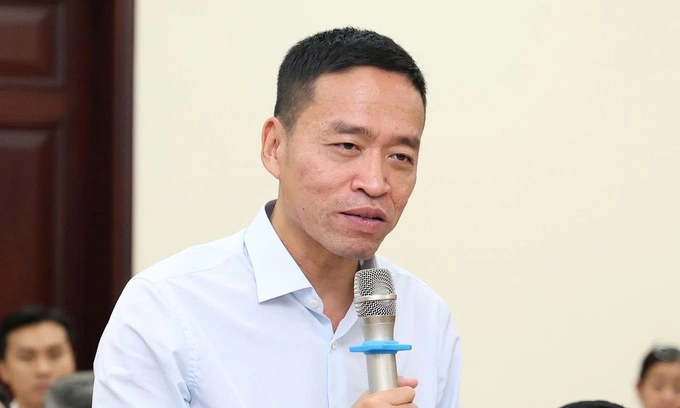
On September 21, during a group discussion at the Ho Chi Minh City People’s Council, Le Hong Minh, a representative from the technology sector, shared his thoughts on various city matters, including urban planning, budgeting, energy, and healthcare.
Minh noted that his role as a municipal delegate was a fresh experience for him. He emphasized his aim of providing valuable perspectives from the tech industry. When discussing the city’s strategy to create internationally recognized research centers, he pointed out a crucial issue: the lack of clarity regarding the expected outcomes given the large proposed budgets.
The city’s plan involves selecting four organizations every year to lead at least one innovation project, each supported by an average budget of approximately VND 100 billion (around $3.9 million). Over the next five years, the total investment could reach about VND 2 trillion.
Minh stressed the importance of accountability, indicating that the city should clearly state what it hopes to achieve with this significant financial commitment. He advocated for setting concrete goals that directly address pressing urban challenges like traffic congestion, electric vehicle infrastructure, and digital city management.
Instead of distributing small grants for numerous projects, Minh suggested that the city should focus its resources on a few high-impact initiatives. He pointed out that while minor grants can yield theoretical studies, genuine improvements in daily life require deeper, concentrated investments.
In his review of draft resolutions regarding tax benefits for innovative startups and support for top-tier research centers, Minh observed that Ho Chi Minh City was taking a cautious approach. He noted that the current drafts tend to concentrate on procedural aspects, such as how to allocate funds, rather than the transformative goals that the city aspires to achieve.
From a business perspective, he raised a vital question: what concrete results will these policies produce? Presently, this remains somewhat unclear. On tax incentives for innovative businesses, Minh encouraged city officials to view their approach as part of a regional competition to attract leading tech firms and skilled talent. Executives in the technology and semiconductor sectors consider personal income tax exemptions crucial for recruiting top professionals. However, the city cannot implement these incentives until local regulations are established, despite existing national laws.
He highlighted the need for Ho Chi Minh City’s policies to be as competitive as those in other regions, especially if it wants to attract prominent businesses and specialists.
Minh also mentioned concerns about salary caps for science and technology personnel, noting an existing proposal that limits monthly wages to VND 150 million for certain roles, while updated national regulations allow salaries of up to VND 300 million for chief architects leading strategic projects. He argued that to tackle the city’s biggest challenges, it needs to employ the best talent available.
Tran Thi Minh Hanh, chairwoman of the Chanh Phu Hoa Ward People’s Council, added that previous aid programs for science and technology were often complicated and burdened by unnecessary paperwork, which discouraged many potential applicants. She urged the city to create streamlined procedures to help organizations and individuals providing meaningful scientific solutions to receive assistance more easily.
Hanh also suggested that the city should enhance its outreach efforts so that innovators and businesses are well-informed about available programs and the application process.
