
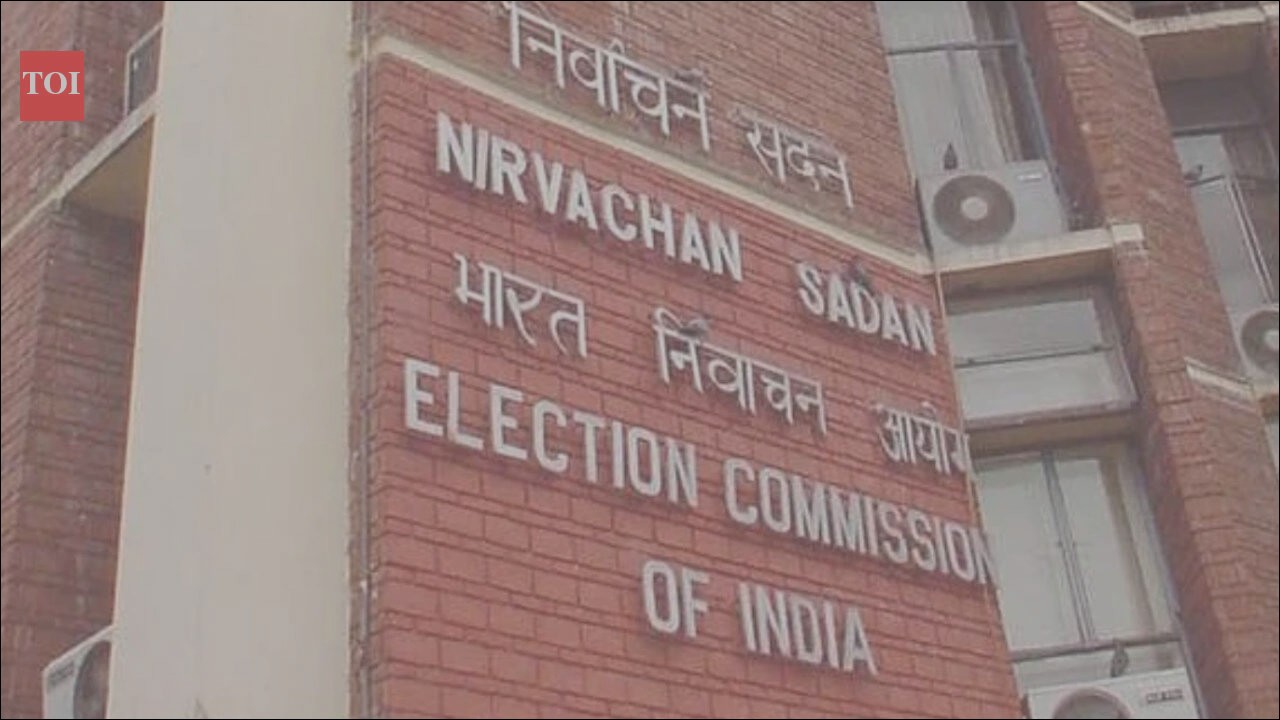
New Delhi: Issues within the Election Commission of India (ECI) are not new, with tensions dating back to its transformation into a multi-member body in 1989, as highlighted by journalist Bharti Jain.
In October 1989, two election commissioners, S.S. Dhanoa and V.S. Seigell, were appointed to work alongside then Chief Election Commissioner (CEC) R.V.S. Peri Sastri. This shift was seen by Sastri as a reduction of his authority. By January 1990, their appointments were revoked, and the ECI returned to a single-member format.
In 1993, during T.N. Seshan’s tenure as a powerful CEC, the ECI was restructured again into a multi-member body with the addition of commissioners M.S. Gill and G.V.G. Krishnamurthy. This change led to conflicts between Seshan and his colleagues, resulting in a 1995 Supreme Court ruling that affirmed election commissioners and the CEC held equal power and status.
Another notable clash happened between CEC N. Gopalaswami and election commissioner Navin Chawla from 2006 to 2009. Just months before his term ended, Gopalaswami urged the President to remove Chawla, citing a perceived bias in favor of the Congress party.
More recently, during the 2019 Lok Sabha elections, tensions arose between CEC Sunil Arora and election commissioner Ashok Lavasa, both appointed by the Modi government. Lavasa ultimately resigned in August 2020, two years ahead of the end of his term, amid ongoing disputes.
These historical instances illustrate the persistent challenges and disagreements that have affected the functioning of the Election Commission over the years.
