
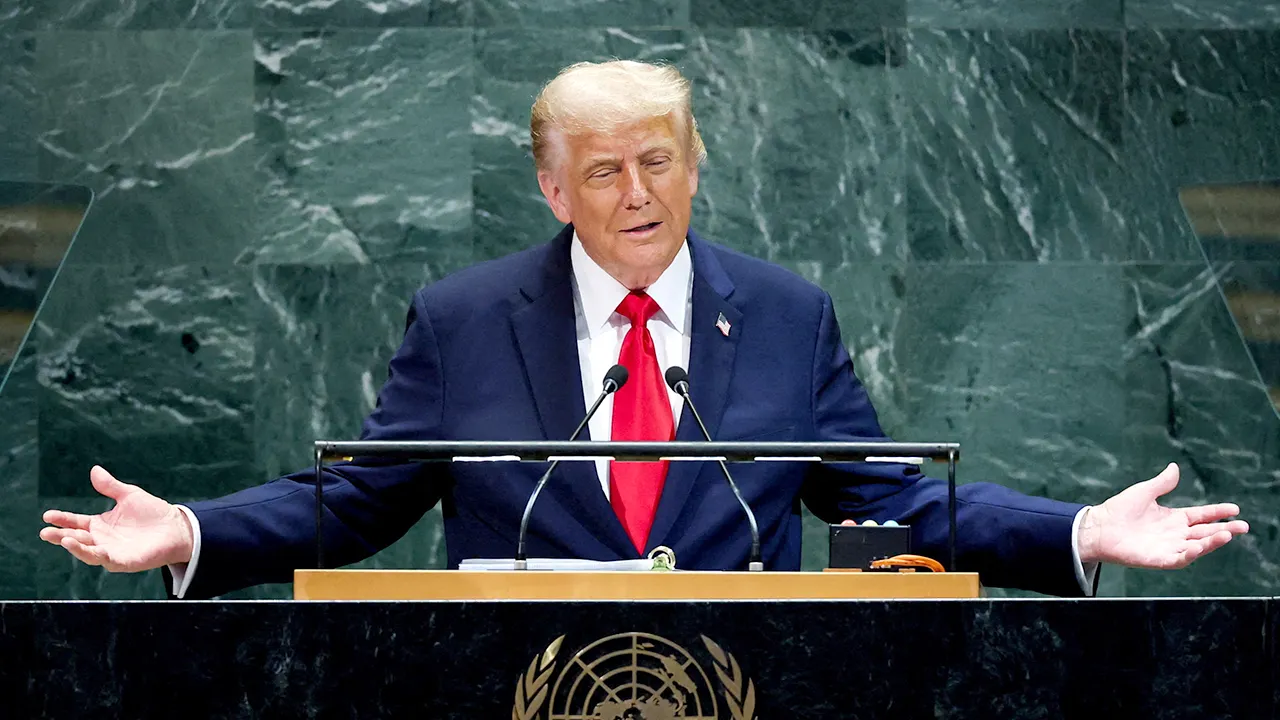
UNITED NATIONS, NEW YORK — This week, over 100 world leaders are gathering in New York for a significant event at the United Nations. They arrive as the U.N. addresses ongoing conflicts in the Middle East and Ukraine, economic troubles from energy market disruptions, and concerns about its effectiveness in a divided global landscape.
According to U.N. spokesperson Stéphane Dujarric, 73 presidents, 45 prime ministers, 49 ministers, 11 vice presidents, and one crown prince will attend. Member states have made around 1,000 requests for one-on-one meetings, and 168 events are planned during this intensive week.
When asked about the mood at U.N. headquarters as delegations arrive, Dujarric described it as “high stress.”
INDIA’S MODI AND IRAN AMID U.S. SANCTIONS WARNINGS
The 81st U.N. General Assembly will kick off on September 22, discussing the theme, “Restoring trust, managing transformation: A United Nations that delivers for all.” Beyond the speeches and official meetings, there’s another crucial competition: many governments will be looking to attract the attention of the United States.
“This is their moment to grab a piece of American attention for sure,” stated Frank Ahrens from BGR Analytics.
A new report ahead of the assembly tries to gauge which countries currently hold influence in the U.S. The 2026 BGR Impact Index ranks 197 nations based on their presence in the U.S., considering economic, cultural, diplomatic, and geopolitical factors. For the third year running, Japan is in the top spot, followed by Germany, Canada, the United Kingdom, and South Korea.
TRUMP THREATENS ACTION AGAINST IRAN
As the U.S.-Iran conflict continues into its seventh month, President Donald Trump is expected to return to the General Assembly. The recent conflict involving Iranian-backed Houthis has created additional concerns about security in the Red Sea and among Gulf nations. Reports indicate that many European and Asian allies have been hesitant to deepen their involvement in the conflict, which has strained U.S. relationships with several partners.
The agenda for the General Assembly will also heavily feature Russia’s war on Ukraine, Israeli-Palestinian tensions, issues in Sudan, climate change, and advancements in artificial intelligence. Prominent leaders, including Iranian President Masoud Pezeshkian, Ukrainian President Volodymyr Zelenskyy, Israeli Prime Minister Benjamin Netanyahu, and Russian Foreign Minister Sergei Lavrov, are set to speak.
The BGR study, which uses over 100 indicators to gauge influence, examines factors such as GDP, cultural presence, and lobbying activity. This year, a significant focus has also been placed on a newer element: social media.
“We analyzed nearly 5 trillion pieces of data because social media can greatly influence how a country is viewed in the U.S.,” Ahrens noted. Social media sentiment is considered in 20% of the index, trailing only cultural impact, which accounts for 24%.
SMALL COUNTRIES CAN MAKE BIG GAINS
The analysis reveals that smaller countries can experience considerable changes in reputation based on their online presence. For instance, Bahrain improved its ranking significantly, moving up 22 spots to 75th, thanks to positive online sentiment and increased visibility from its recent election to a rotating U.N. Security Council seat.
In contrast, Georgia dropped 31 ranks to 104, as political unrest and the arrest of journalists negatively affected its online sentiment.
While generating attention is crucial, Ahrens emphasized that making noise does not equal real political influence. “Countries that attract attention must follow up with concrete actions,” he stated.
BGR’s analysis balances public sentiment with more tangible measures such as economic relationships and lobbying expenditures.
Interestingly, one notable change in national perception this year came not from a government official, but rather from a German soccer fan known as “Freddy,” whose positive social media posts about traveling in the U.S. went viral. BGR noted that Germany’s positive sentiment surged by 13% during Freddy’s online rise.
As delegates prepare for this busy week in New York, the lesson remains clear: effective communication on social media can significantly impact how countries are perceived on the global stage.
