
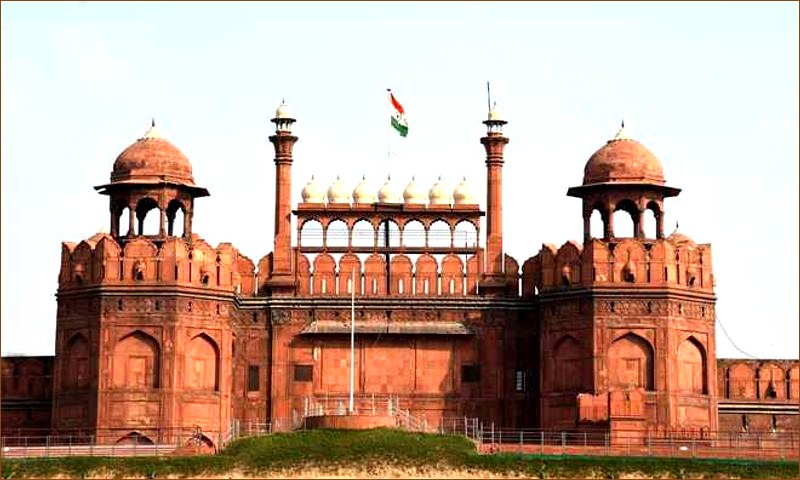
The Lahori Gate of the Red Fort in Delhi is in the midst of a significant makeover that goes beyond just a change in color. The Archaeological Survey of India (ASI) has carefully removed several layers of paint, revealing what the gateway looked like back in 1648.
The area around the circular well, where Prime Minister Modi delivers his Independence Day speech, has transformed from its deep-red color to a more natural earthy-brown hue following restoration efforts. This work has uncovered parts of the original Mughal masonry and architectural details that had been hidden under years of paint.
To achieve this, the ASI used a method called controlled sand blasting to remove the old paint. They then stabilized loose stones, filled in cracks, and reinforced joints using traditional lime mortar. This step is crucial as the layers of paint had trapped moisture, impacting the wall’s durability and performance, as explained by ASI officials.
Furthermore, this restoration shines a light on a less-discussed part of the Red Fort’s history. After the British took over the fort following the 1857 uprising, they made significant military changes, adding barracks and other structures. Official records highlight the scale of these alterations made after the uprising.
At Lahori Gate, later additions made with bricks and cement, particularly those related to military use, pose a unique challenge for conservators. The team is opting to repair these structures using lime-based materials instead of replacing them completely.
Next up for a similar examination is the Delhi Gate, suggesting that this restoration effort could expand beyond a single project.
This initiative is part of a broader conservation plan for the Red Fort, where the ASI has previously restored the Chhatta Bazaar and worked on uncovering hidden historical elements and paintings.
For the millions of visitors who come to Delhi, this change might seem like just a new color. However, for those in the field of conservation, it represents a deeper task: determining which layers of the city’s history should be highlighted, preserved, and passed down through generations.
