
New Night Vision Technology Enhances Firefighting Efforts in Oregon
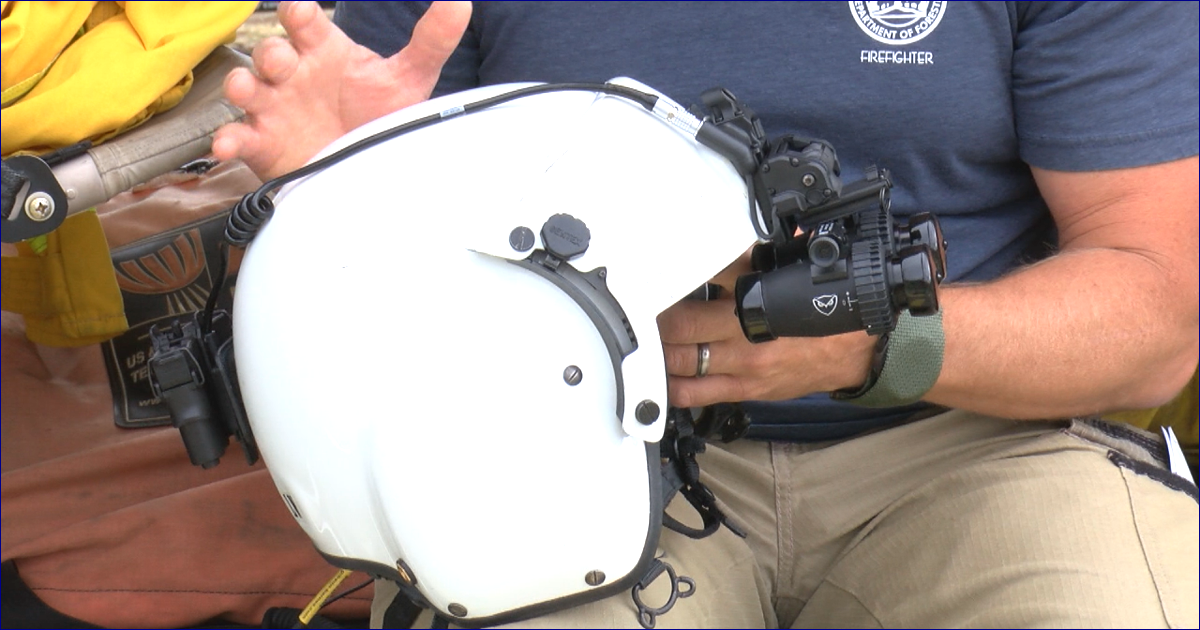
Medford, Oregon – The Oregon Department of Forestry (ODF) is excited to announce that its Southwest headquarters has upgraded its helicopters with advanced night vision technology. This new feature allows firefighting crews to better spot and tackle fires that occur after sunset.
Helicopters play a vital support role for firefighters on the ground, according to Lee Winslow, the district aviation supervisor at ODF Southwest. While the aircraft do not put out fires directly, they provide essential assistance that ensures firefighters can work safely along the fire’s edge. “Ground teams are the ones who extinguish the fires. The aircraft provide crucial backup to keep them safe,” Winslow explained.
The primary helicopter in this operation is equipped for multiple tasks, such as reconnaissance, mapping, and guiding firefighting units to the spot of the fire. It also carries a bucket for dropping water. Daemian Deen, a crew member, shared that their Type 3 helicopter handles various roles, including reconnaissance and mapping, while also helping to manage bucket work.
The new night vision tools, while limiting the pilot’s view, enhance visibility in low-light conditions. Craig Morrison, vice president of flight operations at Brim Aviation, highlighted that this technology is particularly effective at spotting small fires from a great distance. “With night vision, we can detect flickers of light from far away, allowing us to identify new fire starts even in complete darkness,” Morrison noted.
This innovative technology was put to the test on September 1, when crews used night vision to discover three lightning-caused fires and successfully contained them before they could escalate. Winslow remarked, “We were able to pinpoint the fires early, coordinate with ground crews, and effectively manage all three before they grew larger.”
Furthermore, the night vision capabilities assist teams already fighting fires by detecting embers that may have spread beyond the designated fire line. Having aerial support is crucial, as it allows ground crews to focus on their tasks while being alerted to potential threats that might otherwise go unnoticed.
The introduction of night vision technology provides an additional 12 hours of support, significantly improving the response time to fires and enhancing community safety. “Having a helicopter actively monitoring in the air allows for quicker containment and reinforces the work done by ground crews,” Winslow emphasized. This improved coordination between day and night shifts helps crews gain control of fires faster than ever before.
