
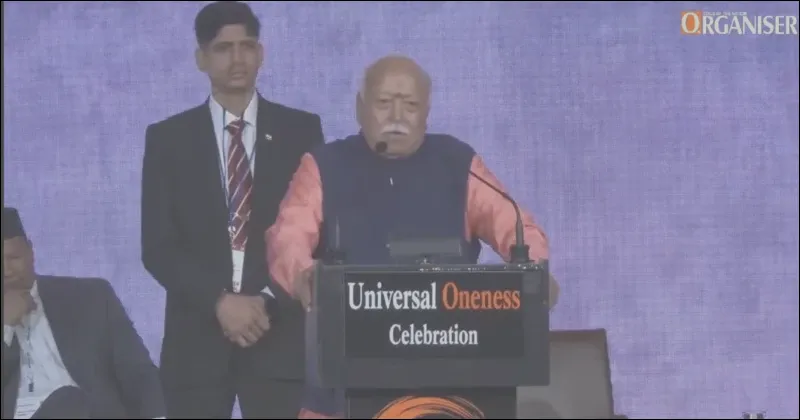
In today’s world, where divisions and conflicts seem to abound, the quest for a common language and understanding across nations is crucial. At a recent gathering in New York, attended by over five thousand members of the Indian community, RSS Chief Dr. Mohan Bhagwat shared a perspective rooted in ancient Indian wisdom. He emphasized the idea of “universal oneness,” suggesting that true diversity is not just about tolerating differences but recognizing that we all connect to a shared reality.
Dr. Bhagwat’s address stands as a significant moment for India’s presence on the world stage, shifting from merely preserving culture to actively participating in global discussions about harmony and understanding.
### The Limitations of Our Perception
A central theme of Bhagwat’s speech highlighted how humans often limit their understanding of reality. Using an example from his background as a veterinarian, he compared human perception of color to that of dogs, which see only a few shades. Just as a dog believes its view is all there is, people frequently mistake their own beliefs for the whole truth. Many conflicts arise when we fail to see that different cultures and ideologies might just be reflecting the same underlying reality through various lenses.
This perspective allows us to view “Dharma,” the concept of cosmic balance in Eastern philosophy, as different from Western ideas of religion, which often require strict adherence to specific beliefs. Dharma, in contrast, emphasizes the harmony of individuals, communities, and nature.
### The Trap of Consumption
To address the modern challenges of consumerism and a lack of inner fulfillment, Bhagwat used a relatable analogy about donuts. He explained that while one might enjoy eating donuts, after having too many, they can lead to a sense of disgust rather than satisfaction. This mirrors the truth that material possessions alone cannot fill deeper emotional and spiritual needs.
He referenced a Vedic story about two kings, Indra and Virochana, who are similar in their quest for meaning. Virochana, driven by material abundance, believed true happiness resided in the physical realm. Indra, however, discovered the deeper essence of consciousness. This story speaks to today’s leaders, suggesting that true contentment and peace come from spiritual awareness rather than material wealth.
### Empathy in Global Relations
Bhagwat also touched on the importance of empathy in international relations. He posed a thought experiment: Imagine eating a wonderful meal while a very hungry person watches. Most people would feel guilty in that situation, highlighting our innate connection to others. This understanding could transform how nations interact; rather than seeing international relations as zero-sum games where one side wins at the expense of another, empathy can guide us towards peaceful resolutions.
He encouraged members of the Indian diaspora in the U.S. to embody the values from their homeland while engaging positively with their new community. This dual connection can foster cooperation and understanding between cultures.
### A Call for Ecological Awareness
Towards the end of his address, Bhagwat urged immediate action for ecological restoration. He remarked that humanity’s rapid rise often came at a significant cost to nature, advocating for a shift from merely allowing nature to survive to actively supporting it. He drew on the idea of “helping others live,” highlighting our responsibility toward the planet.
He concluded with an inspiring story about perseverance, urging that lasting change often requires continuous effort, just as a miner who stopped digging three feet short of finding riches missed out on great success.
Dr. Mohan Bhagwat’s address was not just a call for coexistence but also a roadmap for how to proceed in our interconnected world. By blending ancient wisdom with contemporary issues, he offered a hopeful vision where our diversity enriches our shared journey rather than dividing us. In a world often plagued by discord, this perspective may provide the understanding needed to come together.
