
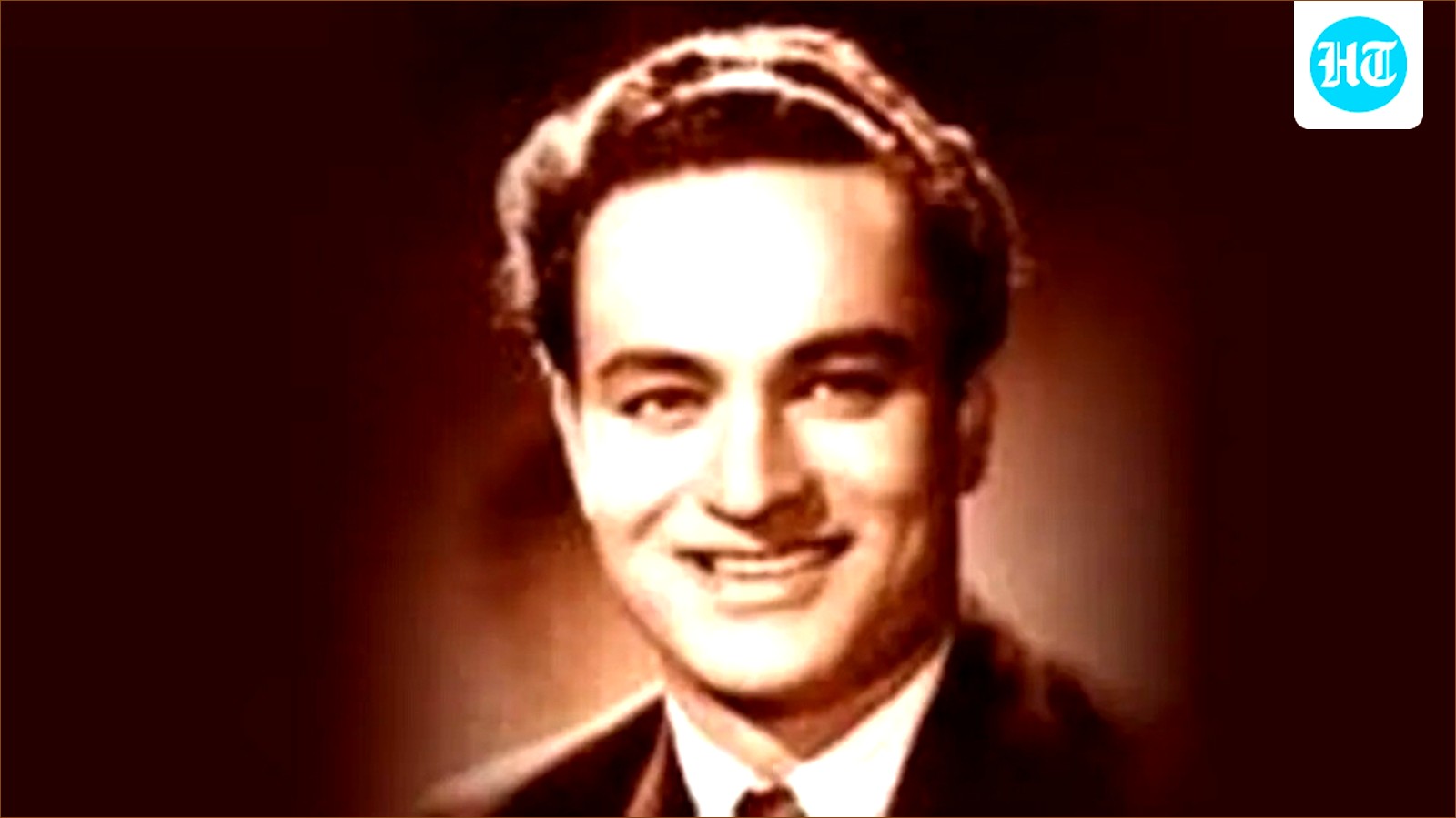
Remembering Mukesh: A Voice That Echoes Through Time
Last week marked the 50th anniversary of the legendary singer Mukesh, whose full name was Mukesh Chand Mathur. Even five decades after his passing, his voice continues to touch the hearts of millions of Indians. While many singers are celebrated for their technical excellence, what set Mukesh apart was the raw emotion, warmth, and vulnerability he brought to his music. His timeless songs, including classics like “Awaara Hoon,” “Kabhi Kabhie Mere Dil Mein,” and “Kahin Door Jab Din Dhal Jaye,” still resonate with people today.
Mukesh’s journey began on July 22, 1923, in Delhi. He was just 53 years old when he died of a heart attack in Detroit while on a concert tour with the iconic Lata Mangeshkar. Contrary to the traditional route to fame, Mukesh’s entry into the world of playback singing was quite unexpected. Initially, he worked in the Public Works Department and wasn’t focused on a musical career. However, after being encouraged by his mother, he moved to Bombay in 1940 against his father’s wishes.
In Bombay, a distant cousin, actor Motilal, provided support as Mukesh sought to find his place in the industry. His early years were challenging, with his first film, “Nirdosh,” released in 1941, not making much impact. Mukesh tried various jobs to make ends meet, even selling dry fruits at one point.
He was heavily influenced by the renowned singer K. L. Saigal and often emulated his style in his early work. However, his breakthrough came with the song “Dil Jalta Hai To Jalne De” from the movie “Pehli Nazar” in 1945, which marked the beginning of his unique journey. His legendary partnership with Raj Kapoor further cemented his legacy, with Mukesh’s voice becoming synonymous with Kapoor’s on-screen persona in films like “Awaara,” “Shree 420,” and “Mera Naam Joker.” Over the years, he lent his voice to more than a hundred songs for Kapoor.
Mukesh’s repertoire is filled with unforgettable tracks that explore love, friendship, and the complexities of life. From the uplifting “Mera Joota Hai Japani” to the reflective “Jeena Yahan Marna Yahan,” his songs have a remarkable ability to traverse various themes. Classics such as “Chandan Sa Badan” and “Suhana Safar Aur Yeh Mausam Haseen” remain beloved to this day. Notably, Mukesh won the National Film Award for Best Male Playback Singer in 1974 for the poignant “Kai Baar Yunhi Dekha Hai” from the film “Rajnigandha.”
Even 50 years later, Mukesh’s music continues to remain relevant. His songs hold a personal connection for many, evoking memories of love, friendship, and the struggles of life. For those who grew up listening to him, his voice feels like a comforting presence, reminding us of shared experiences and emotions.
In an ever-evolving cultural landscape, Mukesh’s legacy lives on. His unique ability to express the deepest human feelings through song ensures that his voice will never fade away. As we remember him, we recognize the profound impact he made on the world of music and the cherished memories he created for generations.
