
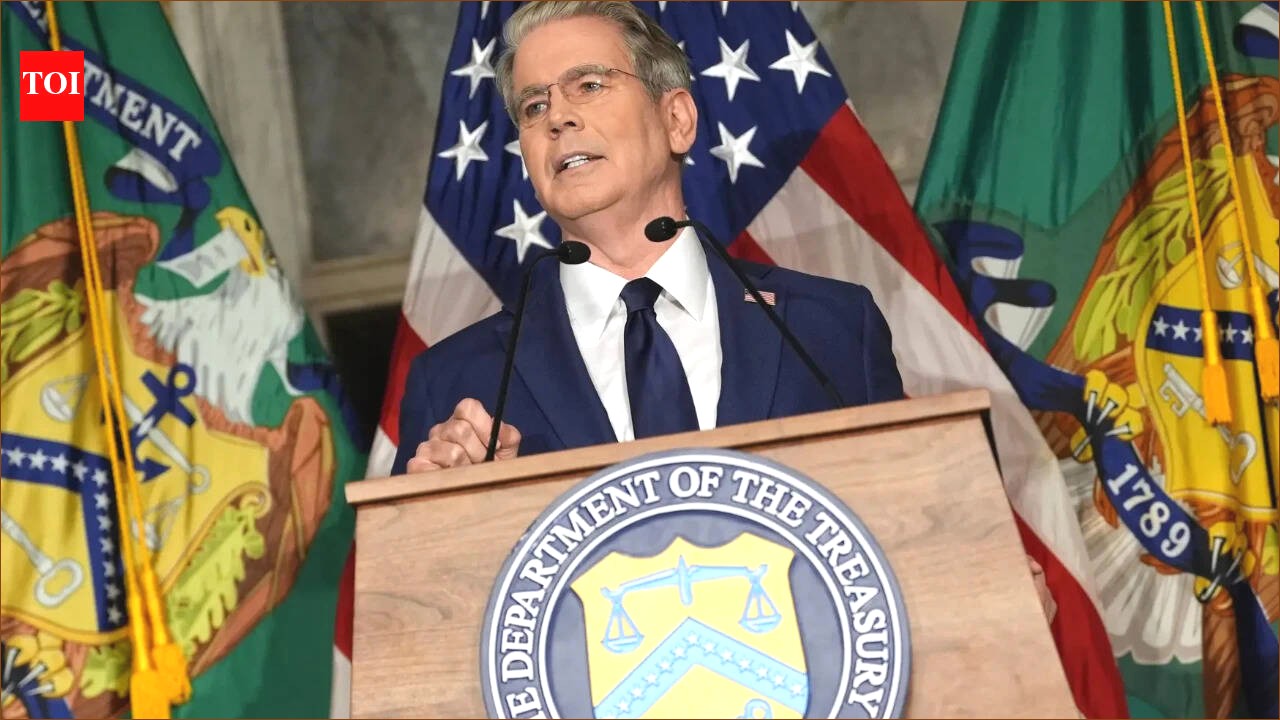
The United States has launched a significant economic initiative aimed at Iran, which Treasury Secretary Scott Bessent has described as “unprecedented.” This operation, dubbed “Operation Economic Outcast,” seeks to disrupt Iran’s financial systems, oil income, and international connections in a bid to increase pressure on the Iranian government.
Bessent announced the launch of this campaign at the instruction of President Donald Trump, likening it to the D-Day invasion during World War II. Reflecting on this historical parallel, he stated, “Today, we start an economic offensive against Iran’s financial networks worldwide.”
The key goal of this initiative is to cut off the financial resources supporting Iran’s leadership, particularly those associated with the Islamic Revolutionary Guard Corps (IRGC). Bessent emphasized, “We aim to sever every economic lifeline for this regime until Tehran is isolated.”
He highlighted that the sanctions would focus on five critical sectors: digital assets, technology, gold, aviation, and shipping. Additionally, he warned that any continued economic ties with Iran could expose involved parties to US financial repercussions. Bessent presented a clear choice for Iran: either face complete isolation or work towards restoring normal economic relations.
Before Bessent’s announcement, the US Treasury had already placed sanctions on nearly 60 entities, individuals, and vessels linked to Iran’s nuclear, missile, cyber, and oil activities. This action also targeted companies that support Iranian shipping operations in locations such as the United Arab Emirates, Hong Kong, and Europe.
As these developments unfold, Iran’s economy is under increasing strain. The Iranian rial has dropped to a record low against the dollar, with food prices soaring—rice has risen approximately 60%, and beef prices have increased by over 150%. The International Monetary Fund predicts a 5% contraction in Iran’s GDP.
President Trump has portrayed the campaign as pushing Iran toward a state of economic and military failure, stating, “IRAN IS COMPLETELY COLLAPSING!!!” He later described the situation as an “economic and military death spiral” for Iran.
Bessent previously referred to this initiative as an “economic D-Day,” indicating that the United States is entering a critical phase of this financial confrontation. He affirmed, “At dawn begins an economic D-Day—the largest financial offensive ever launched against an opponent.”
In response, Iran has warned that the tightening of sanctions could lead to broader hostilities. Mohsen Rezaei, the Secretary of Iran’s Supreme National Security Council, mentioned that Iran might consider halting all oil exports through vital shipping routes like the Strait of Hormuz if the US persists with its economic pressure.
