
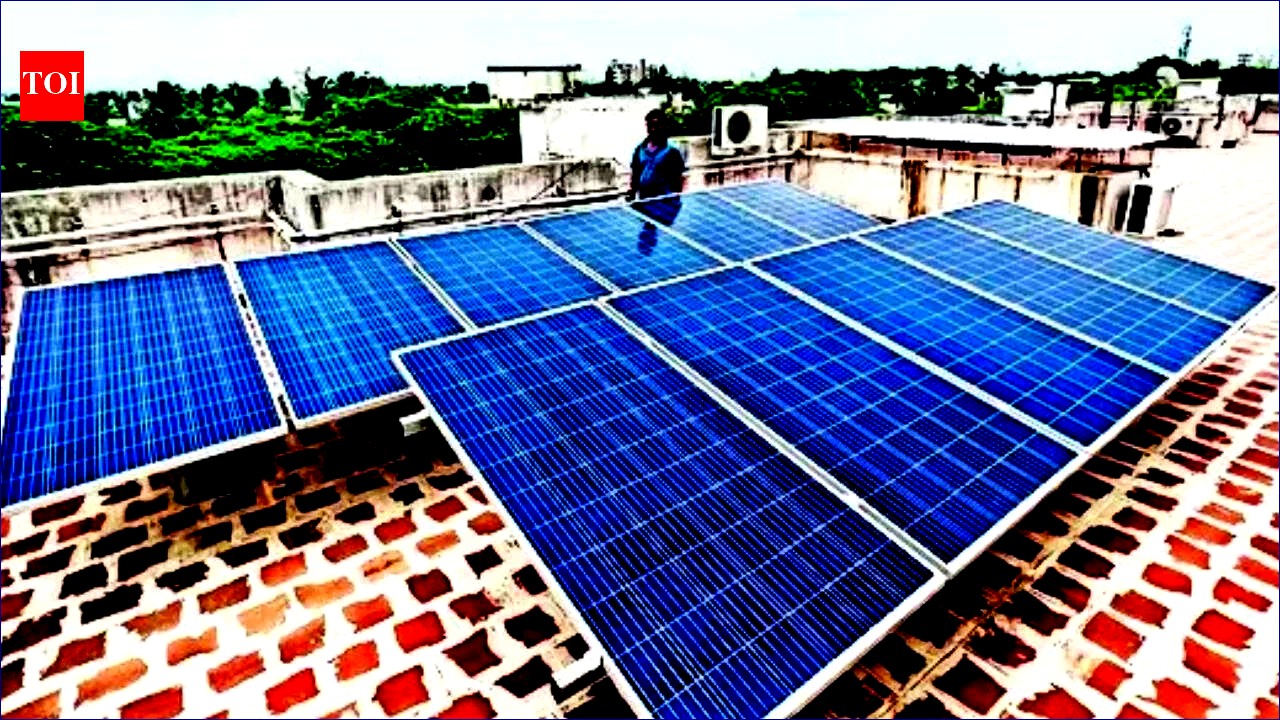
Government to Track Electricity Generation from Rooftop Solar Systems
In New Delhi, the Indian government is stepping up its efforts to monitor the electricity generated by rooftop solar (RTS) systems installed under the PM Surya Ghar scheme. As more households adopt these eco-friendly systems, the government wants to get accurate data on their performance. To do this, inverter manufacturers are now required to report daily electricity generation to a national portal.
This new approach will allow the government, for the first time, to track how much electricity individual RTS setups are producing, rather than just counting the total capacity that has been added through the scheme. According to the recently issued guidelines by the Ministry of New and Renewable Energy, inverter makers must send cumulative generation data daily through an application programming interface (API), linked to the unique serial numbers of their devices. Additionally, all applications and data systems related to these inverters need to be hosted within India.
By collecting this data, the government hopes to understand how much electricity these rooftop systems are actually generating. It will also help identify any systems that are not performing well. Furthermore, analysis of generation data from different states and power distribution companies (discoms) will provide insights into the overall success of the initiative.
A committee of energy experts highlighted a significant gap in data on electricity produced and consumed by decentralized renewable energy systems. As of now, over 4.4 million RTS systems have been set up under the PM Surya Ghar Muft Bijli Yojana, benefiting more than 5.2 million households and contributing 15.6 gigawatts (GW) to the solar energy capacity.
The committee found that much of the electricity generated by these rooftop solar systems is used directly at the homes where they are installed, which means it doesn’t go through the main power grid. This fact makes it hard to include these figures in regular electricity reports. They recommended making it mandatory for discoms to collect and report this data to ensure that India’s electricity statistics are more accurate.
While some of the electricity generation from these systems is already measured, the information is often not shared effectively with discoms. Alekhya Datta, a director at TERI’s electricity and renewables division, believes that central monitoring of rooftops’ electricity generation will bring in several benefits. If discoms are aware of how much electricity is being generated locally, they can better plan their power purchases and operations.
Having visibility on electricity generation not only helps the discoms but also informs vendors about the quality of the systems. Consumers also gain insight into their contribution to renewable energy, enhancing their sense of satisfaction.
Although the ministry has mandated that all inverter manufacturers start sharing this data, only about 15% of them currently have the capability to do so through APIs. Moreover, the government still needs to put together a comprehensive dashboard to compile this information effectively.
