
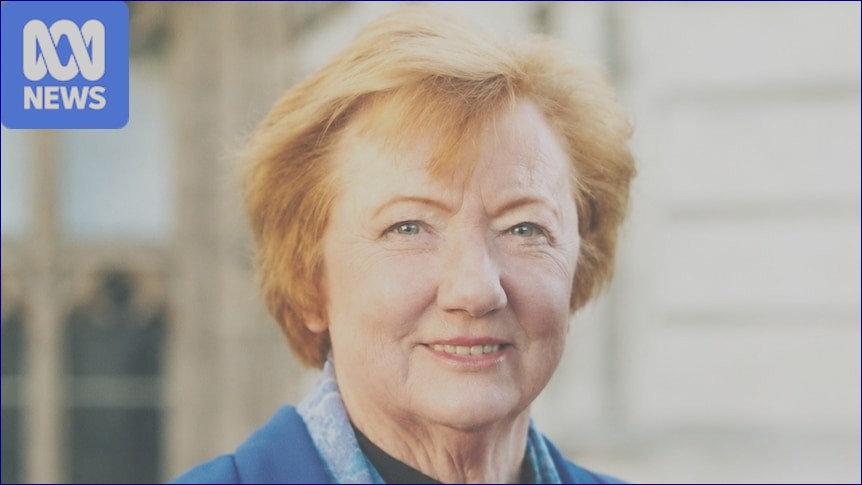
Celebrating the Life of Dr. Margaret Smith: A Trailblazer in Women’s Health
Dr. Margaret Smith was known for her down-to-earth nature, often saying, “not famous, but well-known.” Born in Perth, Australia, she was a prominent obstetrician and devoted advocate for women’s health, having delivered an impressive 6,000 babies during her long career. She faced significant challenges due to the rampant sexism in the medical field, especially during the 1950s, an era when few women could rise through the ranks of medicine.
Dr. Smith passed away on July 14, which marked her 94th birthday. In a heartfelt eulogy, family friend Julian Dowse shared that Dr. Smith often referred to the struggles she faced with a quote about renowned dancers Ginger Rogers and Fred Astaire: “I have to do everything he does backwards and in high heels, but fortunately I can make it look twice as easy.”
Margaret, or “Margie,” as she was affectionately known, was a twin, born just minutes before her identical sister, Joan. Their mother, surprised to learn she was having twins, originally chose the name ‘Margaret Joan’ for a single girl. In the end, the sisters were each given a name, and their family was completed four years later with the addition of their sister Nancy.
A pivotal moment in Margie’s life occurred during her teenage years when she lost a beloved cousin, an event that lit her passion for medicine. This was further fueled by her grandmother’s battle with ovarian cancer, ultimately steering her toward a focus on women’s health issues.
Breaking Barriers in a Male-Dominated Field
Margie graduated from the University of Adelaide in 1956, proudly standing as one of only four women among a graduating class of more than 100 men. Initially, she faced barriers in securing a residency in obstetrics simply because of her gender. However, her classmates rallied around her, refusing to accept their positions unless she was given her rightful place.
Among her supporters was Frank Smith, who would later become her husband. The couple never had children, but Margie often reflected on the sacrifices professional women like her made. “I could not have had children; otherwise, I could not have done what I did for other children,” she shared.
A Vanguard in Women’s Health
After spending five years training in Edinburgh, where she earned a gold medal for excelling in her postgraduate exams, Margie and Frank lived in the highlands of Papua New Guinea for seven years. While there, they faced unique challenges, with Margie not only delivering babies but also serving as a physician and anesthetist in a resource-limited setting. One of her proudest accomplishments was successfully delivering triplets during this time.
Upon returning to Perth, Margie was among the few female practitioners in the area. She worked at King Edward Memorial Hospital, in private practice, and also taught at the University of Western Australia. Her contributions were transformative, as she focused on women’s health from childbirth to menopause.
Tackling Menopause Head-On
In the 1970s, discussions around menopause were virtually non-existent, but Margie recognized the struggles women faced. In 1978, she established the first menopause clinic in Western Australia, which was later named in her honor. She was also a founding member of the Australasian Menopause Society. Colleagues described her as a passionate educator who empowered women through knowledge and understanding.
She held numerous public seminars on menopause, where her clarity and enthusiasm made her a popular speaker. In her approach, she often emphasized that knowledge gave women power over their health.
Honors and Legacy
Margie’s contributions to medicine and women’s health did not go unnoticed. She was named Western Australia’s Citizen of the Year in 1994 and was appointed a Member of the Order of Australia in 1996. In 2011, she was honored with induction into the WA Women’s Hall of Fame. Besides her medical work, she authored several books and over 30 medical papers, mentoring many young doctors and inspiring countless patients throughout her career.
“She embodied the Hippocratic Oath,” Dowse said, highlighting her commitment to improving lives.
A Life Filled with Passion
Margie had a deep love for classical music and was a choral singer well into her nineties. She had a passion for poetry, often referring to her favorite anthology as an essential guide. Late in her life, she took up playing the cello and painting, continually pursuing her passions with vigor.
Margie is remembered fondly by her twin sister Joan, her nieces, nephews, and a multitude of grateful women whose lives she touched. Her legacy as a pioneer in women’s health and as an insightful, compassionate individual will continue to inspire future generations.
