
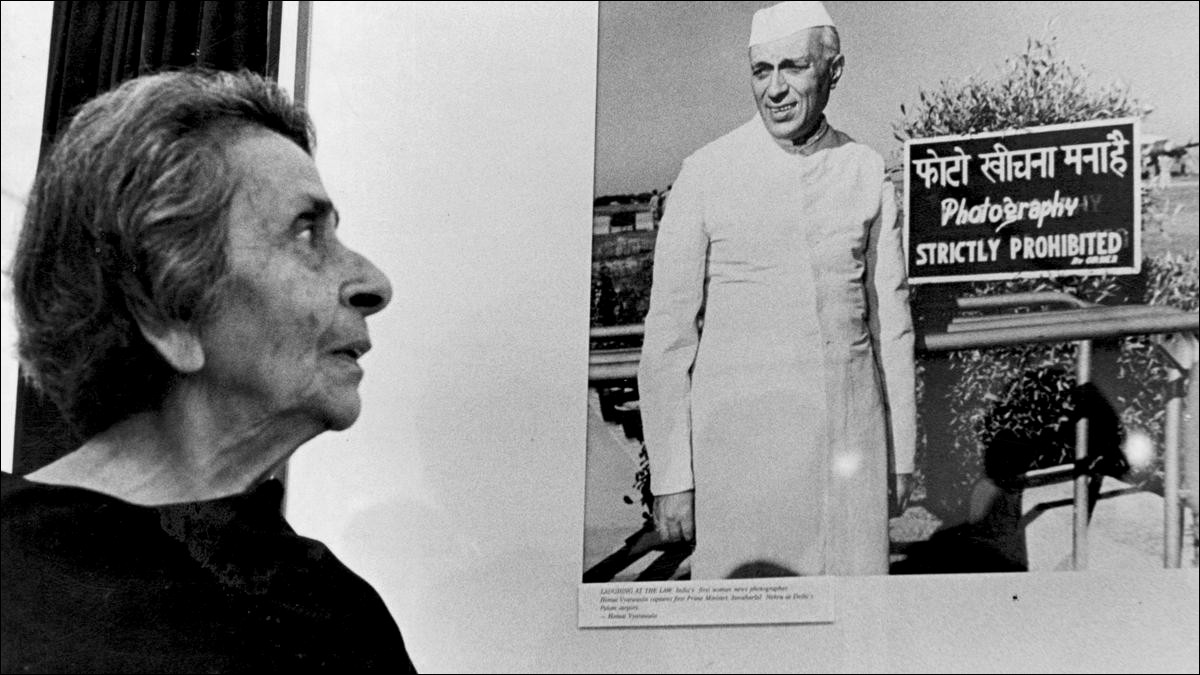
Homai Vyarawalla: The Pioneer of Indian Photojournalism
Homai Vyarawalla witnessed a significant moment in history when Mohammad Ali Jinnah held his final press conference at his home on Aurangzeb Road, New Delhi, before departing for Pakistan. This poignant moment was filled with emotion, and when Homai, trying to capture the scene, slipped and tumbled from a stack of boxes, Jinnah quickly expressed concern for her wellbeing, saying, “I hope you are not hurt.” Remarkably, she managed to protect her camera and flash gun during the fall, a testament to her dedication as reported by The Statesman on May 14, 1951.
A Focus on Key Figures
Homai, along with other photojournalists of her era, played a crucial role in documenting India’s nationalist movement through their lenses. They framed their aspirations for the new nation around prominent figures like Jawaharlal Nehru and Mahatma Gandhi, who were seen as the heroes leading India to independence. Homai, in particular, captured more images of Nehru than anyone else, reflecting his influence as Prime Minister during the early years of India’s independence, as noted in Professor Sabeena Gadihoke’s biography, Camera Chronicles of Homai Vyarawalla.
Nehru and photographers shared a special bond, resulting in iconic images that have become deeply embedded in Indian culture—one such photo depicts Nehru releasing a pigeon at a function at India Gate, which has taken on various meanings over the years. In contrast, images of other leaders releasing pigeons have faded from public memory. The power of a photograph often correlates with the historical moment in which it was captured, and once a picture achieves iconic status, it remains a lasting part of our visual history.
Capturing History Through Their Lens
Like Homai, Kulwant Roy also favored photographing Nehru and Gandhi, capturing important moments during the nation’s early days. His photos, filled with energy and confidence, portrayed a nation ready to embrace its identity and assert its presence on the world stage. As noted by Aditya Arya, Roy’s images exuded a sense of assurance, even during a time of significant challenges for the country.
In reviewing over 1,500 photographs of Nehru, it is evident he exuded confidence and charm in front of the camera. He was always approachable, and even in candid moments, like when he was caught napping at the Red Fort, he greeted the camera with a smile, showcasing his affable nature. In contrast, figures like Krishna Menon reacted more defensively to being photographed, highlighting Nehru’s easy-going personality.
Documenting a Transforming India
Pioneering photographers like Homai set the stage for future generations to chronicle India as it transformed. After the tragic assassinations of Indira Gandhi and Rajiv Gandhi, access to power became more restricted with the establishment of security measures around political figures.
Later photographers faced different challenges, such as documenting incidents of disaster and violence which garnered more media attention than the earlier, more serene political images. Photographers like Praveen Jain captured moments that blended humor with political gravity, capturing ministers in playful poses before taking their seats in ceremonies.
Later, as access to politicians tightened, photographers like Raghu Rai managed to seize remarkable glimpses into political life, as demonstrated by his striking image of Indira Gandhi framed by her attentive ministers.
Indian Prime Ministers have always favored being photographed, understanding that each captured moment contributes to their historical narrative. Nehru, in particular, had numerous casual poses that have since become iconic, including one where he cheekily stands in front of a “Photography strictly prohibited” sign at Delhi airport—a testament to his charismatic personality.
(An edited summary from Binoo John’s upcoming work: All in a Flash: News Photography in India.)
