
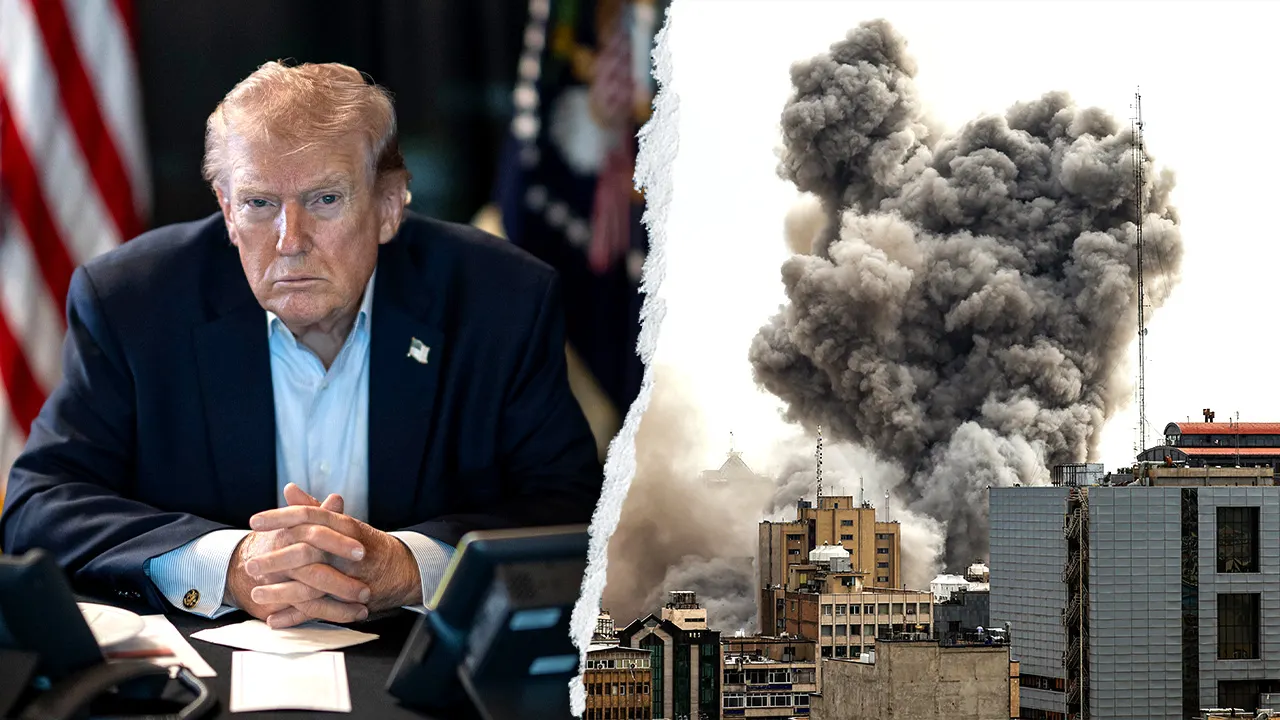
U.S. Resumes Airstrikes on Iran After Missile Attack
Last night, the United States launched airstrikes inside Iran in response to a recent missile attack aimed at American forces in the region. This action comes as tensions between the two nations continue to escalate. An expert on Iran noted that Tehran seems increasingly willing to challenge the U.S., despite its military being in a weakened state.
According to U.S. Central Command, the airstrikes were a strong response to the attempted attack on U.S. assets and were the first of their kind since President Trump paused strikes to explore diplomatic options. The pause was short-lived, as Iran’s missile launch broke that brief calm and reignited direct conflict.
President Trump had hinted at a robust response earlier, stating that the U.S. would hit Iran “very hard.”
Shift in Iran’s Tactics
Behnam Ben Taleblu, an Iran expert, emphasized that the nature of this missile attack represents a significant change in Iran’s approach. “This is the Islamic Republic showing its intentions clearly,” Taleblu explained. He characterized Iran as more daring and hazardous, despite possibly being less capable militarily.
The U.S. Central Command reported that the Islamic Revolutionary Guard Corps fired multiple ballistic missiles at around 5:45 p.m. Eastern Time on Tuesday. Fortunately, all missiles were intercepted, and no damages or casualties were reported.
Trump later elaborated, indicating that the U.S. would deliver a stern message to Iran. “We’re going to hit them hard,” he stated.
Implications of the Conflict
The renewed hostilities come amid already shaky negotiations over maritime routes in the Strait of Hormuz. Iran has also reportedly targeted commercial tankers in the area. Recently, the U.S. and Saudi Arabia jointly conducted strikes against Iran-aligned groups in Iraq, marking a significant shift in their collaborative efforts against Iran.
These developments not only complicate diplomatic talks but also raise the stakes for American troops and interests in the region. Experts warn that Iran’s bold actions could have dangerous consequences, emphasizing that every missile launch, whether successful or not, poses a significant threat.
In summary, the conflict’s rapid escalation highlights the fragile geopolitical landscape and the complexities involved in U.S.–Iran relations. The recent missile attacks and the subsequent response from Washington may shape the future of military and diplomatic engagements in the region.
