
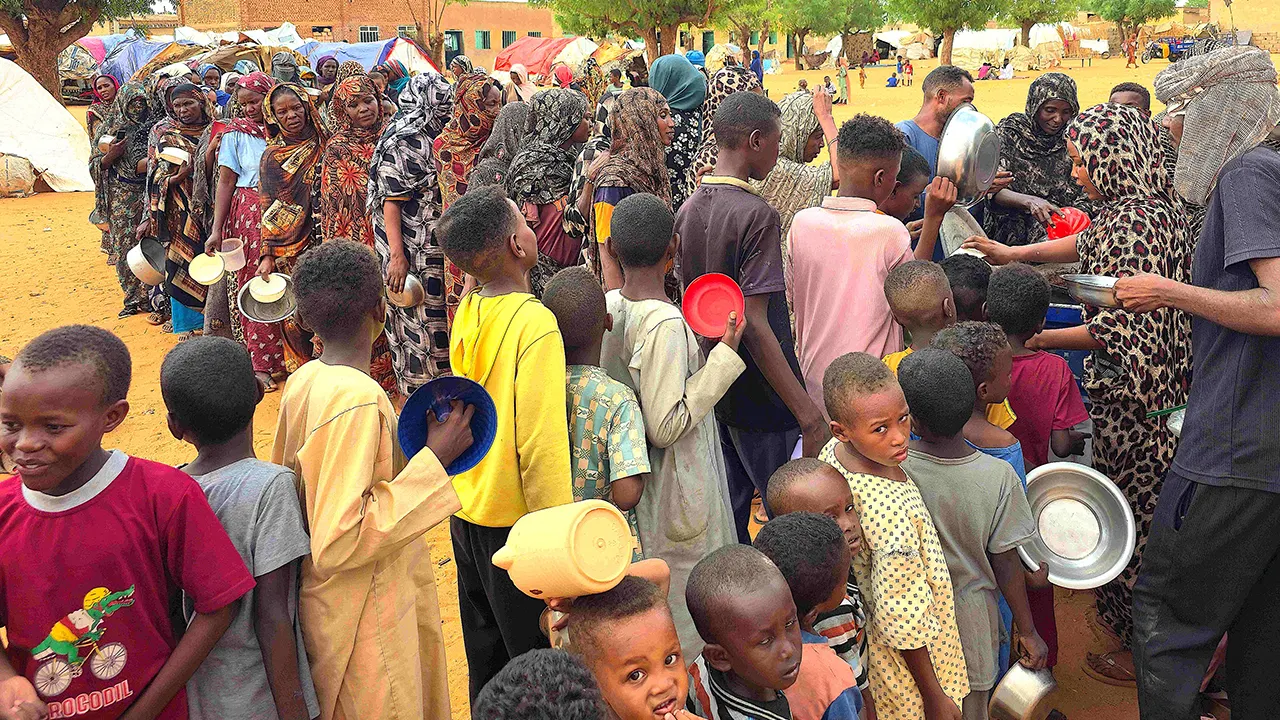
Sudan Faces Severe Humanitarian Crisis Amid Ongoing Conflict
As the world grapples with various international crises, the situation in Sudan has escalated into one of the largest humanitarian disasters globally. Since fighting erupted in 2023, over 14 million people have been forced from their homes, with nearly 34 million now in urgent need of assistance. This number represents about 10% of the world’s total humanitarian needs, as reported by the International Rescue Committee.
Alan Boswell, a project director at the International Crisis Group, stated, “The war in Sudan has sparked the world’s largest humanitarian crisis, intensifying into a regional conflict that pulls in neighboring countries and several Middle Eastern powers.” Despite the gravity of the situation, many world leaders seem to overlook Sudan’s plight, delegating the issue to aides who have not produced effective solutions.
The United Nations indicates that around 19.5 million people are suffering from acute hunger, with 4.5 million fleeing the country. In response to deteriorating conditions, the United States has imposed more sanctions on the Sudanese Armed Forces for allegations related to chemical weapon use in violation of the Chemical Weapons Convention—a charge that the Sudanese government has denied.
Richard Data, the International Rescue Committee’s country director, emphasized that warnings about approaching catastrophe in Sudan have been ignored for three years. The civil war, ignited after years of coups and allegations of ethnic cleansing, continues to play out largely unnoticed.
The conflict pits the Sudanese Armed Forces, led by General Abdel Fattah al-Burhan, against General Mohamed Hamdan Dagalo, known as “Hemedti,” who leads the paramilitary Rapid Support Forces (RSF). The two leaders have shifted from an uneasy partnership to open hostility, following the overthrow of long-time dictator Omar al-Bashir in 2019 and another coup in 2021 that dismantled a civilian government.
Brutality has been reported on both sides, but recent investigations highlight particularly heinous actions by the RSF. In North Kordofan’s El-Obeid, over 100,000 displaced individuals are struggling with severe hunger, prompting urgent calls for increased humanitarian efforts from organizations like the World Food Programme.
El Fasher in Darfur has also turned into a focal point of violence, especially after the RSF seized control in October 2025, leading to thousands of deaths. A report from the United Nations High Commissioner for Human Rights recently revealed alarming rates of sexual violence against women and girls in the region, including reports of mass rapes conducted by RSF members.
Human rights groups have accused the RSF of carrying out targeted attacks against specific ethnic groups, while a U.N. assessment indicated clear evidence of war crimes committed by both the RSF and the Sudanese Armed Forces. The humanitarian crisis continues to deepen, leaving millions vulnerable and without essential support.
