
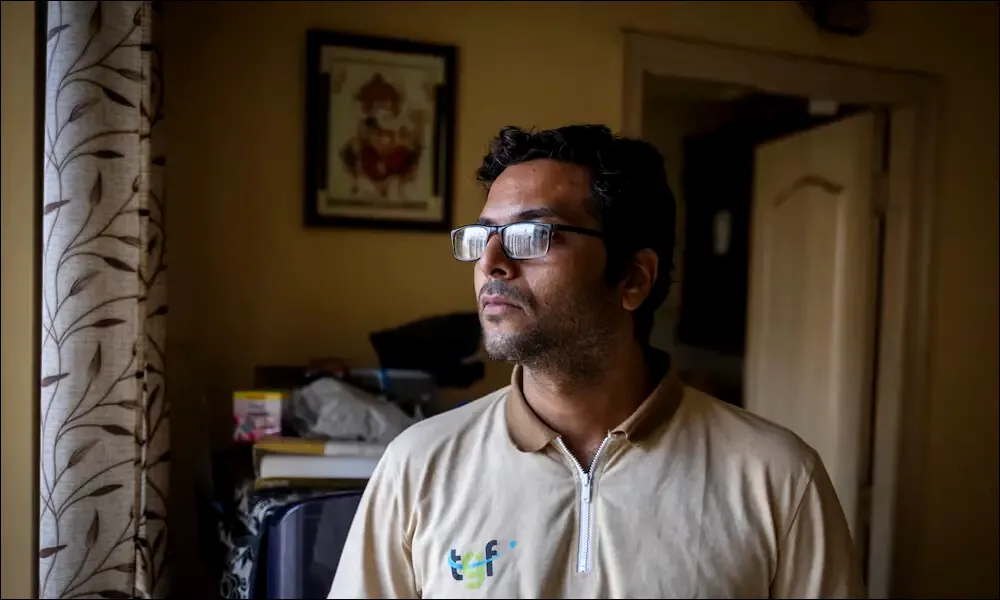
NEW DELHI: Indian reporter Dev Kotak from Times Now had a challenging experience this week while covering a large youth protest against Prime Minister Narendra Modi’s government. He had planned to do a live report and then leave, but things took a violent turn when protesters attacked him, believing his channel supports the government. Videos of the incident quickly spread on social media, showing the intensity of the situation.
Kotak, 36, expressed his fear during the attack, describing how the crowd shouted “godi media” at him. He noted, “The anger was palpable; they felt the media was ignoring their views.” Despite his efforts to report the events fairly, he feared for his safety as he faced slaps, kicks, and thrown objects.
The protests intensified after a police crackdown left many students injured during a demonstration outside parliament. Kotak stressed that he covered injuries on both sides, but protesters believed otherwise.
This hostility towards journalists highlights a growing concern over media freedom in India, especially since Modi became Prime Minister in 2014. The nation’s ranking in the Reporters Without Borders’ World Press Freedom Index has significantly declined, falling from 122nd to 157th out of 180 countries over the years. The decrease has been linked to violence against journalists and a concentration of media ownership that aligns with the government.
The Editors Guild of India condemned acts against media representatives that are perceived to be close to the ruling party, pointing out that biased reporting only exacerbates societal issues and undermines democracy.
Noted journalist Ravish Kumar, who coined the term “godi media” — referring to media aligned with the government — criticized mainstream media for failing to challenge the government and sidelining opposition voices.
A spokesperson for the protest group, the Cockroach Janta Party, emphasized that they are continually asking protesters to respect reporters. “We want to ensure that no one is mistreated,” he said.
Manisha Pande, the editorial director of news website Newslaundry, noted that the frustration toward mainstream media has been building over the years, describing it as increasingly disconnected from the needs of the public.
Digital commentator Akash Banerjee, who has transitioned to independent media, observed that the public’s trust in traditional news sources is dwindling, pushing many to seek out alternative platforms.
Pande warned that the current anger against media could have serious repercussions, stating, “Protesters may no longer see reporters as individuals, but as part of a media establishment causing them distress.”
