
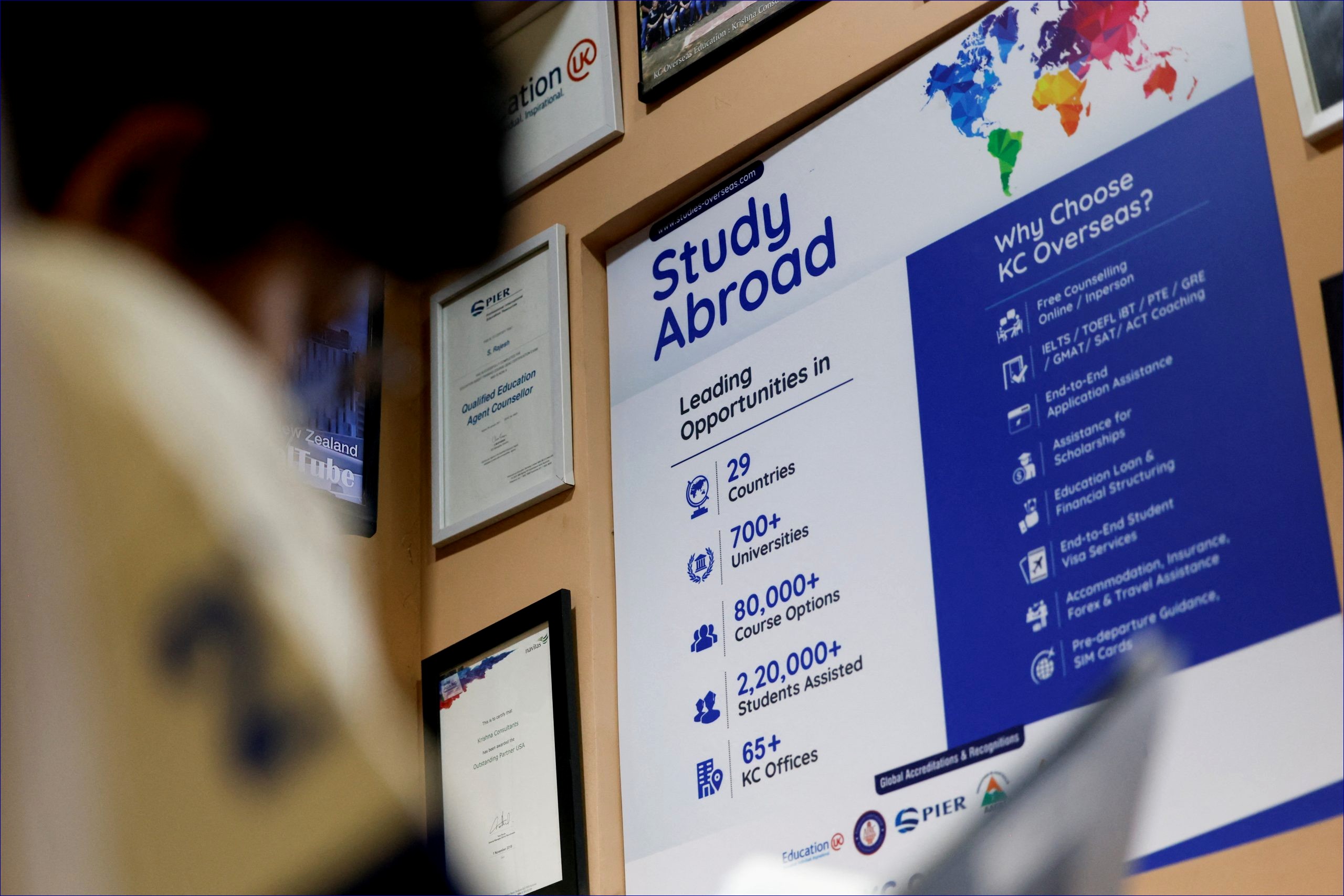
Growing Interest Among Indian Students in European Universities
Indian students are increasingly choosing Europe for their higher education, as seen in the case of A. Shrinikheathan from Chennai. The 22-year-old engineering graduate decided to pursue a master’s degree in Germany rather than follow the family tradition of studying in the United States. He is currently learning German, motivated by the lower costs of education in Germany as well as the country’s strong industrial ties.
This trend reflects a broader shift where Indian students are considering European universities due to the recent India-EU trade deal, which provides easier mobility options, alongside stricter U.S. immigration regulations. Many students and advisors agree that the allure of the “American Dream” is fading, leading to greater interest in Europe.
Shrinikheathan expressed his satisfaction with having educational choices beyond the “much more expensive” U.S. and Canada. If this trend continues, it could significantly alter the patterns of international student movement, with Europe stepping up as a competitive alternative to North America.
According to education consultants, tuition fees in Europe can be 50% to 80% lower than those in the U.S. This, along with cheaper living costs, contributes to the rising popularity of European institutions. An official from the EU noted that Indian students are valued for their creativity and cultural diversity, enhancing educational environments across Europe.
Recent government data shows that the number of Indian students studying abroad fell from over 908,000 in 2023 to approximately 626,000 in 2025. This decline is attributed to rising costs and intense visa restrictions in the U.S. and other popular destinations, such as Australia and the UK. In response, the U.S. recently announced changes to tighten its visa policies for foreign students.
After the signing of the trade deal in January, Indian interest in European education has surged, thanks to clearer post-study work options and better recognition of Indian qualifications.
Arnav Kumar, co-founder of a study-abroad platform, emphasized that the EU is now actively seeking Indian talent, marking a significant change in how major economies attract skilled individuals. The framework allows for structured pathways from education to employment, with expectations of a 60% to 70% increase in the flow of students and professionals between India and Europe over the next few years.
Interest in specific countries is also growing: students are drawn to Germany for engineering, the Netherlands for work-life balance, and Portugal for affordable postgraduate research.
Despite these opportunities, challenges remain. Students are reminded that studying in a foreign country doesn’t guarantee employment. Skill development is essential for fostering job opportunities.
Language barriers, housing shortages, and competition for jobs have been highlighted by students considering moving to Europe. Concerns about political attitudes in some European regions are also on their minds.
Recent data indicates that Indian enrollment in countries like the Netherlands is on the rise. The Eindhoven University of Technology has experienced a notable increase in applications, while Leiden University has also seen more Indian students enrolling in its master’s programs.
Whether this increasing interest translates into long-term enrollment will depend significantly on how effectively the new trade agreements are implemented. As perceptions of studying in Europe change, students like T. Suthir from Chennai are starting to see Europe as a favorable destination for their education.
