
Understanding July 4th: American Independence Through Different Eyes
As I walk down the hallway at work, my co-worker Casie stops me and asks, “Where will you be watching the fireworks?” I blink for a moment, unsure of what to say.
“Oh, you mean the July 4 fireworks!” she clarifies, noticing my confusion. “Have you made any plans? This year is special because it marks 250 years of independence!”
Having moved from Sweden to the U.S. just a year ago, I’m still getting used to American traditions. My time here has shown me that people outside the U.S. often think they understand the country, thanks to its widespread influence in music, films, and tech. However, familiarity doesn’t really equal understanding.
The Fourth of July is one such example. I know it from TV shows and movies—flags, fireworks, barbecues, and parades. But as the country celebrates 250 years, I’m eager to learn what this day means to native Americans and immigrants alike, for those who were born into its history and for those who have chosen to make it their home.
What I discover is that this celebration isn’t just about fun; it’s filled with deeper feelings of gratitude and anxiety, belonging and caution, pride and embarrassment. The dream of America is still alive but is no longer taken for granted.
A Shifting Perspective
To dive deeper into these feelings, I spoke with Shylashree Edalur, a physician who moved from India to Texas 30 years ago. “America has been my home since I was 24,” she shares. “I had my children here, and they are American citizens.”
Her story reflects a traditional Indian view of America—a place where hard work can lead to a better life. “For me, the American dream is real,” she asserts, echoing what many Indians believe about the U.S. being a place where anyone can thrive if they work hard enough.
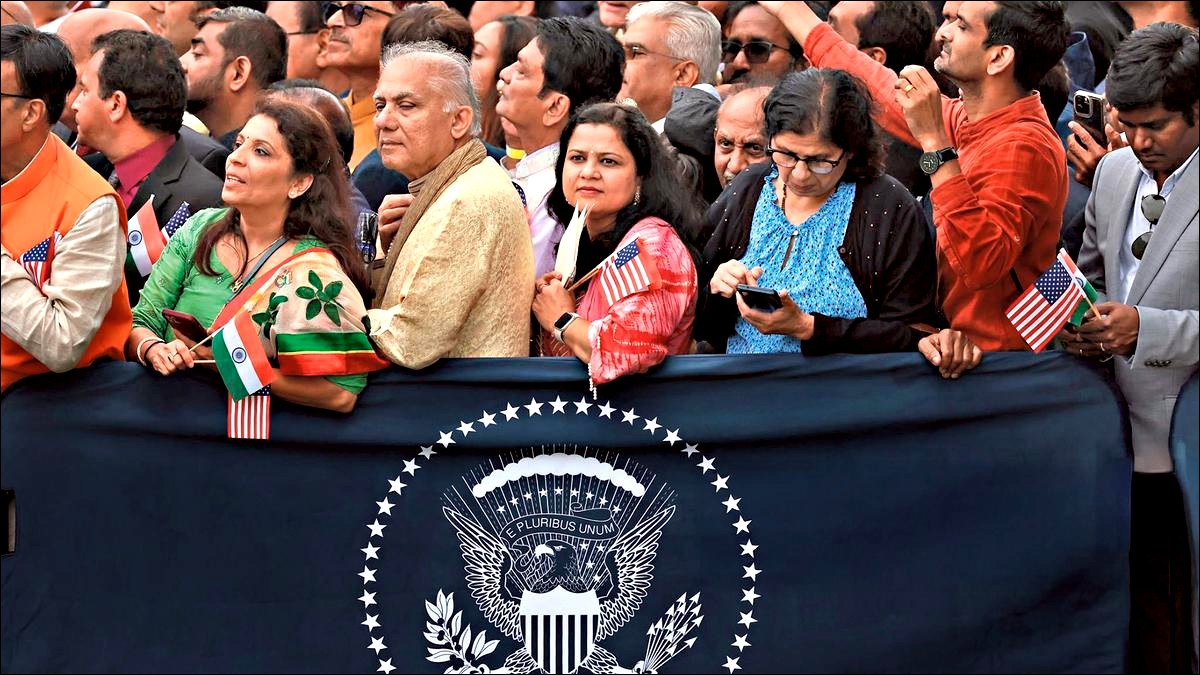
Currently, about 5.2 million Indian Americans call the U.S. home, making up the second-largest Asian group in the country. In 2023, Indian American households had a higher average income than many other American families. I think back to my graduating class from IIT Delhi in 2004—many of us dreamed of studying in the U.S., eager to live the American Dream.
Yet, even Shylashree acknowledges that America feels more tense today. “I haven’t faced discrimination directly,” she admits, “but I sense unease and intolerance among people.” Conversations about politics now intrude on festive events like July 4, making her cautious about sharing her opinions.
This careful navigation expresses the complex emotions often felt by immigrants. One can love a country while still being cautious about what they say—a reflection of dual identities.
Changing Times
Avinash, a tech professional who graduated from IIT and now works in America, represents another facet of the Indian experience here. “I was always excited about studying in the U.S. but wasn’t sure I wanted to stay,” he explains. He saw the opportunities but still felt connected to India.
Eventually, the chance to work at Microsoft in Seattle kept him here. “It felt like a dream come true,” he recalls. Yet, he too bears doubts about the U.S.’s future as a global leader. “There’s fantastic growth happening in India now,” he notes, reflecting a new outlook that doesn’t entirely reject America but recalibrates his view of it.
In this evolving landscape, young people like Nikhil, who will soon move from India to pursue graduate studies in the U.S., illustrate yet another shift. A U.S. citizen by birth, Nikhil has returned to India after spending part of his childhood in the U.S. Now, he sees the U.S. as essential for his career in tech, driven by the need for cutting-edge research opportunities.
A Grand Experiment
Nishq Mody, born in the U.S. to an Indian father and an English mother, embodies a unique perspective shaped by his experiences in both countries. He sees America as a grand experiment of democracy, despite its flaws. “Sometimes, reality falls short of the ideals,” he acknowledges, “but the founding ideas remain powerful.”
For Carrie Miller, a Texan accountant with deep family roots in American history, July 4 is a personal celebration. Her ancestors faced hardships to settle in America, and she believes the country has achieved a lot despite its flaws. “America has done much good in the world,” she says, emphasizing the importance of democracy to correct mistakes.
Nicole Zibili, an English teacher with Nigerian roots, reflects a more complex stance. While she sees America as a land of opportunity, she no longer feels excited about July 4. Her children embody two opposing views: one sees America as the best place on Earth, while the other has distanced himself from it.
A New Chapter
At 250 years, America remains a hub of wealth and innovation, yet it grapples with rising inequality and anxiety over immigration. As families gather for fireworks and barbecues, the question looms: What does America mean today?
From gratitude to skepticism, perspectives vary. For some, America is a place of opportunity; for others, it’s a mixed blessing. As for me, I plan to join the celebrations in Dallas this year and immerse myself in the sights and sounds of the parade. Watching a diverse group of people come together will be a moment to reflect on America’s unfolding story.
