
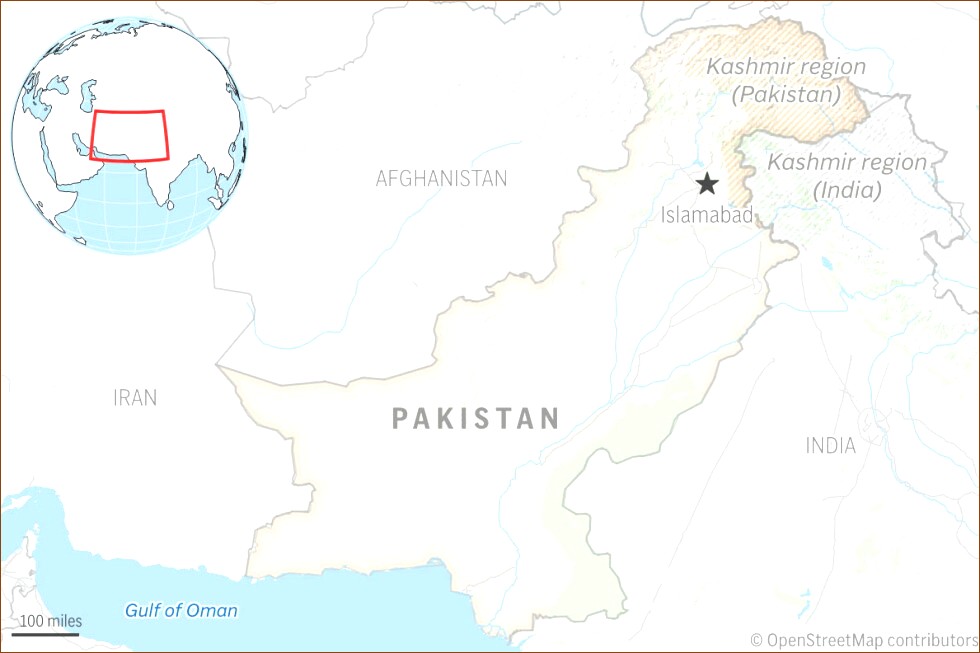
Pakistan Raises Alarm Over Water Disputes with India
ISLAMABAD — On Tuesday, Pakistan’s government cautioned that any attempt by India to cut off its water supply under the Indus Waters Treaty could be seen as “weaponizing water.” Officials stressed that such actions could seriously threaten peace in the region.
During an international seminar discussing the 1960 treaty, which manages the water distribution between the two neighboring countries, Foreign Minister Ishaq Dar and other officials voiced their concerns. The agreement has faced difficulties since India halted its participation following a deadly attack in Kashmir that left 26 tourists dead. India accused militants in Pakistan of the attack, a claim that Pakistan firmly denied, while offering to help with an unbiased investigation.
The incident marked a sharp decline in relations between the two nations, leading to the downgrading of diplomatic ties, closing of key border crossings, and revocation of visas for each country’s citizens. Tensions increased further with missile exchanges in May 2025, although a ceasefire was announced later on by U.S. President Trump. Since then, relations have remained tense.
At the seminar, Dar emphasized that water should never be used for political reasons. He highlighted the importance of sharing water resources positively, advocating for cooperation and respect for international law. “Shared waters should connect nations, not divide them,” he stated.
Describing water as vital for human dignity and economic development, Dar argued that rivers across borders should be a source of collaboration rather than conflict. He labeled India’s 2025 decision to suspend the treaty as “illegal,” asserting that Pakistan views the agreement as valid and binding. “No one can unilaterally suspend a treaty without proper provisions,” he added, urging all parties to honor international agreements genuinely.
Dar reiterated that any move by India to interfere with the water supply allocated to Pakistan would be treated as a serious offense, referencing a decision made by Pakistan’s National Security Committee after India’s suspension announcement.
In recent months, Pakistan has accused India of breaking the treaty, claiming that India has reduced water flows in the Chenab River. However, there has been no response yet from India regarding these allegations.
Furthermore, Information Minister Attaullah Tarar asserted that the treaty cannot be changed or suspended without mutual consent. He pointed out the increasing necessity to uphold the agreement, especially amid the challenges of climate change and water scarcity affecting the region.
The Indus Waters Treaty, brokered by the World Bank and established in 1960, specifies water rights between the two countries, with India managing the eastern rivers and Pakistan receiving the western river waters. Despite multiple conflicts between India and Pakistan, including wars in 1965, 1971, and the Kargil conflict in 1999, the treaty had endured as a crucial agreement during decades of disputes over Kashmir.
