
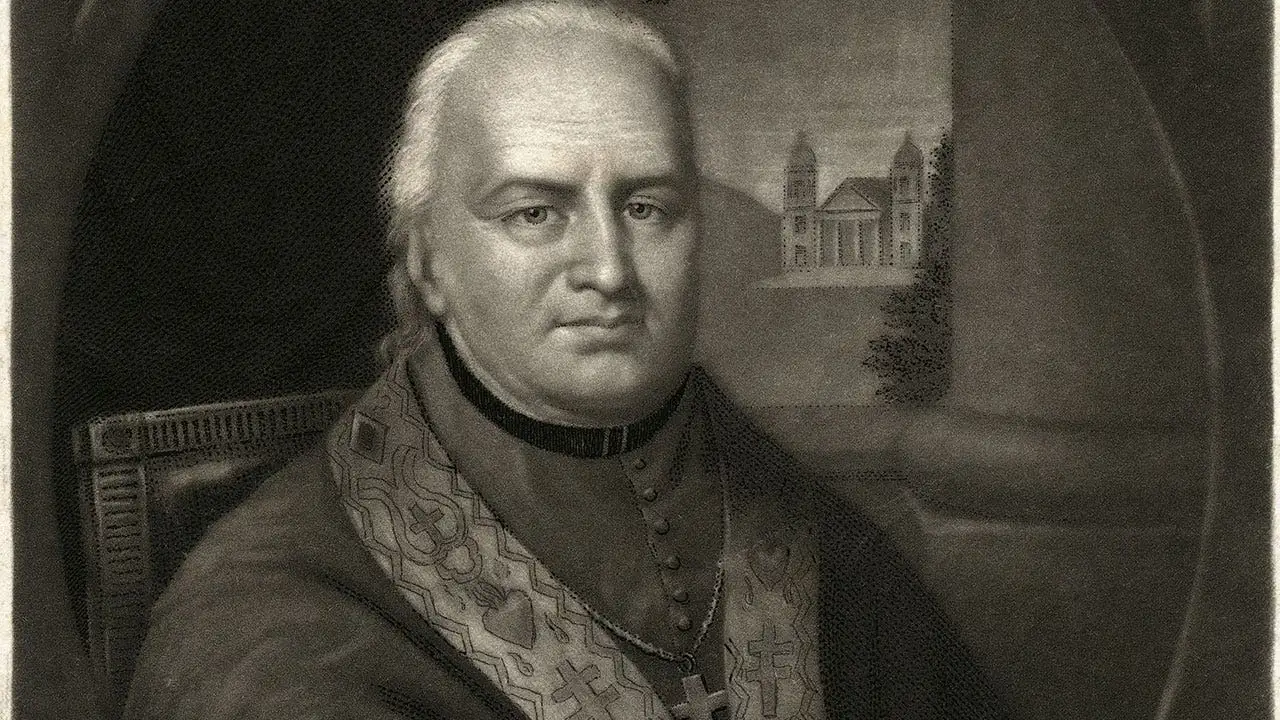
As the United States gears up for its 250th anniversary, historians are revisiting important documents from the country’s founding era that outline its core values. One such document is a rare correspondence from 1790 between John Carroll, the first Catholic bishop in the U.S., and President George Washington. This exchange provides answers to a key question of the time: Could Catholics, who had been treated with suspicion during British rule, truly be accepted as equals in the new nation?
This original letter from Carroll is housed closely to Dr. Kevin Butterfield’s office in the Library of Congress, specifically among the George Washington Papers. Butterfield, who leads the Manuscript Division at the Library, talked about how Washington was determined to connect with citizens throughout 1790, his first year in office. He received numerous letters seeking assurance about their place in the new government.
In March 1790, Carroll, along with other Catholic leaders, reached out to Washington to clarify whether Catholics would be included as full citizens in the fledgling republic. At that time, Carroll had recently been appointed bishop as part of the first diocese established in Baltimore.
Michael Breidenbach, a university dean, highlighted that this exchange helps us remember that Catholics played a vital role in shaping the nation, not just seeking to benefit from it. “As America approaches its 250th anniversary, there’s an ongoing debate about the religious roots of the nation,” he stated, noting that the Catholic contributions to American history are often overlooked.
Carroll’s letter expressed a desire for religious liberty and a place in the new government. It acknowledged the sacrifices of Catholics during the Revolutionary War alongside other patriots. Carroll emphasized their contributions, reminding Washington that Catholics had fought for independence too.
Historian Catherine O’Donnell explained the historical context, mentioning that before the Revolution, Catholics faced severe restrictions in England and its colonies. Many viewed them with distrust, fearing their loyalty to the Catholic Church over their country.
Despite the discrimination he experienced, Carroll believed that the new American republic provided a better opportunity than returning to an established Catholic state. He saw the separation of church and state as a benefit, believing it would provide true freedom.
The letter to Washington was both heartfelt and strategic, aiming for a positive affirmation of Catholics’ rights in the nation. Carroll was joined by several prominent Catholic figures, including Charles Carroll, the only Catholic signer of the Declaration of Independence. They argued that their contributions during the war merited equal rights as citizens.
Breidenbach noted that this correspondence illustrates the remarkable journey of American Catholics from being viewed as outsiders to becoming trusted members of a new republic. Washington’s response confirmed that he appreciated these contributions, suggesting that Catholics were already enjoying the benefits of the new government.
Butterfield remarked that this exchange reflected Washington’s broader vision for an inclusive nation. His message was clear: good citizenship transcends religious beliefs, as long as one abides by the law.
Even though some states retained restrictions for years, the new federal government aimed for a different approach. The Constitution’s Article VI had already prohibited religious tests for office holders, paving the way for greater religious freedom.
Carroll’s letter endures in the Library of Congress, reminding us of the delicate balance between liberty and prejudice in America’s early history. As we approach this milestone, it teaches us that public leadership and dialogue can help integrate ideals of fairness and justice into the fabric of society.
