Close Menu
  • Home
  • World News
  • India News
  • Business News
  • Health
  • Sports
  • Indian Diaspora In US
  • Technology
  • Bollywood
  • Education
Facebook X (Twitter) Instagram
Friday, June 12, 2026
Breaking News
  • Families Remember Air India Crash Anniversary with Vigils and Reflections
  • SpaceX Takes Flight with Groundbreaking IPO Launch
  • UCF Researchers Explore Wing Designs to Propel Drone Innovation
  • Hrithik Roshan Poised to Step In for Shah Rukh Khan in Jailer 2? Here’s the Inside Scoop!
  • New Research Debunks Myths: No Level of Alcohol Considered Safe
  • Virat Kohli Cheers for Williamson: “Great job, my friend—this is just the start!”
  • India’s Chief Economic Adviser: Capital Gains Tax Reforms Less Justified for Stocks than Bonds
  • Drone Incursions from North Korea Result in 30-Year Sentence for South Korea’s Yoon
Facebook X (Twitter) Instagram
India Bulletin
Advertisement
  • Home
  • World News
  • India News
  • Business News
  • Health
  • Sports
  • Indian Diaspora In US
  • Technology
  • Bollywood
  • Education
India Bulletin
Home»Technology»UCF Researchers Explore Wing Designs to Propel Drone Innovation
Technology

UCF Researchers Explore Wing Designs to Propel Drone Innovation

June 12, 20263 Mins Read
Facebook Twitter Email
Share
Facebook Twitter Email


Enhancing Amphibious Vehicles with Wing Shape Research

Key Points:

  • UCF’s Associate Professor Samik Bhattacharya is leading research on wing designs that could boost the performance of the U.S. military’s amphibious vehicles.
  • The findings may also assist in search-and-rescue efforts and disaster response scenarios.
  • This project is funded by a grant from the DEVCOM Army Research Office.

Flying from the water into the sky, like a bird or a mobula ray, seems effortless. However, for drones, this maneuver is quite challenging. Researchers at the University of Central Florida (UCF) are exploring how wing shapes and movements impact the crucial transition from water to air. Their findings could significantly advance the design of amphibious drones.

UCF’s Associate Professor Samik Bhattacharya, along with aerospace engineering master’s student Dominic Polidoro, is studying the forces that come into play when a drone transitions from water to air, a process known as egress. This nine-month project, backed by the U.S. Army Combat Capabilities Development Command’s grant, aims to create mathematical models that enhance military amphibious technology.

“This technology can enable seamless operations between air and water without needing two different vehicles,” Bhattacharya explains. The potential applications for this research extend beyond the military, with possibilities for use in civilian rescue operations and environmental monitoring.

Bhattacharya envisions a future where amphibious drones can dive and ascend smoothly, carrying more weight and operating autonomously in complex environments. He states, “In 10 years, we could see these vehicles performing reliable transitions, far surpassing today’s models.”

While there has been significant research on how drones enter water, less is known about their exit. Past studies indicate that as a wing emerges from the water, it experiences an initial increase in lift, followed by a sudden drop. Understanding this phenomenon is crucial for improving drone stability.

Bhattacharya says, “Typically, when a UAV exits the water, it experiences a surge of lift, followed by a sharp decline.” This instability can result in a loss of control, highlighting the importance of understanding this process to improve drone design.

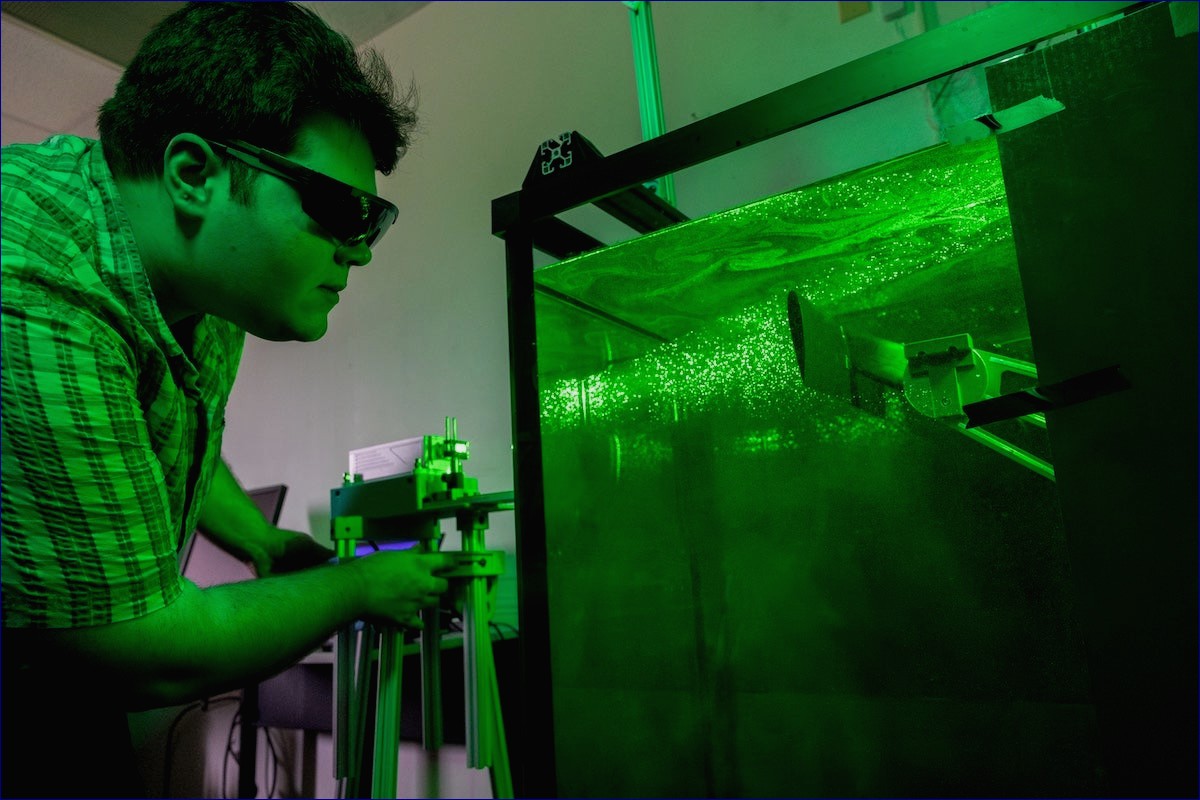
In UCF’s Experimental Fluid Mechanics Lab, Bhattacharya and Polidoro utilize a water tank and 3D-printed wings to examine how surface ripples, waves, and vortex shedding affect the egress process. Bhattacharya notes the challenge of isolating these effects, as they occur in quick succession and influence one another significantly.

The team recently shared some of their findings at the American Institute of Aeronautics and Astronautics SciTech Forum earlier this year.

About the Researcher:
Samik Bhattacharya, who has been with UCF since 2016, holds a Ph.D. in aerospace engineering from The Ohio State University, a master’s from Auburn University, and a bachelor’s degree in mechanical engineering from the National Institute of Technology in Warangal, India.

Aerospace Engineering College of Engineering and Computer Science Department of Mechanical and Aerospace Engineering mechanical engineering Research Samik Bhattacharya
Share. Facebook Twitter Email
admin
  • Website

Related Posts

IT Leaders Grapple with Surging Unexpected AI Expenses

June 12, 2026

Why Anthropic’s S-1 Could Transform the Landscape for European AI Startups This Year

June 12, 2026

David Gee to Share Insights at EDGE 2026: The Voice of Tech Buyers

June 12, 2026
  • Facebook
  • Twitter
  • Instagram
Don't Miss

Families Remember Air India Crash Anniversary with Vigils and Reflections

SpaceX Takes Flight with Groundbreaking IPO Launch

UCF Researchers Explore Wing Designs to Propel Drone Innovation

Hrithik Roshan Poised to Step In for Shah Rukh Khan in Jailer 2? Here’s the Inside Scoop!

Started in 2004, India Bulletin is the largest and
most read South Asian publication
in Chicago and surrounding Midwest.

  • Home
  • About Us
  • Contact
  • Advertise With Us
  • Privacy Policy
  • Terms of Use
  • Disclaimer
  • CCPA
News
  • Bollywood
  • Business News
  • Health
  • India News
  • Indian Diaspora In US
  • Sports
  • Technology
  • World News
Facebook X (Twitter) Instagram

Type above and press Enter to search. Press Esc to cancel.

Accessibility Adjustments

Powered by OneTap

How long do you want to hide the toolbar?
Hide Toolbar Duration
Select your accessibility profile
Vision Impaired Mode
Enhances website's visuals
Seizure Safe Profile
Clear flashes & reduces color
ADHD Friendly Mode
Focused browsing, distraction-free
Blindness Mode
Reduces distractions, improves focus
Epilepsy Safe Mode
Dims colors and stops blinking
Content Modules
Font Size

Default

Line Height

Default

Color Modules
Orientation Modules