
New Teacher Ready to Make an Impact with Technology
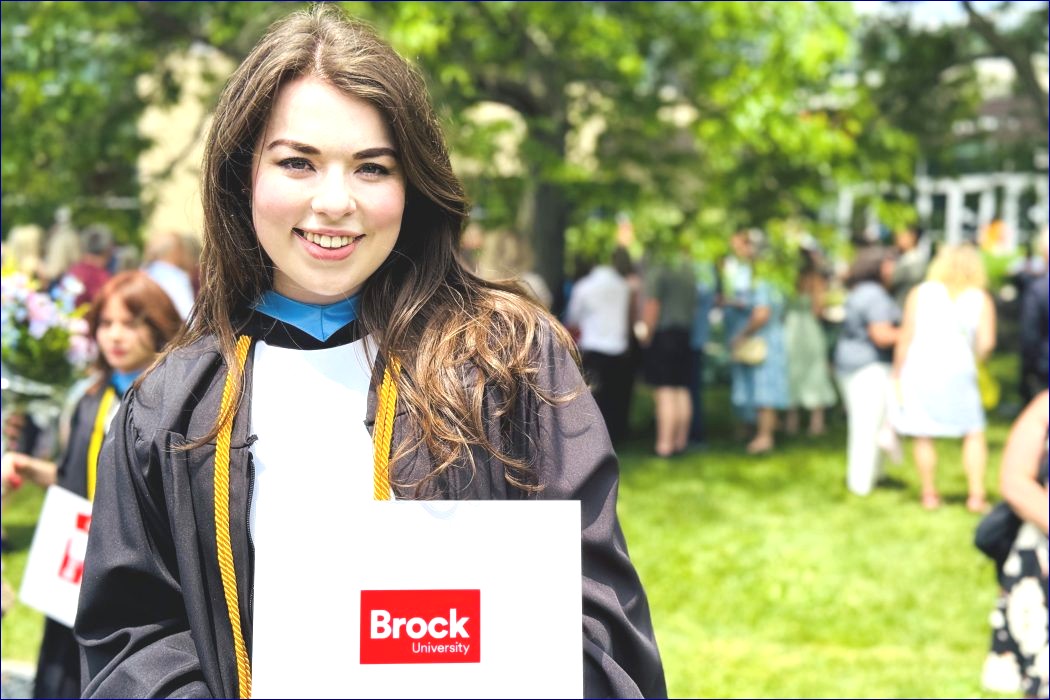
Maisyn Kwinecki is set to kick off her teaching career with a strong belief that technology can help break down barriers and create fair learning opportunities for all students. This year, she is part of the first graduating team of Brock Concurrent Teacher Education students specializing in Interactive Arts and Digital Media (IADM). The graduation ceremony took place on June 11, marking a significant milestone in her educational journey.
Kwinecki shared that she has gained valuable insights about the powerful role technology plays in how students learn and interact with the world. With a passion for both teaching and technology, she found the IADM and education program to be the perfect match for her interests.
The IADM program focuses on combining digital technology with the humanities, preparing future educators to become innovative leaders in their fields. Students learn about important topics like representation, accessibility, and the social impact of media, while also acquiring hands-on skills through projects involving things like virtual reality and video games.
Many of Kwinecki’s courses were rooted in digital humanities, allowing her to explore how digital platforms are designed and how they can impact children’s feelings of self-worth and belonging. “This has reinforced my belief that educators need to understand the digital spaces students use every day, so we can help them navigate those areas safely,” she commented.
Kwinecki views technology as a crucial tool for making education more inclusive, especially for students with learning challenges. “Digital tools are essential for providing varied instruction that meets diverse needs,” she said.
David Hutchison, a professor in Educational Studies and Digital Humanities, emphasized the uniqueness of the IADM program. It doesn’t just focus on traditional subjects like math or science; it equips students with skills that span various educational disciplines.
Graduates of this program are not only well-versed in theory and technical skills; they are also seen as future innovators in their schools. Hutchison noted that many of them will be the go-to teachers for integrating new technologies into the classroom.
“These graduates are experts in designing curriculum and are keenly aware of the potential and risks of using technology in education,” he said. The skills they acquire are important not just for teaching, but also for supporting students and families throughout their educational journeys.
Kwinecki feels ready to enter the teaching world, eager to use technology in ways that truly benefit her students. “Brock provided me with more than just academic knowledge; it gave me a supportive community that helped build my confidence and professional aspirations as an educator,” she said.
