
New Delhi
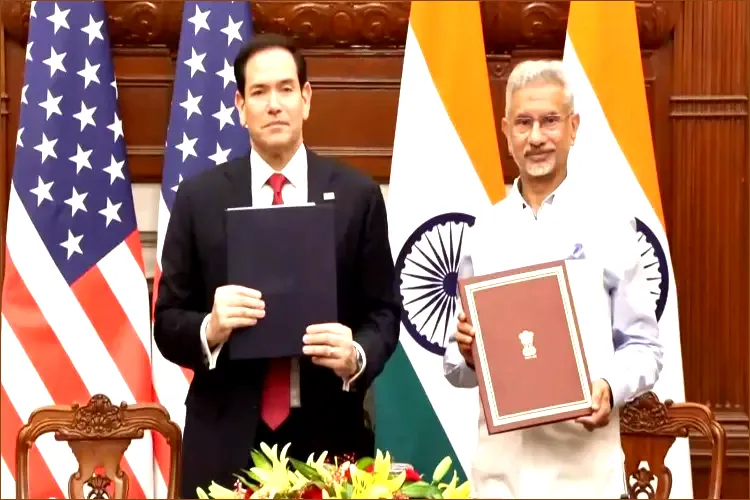
India and the United States have signed a new agreement to enhance the supply, mining, and processing of vital minerals and rare earth elements.
External Affairs Minister S. Jaishankar revealed this significant step during a press conference, emphasizing its importance amidst today’s global challenges, following discussions between leaders and the Quad Foreign Ministers’ meeting.
“We are officially signing a bilateral framework today focused on the secure supply, mining, and processing of critical minerals and rare earths,” Jaishankar stated.
He pointed out that securing these resources was a central topic during the Quad meeting, stressing that this agreement is crucial and timely, whether pursued directly between India and the U.S., through the Quad, or in collaboration with other like-minded nations.
The framework aims to strengthen cooperation throughout the entire critical minerals and rare earth supply chain. Jaishankar explained that this partnership will involve mining, processing, recycling, and related investments.
“This will enhance reliable and diverse supply chains and facilitate collaboration in financing and managing critical minerals and rare earths effectively,” he added.
Describing the agreement as a sign of the growing partnership between Washington and New Delhi, Jaishankar concluded, “This is another indication of how closely we are working together in a world filled with challenges and opportunities.”
U.S. Secretary of State Marco Rubio acknowledged the significance of India to the United States, stating that the agreement is a concrete example of their strategic alliance.
“I have discussed many times, during my stay here, how vital the U.S.-India relationship is for our national interests. Today’s signing is a clear demonstration of that,” Rubio emphasized.
He highlighted the shared strategic interests of India and the U.S. in ensuring long-term access to critical minerals and supply chains essential for their innovative economies.
Critical minerals and rare earth elements are key components in high-tech electronics, clean energy technologies, defense systems, and electric vehicles. The move to diversify supply chains comes as countries work to reduce dependence on single-source suppliers, particularly China, which currently leads in global processing.
