
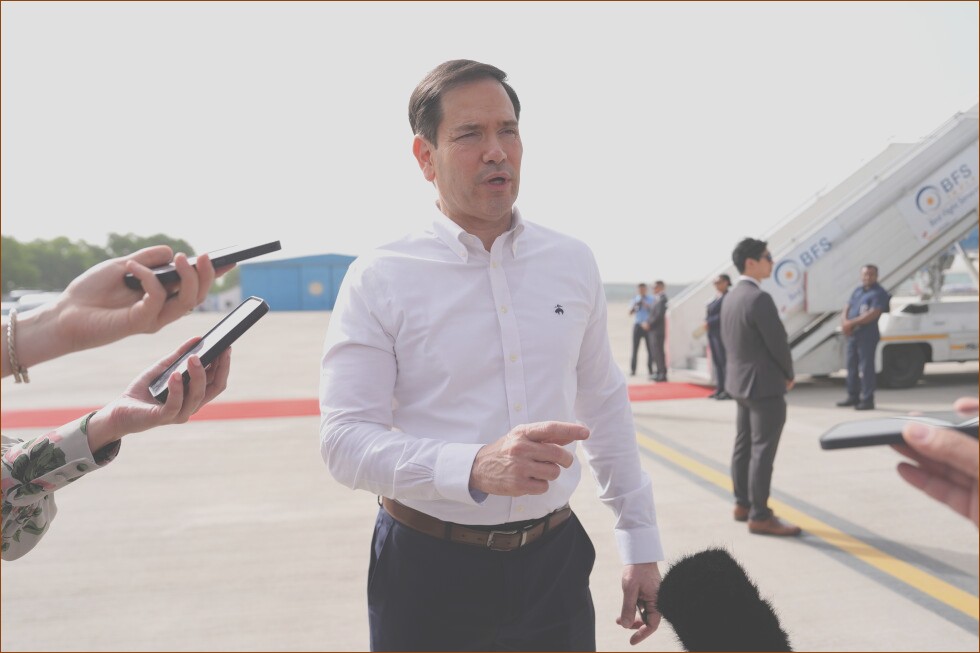
New Delhi — U.S. Secretary of State Marco Rubio recently visited India, highlighting efforts by the United States and India to strengthen their relationship amid some recent challenges. This visit comes as both nations aim to enhance their strategic and economic partnerships, even with some ongoing trade disputes.
During his meetings with Indian Prime Minister Narendra Modi and Foreign Minister Subrahmanyam Jaishankar, Rubio emphasized the importance of collaboration in areas such as trade, energy, defense, and maritime security. He shared a hopeful outlook for a wider trade agreement between the two countries.
Rubio’s four-day trip also includes discussions with officials from the Quadrilateral Security Dialogue, commonly known as the Quad, which involves India, Australia, Japan, and the United States.
Growing Trade Tensions
India-U.S. relations have faced difficulties recently, particularly after the previous U.S. administration imposed significant tariffs on Indian exports. This was partially due to India’s ongoing purchase of Russian oil, which upset Indian officials and raised questions about the reliability of the U.S. as a partner.
However, the two countries reached a temporary trade agreement that helped ease some tariffs and increased India’s imports of U.S. goods, particularly energy products. Nevertheless, broader discussions on a more comprehensive trade deal are still ongoing.
Despite these challenges, India and the U.S. are strengthening their defense and technology collaborations, with the U.S. seeing India as a crucial ally in countering China’s influence in the Indo-Pacific region.
The Future of the Quad
Rubio’s visit also focuses on discussions with foreign ministers from India, Australia, and Japan, as they explore the role of the Quad alliance. This group serves as an essential platform for cooperation on issues like maritime security and regional strategy, especially as China extends its military and economic reach in the Indo-Pacific.
The Quad nations have frequently criticized China’s actions in the South China Sea, accusing it of militarizing contested waters. Meanwhile, China has claimed that the Quad is attempting to limit its regional influence.
With recent trade disputes between the U.S. and India, attention on the Quad has increased. Experts suggest that India’s growing global influence is linked to its position as a counterbalance to China’s power, which means any changes in U.S. policy towards China could impact India’s strategic importance.
Energy Concerns due to Global Strife
The ongoing conflict in Iran has also raised concerns for India regarding energy supplies, particularly through the crucial Strait of Hormuz, which is vital for crude imports. Rising fuel prices are putting additional pressure on the Indian economy.
Jaishankar noted that India plans to keep increasing energy imports, including from the U.S., and diversify its sources to maintain market stability and affordability. Despite challenges, India’s purchases of discounted Russian oil have caused some friction with the U.S.
Washington is encouraging India to increase its imports of U.S. oil and gas, with Rubio underscoring the need for stronger energy cooperation during his meetings.
Cultural Engagements
Beyond official discussions, Rubio’s trip has included cultural activities. He began in Kolkata, visiting the headquarters of the Missionaries of Charity founded by Mother Teresa. He also attended a gala in New Delhi celebrating 250 years of U.S. independence.
Rubio’s itinerary features visits to Agra and Jaipur, both famous for their stunning monuments and rich history, which are popular tourist spots in India.
