
Colombia’s Hippo Dilemma: A Growing Debate and Possible Rescue
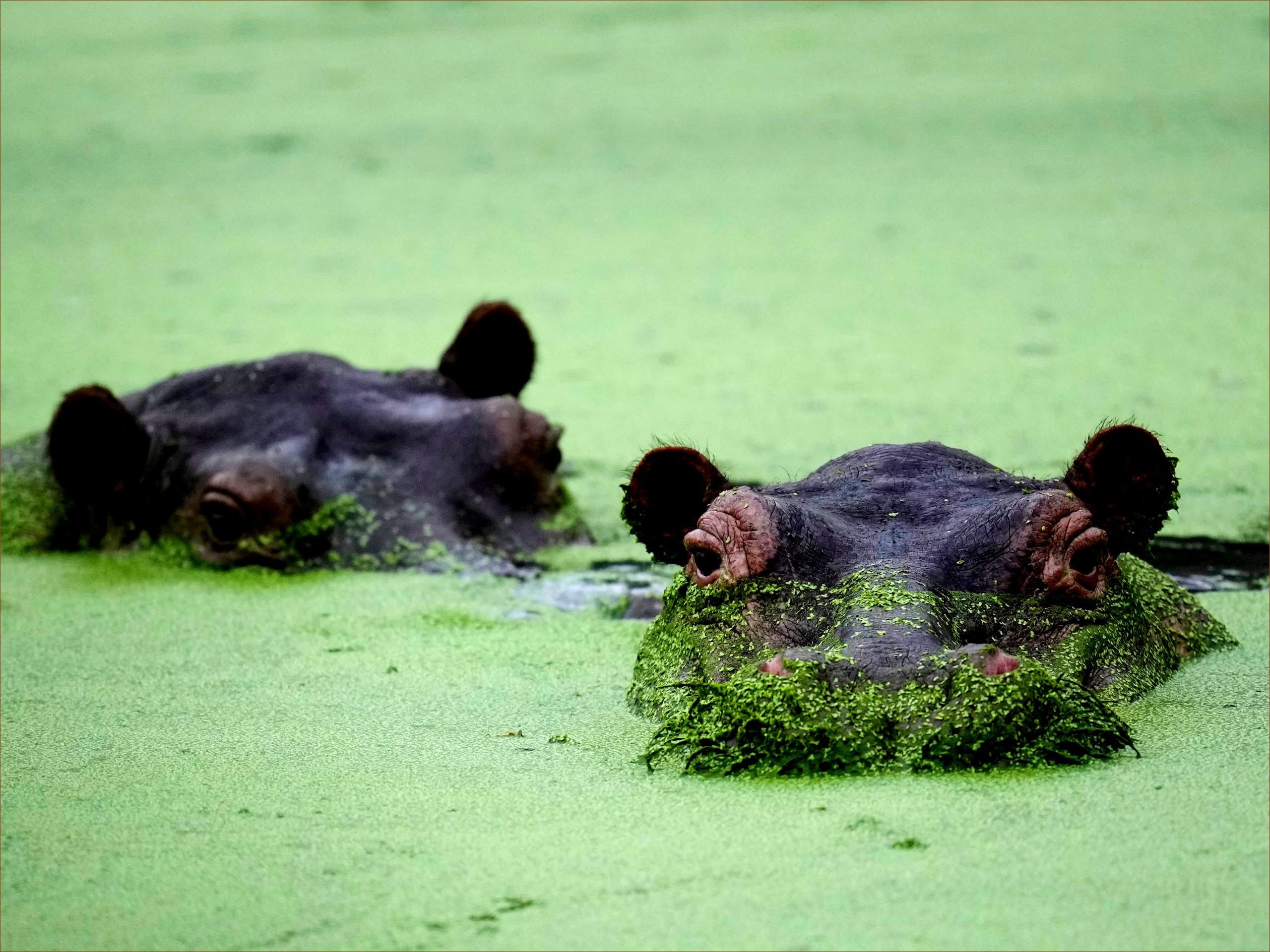
DORADAL, Colombia—In the central town of Doradal, the unique sounds of hippos have become a part of daily life. Every afternoon, residents and visitors gather by a nearby lake, enjoying drinks while observing these large creatures floating in the water.
“This has become a major draw for our town,” said Lina Morales, a local hotel worker.
However, these hippos—the only wild herd outside Africa—are also causing concerns for the community and the environment. Recently, the Colombian government proposed culling some of these animals, rekindling an ongoing debate. Adding to the discussion, an Indian billionaire has expressed interest in relocating up to 80 hippos to his private wildlife reserve in India.
“We need to approach this scientifically,” suggested Sergio Estrada-Villegas, a biology professor at Rosario University in Bogotá. “We should consider the entire ecosystem.”
These hippos are descendants of four individuals smuggled into Colombia in the 1980s by infamous drug lord Pablo Escobar. Escobar kept a private zoo at his estate near Doradal, which included animals like elephants and giraffes. After the government confiscated his property in the 1990s, no one captured the hippos, leading to a rapid population increase as they faced no natural predators. Today, experts estimate around 200 hippos inhabit the region.
Some believe it’s time for culling due to environmental concerns. Biologist Nataly Castelblanco-Martinez warned that hippos contribute significant waste to local waters, which alters water chemistry, affecting oxygen levels and harming aquatic plants.
“With fewer plants, the whole food chain is impacted,” she explained.
Yet, in Doradal, many have embraced the hippos, celebrating them as a community asset. Statues of hippos can be found throughout the town, and some locals even offer hippo safaris to tourists. Tania Galindo, a local business owner, emphasized, “They are part of our community now. There’s no other place outside Africa with wild hippos.”
Historically, efforts to manage the population through sterilization—first through surgery and later with contraceptives—proved costly and challenging, making a comprehensive solution difficult. Castelblanco-Martinez argues that culling may be a more feasible approach.
However, things may change with the proposal from Anant Ambani, the Indian billionaire. He has offered to relocate a number of hippos to his Vantara wildlife reserve in Gujarat, India.
“This is certainly a major task,” said Estrada-Villegas, who remains doubtful about the feasibility of this rescue plan.
The hippos would need to be transported by large trucks about 150 kilometers to the nearest airport before eventually flying to India. This journey raises concerns about their safety and well-being during transit.
German Jimenez, a biologist at Javeriana University, noted another challenge: the hippos’ habitat needs. In the wild, each hippo requires a significant amount of space, and Ambani’s reserve might not provide adequate room for them, potentially leading to dependence on humans for care.
The Colombian government is currently evaluating this proposal while also considering its plans to manage the hippo population, which may still include culling some animals—a notion that has upset many residents in Doradal who have grown fond of the hippos.
Galindo hopes for solutions that do not involve harm. “Killing them should be the last resort,” she asserted. “These are healthy animals that did not choose to be here.”
