
India Strengthens Naval Defense with INS Aridhaman Commissioning
India’s naval capabilities have received a significant boost with the commissioning of the INS Aridhaman, the nation’s third nuclear ballistic missile submarine. This development enhances India’s nuclear triad, allowing for a continuous at-sea deterrent.
The INS Aridhaman was quietly commissioned on April 3 at the Ship Building Centre in Visakhapatnam. While there was no formal announcement, Defense Minister Rajnath Singh took to social media to express the vessel’s importance, stating: “Not words but power, Aridhaman.” Singh was in the city for another naval event, the commissioning of a frigate from the Project-17A program.
The addition of INS Aridhaman is pivotal for India’s nuclear strategy, which focuses on a no-first-use policy and an assured retaliatory strike capability. To maintain a continuous presence at sea, India requires at least three submarines: one actively on patrol while others are in maintenance or transition. With INS Aridhaman now operational, India has met this crucial operational threshold.
Before the INS Aridhaman, India launched its first indigenous submarine, INS Arihant, in the 1980s, which was commissioned in 2016. This submarine, part of a program to develop advanced naval technology, confirmed its nuclear strike capability during its first deterrence mission announced in 2018.
Following the INS Arihant, the INS Arighaat was commissioned in August 2024, rounding out India’s current nuclear submarine capabilities. Together, these submarines enhance the country’s deterrence strategy.
India’s ballistic missile defense includes a variety of missiles, such as the Prithvi and Agni series. The Agni-5, capable of reaching over 5,000 km, represents a significant advancement in mobility and storage due to its canisterized design, tested successfully in 2024.
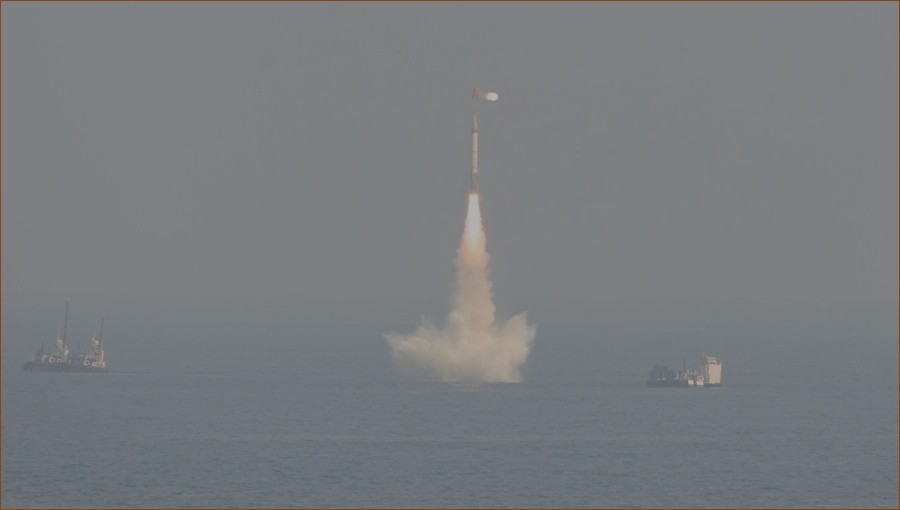
While SSBNs like the INS Aridhaman provide a reliable platform for second-strike capabilities, India still faces challenges. Current submarines are equipped with the K-15 missile, which has a limited range of 750 km. The INS Aridhaman and INS Arighaat are expected to carry the K-4 missile, with a promising range of 3,500 km, though it is not yet fully operational. The future aims include introducing the K-5 missile, expected to have a range of 5,000 km.
Looking ahead, India is also developing a fourth submarine, informally referred to as ‘S4,’ expected to be commissioned next year. Additionally, plans are underway for a larger ‘S5’ submarine, set to weigh around 13,500 tonnes and powered by advanced reactors.
There is growing interest in nuclear-powered attack submarines (SSNs) to enhance naval capabilities in the Indian Ocean. Currently, India operates 17 conventional submarines, many nearing the end of their service life. To address this, the Cabinet Committee on Security approved plans to design and build two SSNs, with the first likely to enter service around 2036-37.
In comparison, China operates over 60 submarines, including at least 12 nuclear-powered ones, highlighting the need for India to bridge this gap. As tensions with China persist, strengthening India’s naval capabilities will be crucial for regional security.
