
Discovery Suggests First Known Surgery from Viking Era
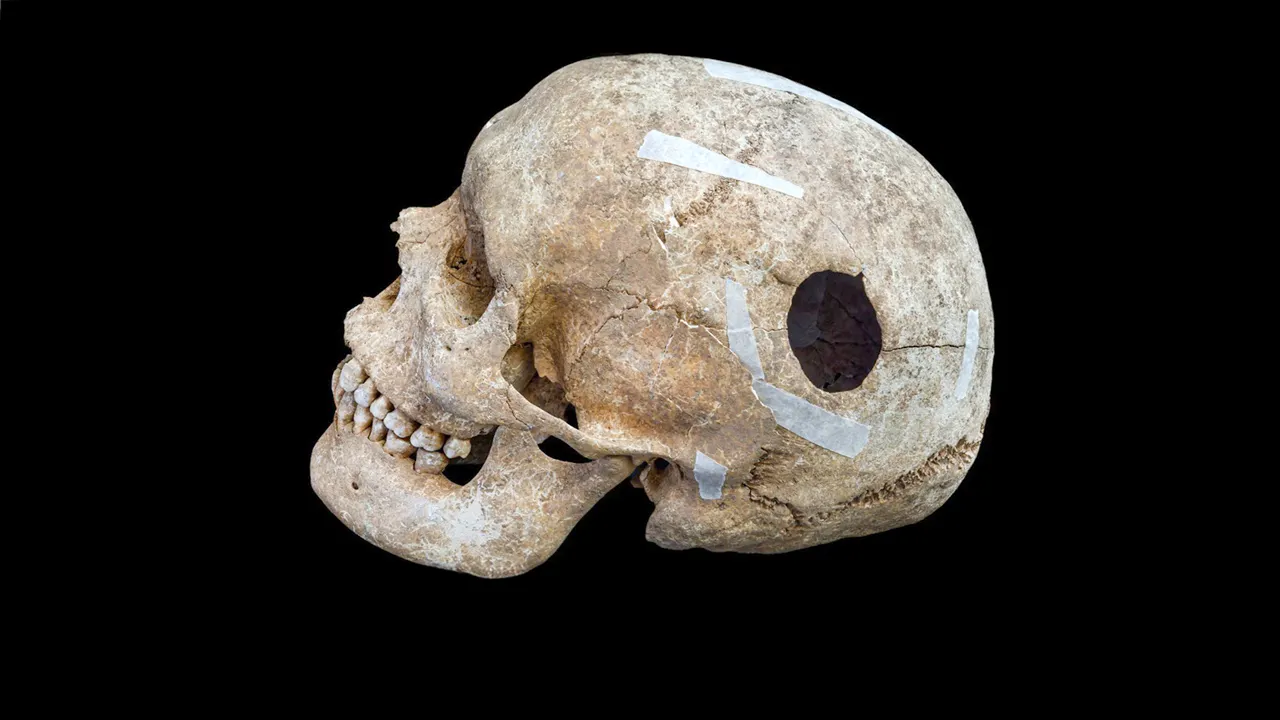
Archaeologists have recently found what could be the earliest evidence of surgery in history: a human skull from the Viking age that has a section removed.
This skull belongs to a young man, estimated to be between 17 and 24 years old, and dates back to the ninth century. The find, which was made during a training dig at the Wandlebury Iron Age hill fort, features an oval hole about 3 centimeters wide. Experts think this man underwent a procedure called trepanation, where a hole is drilled into the skull to treat health issues such as migraines or seizures.
One intriguing aspect of this discovery is the man’s stature. Standing at 6 feet 5 inches tall, he was significantly taller than the average male of that time, who typically stood around 5 feet 6 inches.
Dr. Trish Biers from the University of Cambridge explained that the man might have suffered from a tumor affecting his pituitary gland, leading to an excess of growth hormones. This condition could have caused severe headaches and increased pressure in the skull. The trepanation could have been an attempt to relieve that pain, a practice not uncommon today for head injuries.
In addition to the skull, the burial site revealed a puzzling mix of whole and dismembered bodies. Archaeologists discovered four intact skeletons, with some positioned as if they had been tied up, suggesting a grim scenario. Many of those buried appeared to be young men, leading researchers to believe the site may relate to a battle, skirmish, or even a mass execution.
Oscar Aldred, also from the Cambridge Archaeological Unit, indicated that the individuals buried here may have faced severe punishment connected to a well-known meeting point in the past. Some of the dismembered body parts could have been displayed as trophies before being buried with other victims. This discovery offers remarkable insight into the past practices of communities and medical procedures.
