
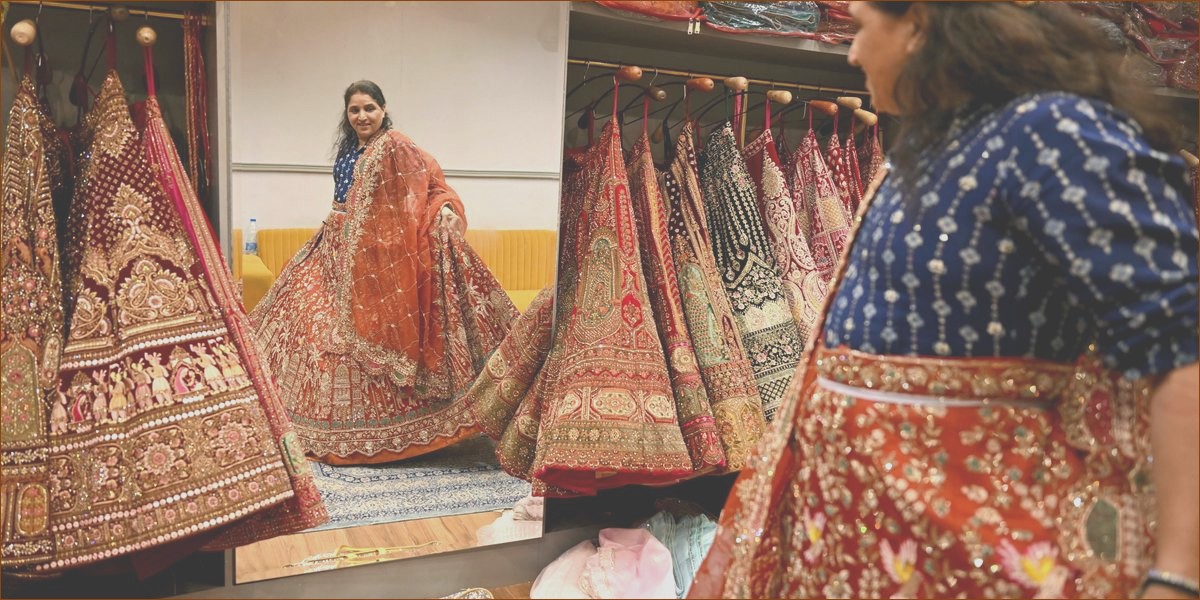
Recent changes in U.S. immigration policies, especially regarding the H-1B skilled-worker visa, are causing families in India to rethink marrying off their children to Indian citizens in the U.S. Matchmakers, academics, and prospective brides and grooms report growing concerns about job security and immigration status for potential partners.
The U.S. is home to the largest Indian community globally, housing about 2.1 million non-resident Indians (NRIs) who were previously considered excellent marriage candidates.
Since taking office in January, U.S. President Donald Trump has intensified measures to restrict immigration, affecting legal pathways to residency significantly. His changes to the H-1B visa program particularly impact Indians, who represented 71% of these visas last year.
New regulations include a hefty fee of $100,000 (£74,505). The H-1B visas allow companies to sponsor foreign professionals in specialized fields like science and technology, initially for three years, but they can be extended up to six years. Each year, the U.S. issues 85,000 H-1B visas through a lottery system, and India secures roughly three-quarters of these.
One example is 19-year-old Sidhi Sharma from Haryana, who had planned to marry someone in the U.S. with a prestigious job. However, she is now hesitant due to worries brought on by the immigration policies. “I always dreamed of settling in the U.S. after marriage, but now it feels like that door has closed,” she said.
While there are no official statistics on marriages between Indian citizens at home and those abroad, the social implications of immigration policies are significant. Anuradha Gupta, founder of a matchmaking service called Vows For Eternity, noted, “These policies might be crafted in Washington, but their effects are felt right at family dinner tables.” For many, marrying someone from the U.S. was seen as a path to financial stability and a better way of life, especially since such individuals often support extended families back in India.
According to data from U.S. Citizenship and Immigration Services, around 75% of the H-1B visas issued to Indians in 2024 went to men. Vanaja Rao, managing director of a matchmaking company, observed a noticeable decline in interest for NRI suitors since Trump took office, intensifying over the past six months due to ongoing uncertainties about immigration.
Some families are opting to postpone weddings entirely. A 26-year-old Indian man residing in Atlanta shared that he knows of three weddings delayed due to the changing policies. “Every time there’s speculation about H-1B visa restrictions, it impacts the marriage market,” he explained.
Harshita Yalamarty, an assistant professor at Toronto Metropolitan University, echoed these sentiments, recalling how past H-1B visa changes had similar effects on marriage decisions.
In response to the shifting landscape, some matchmaking services are adapting. Knot.dating, a premium platform, introduced a ‘U.S. visa filter’ in its app to help families assess the visa statuses of potential matches. Co-founder Jasveer Singh noted that many families are now particularly focused on understanding the immigration status of suitors before moving forward.
Since introducing this feature, about 1,000 NRIs have registered, with 60% holding H-1B visas. Notably, 81% of the new users are men, and Knot.dating requires male users to earn a minimum of ₹5 million (£42,465) annually, a figure much higher than what most recent graduates earn in India.
With the American dream feeling increasingly elusive, some Indian families are now casting their nets wider, looking toward Canada, the UK, Europe, and the Middle East for marriage prospects. Nikita Anand, founder of Wedding Tales Matrimony, noted that considerations around mobility and long-term stability are becoming crucial in marriage discussions. “It’s not just about them but about the future of their families,” Gupta added.
