
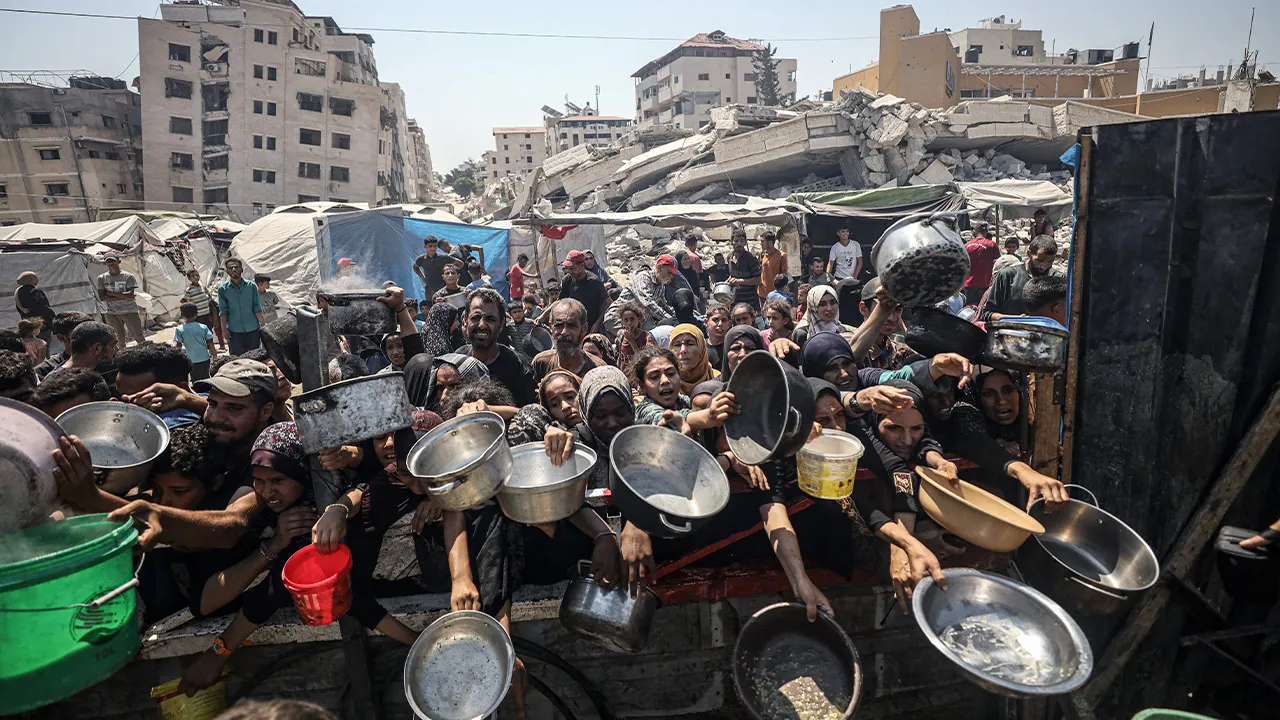
Ongoing Aid to Gaza Raises Questions About Famine Claims
As humanitarian aid continues to flow into Gaza, sparked by a ceasefire agreement, a leading expert has raised doubts about claims made by the Integrated Food Security Phase Classification (IPC) regarding famine conditions in the region this summer.
David Adesnik, vice president of research at the Foundation for Defense of Democracies, said that while the IPC reports famine in certain areas, the key indicators do not support these claims. The IPC defines famine as resulting in two deaths per day per 10,000 people, which should lead to significant mortality rates. However, Adesnik pointed out that current data shows no evidence of reaching this level of death from hunger or related diseases.
On August 22, the IPC reported famine conditions in one Gaza governorate and warned that two more could face similar issues by the end of September. In contrast, the Hamas-run Gaza Ministry of Health stated that 273 Palestinians had died from hunger and malnutrition during nearly two years of conflict, a figure that allegedly rose to 460 by October 7.
The IPC’s forecasts suggested worsening food security, which typically drives prices up. Instead, reports indicate that food prices have remained stable or even fallen. According to the World Food Programme’s Palestine Market Monitor, prices for essential goods in Gaza have not seen the expected increases.
When asked about these discrepancies, IPC representatives did not provide answers. Critics of the IPC also question its credibility since it does not disclose the various NGOs and agencies that contribute to its assessments.
Concerns have also been raised over the distribution of aid, especially given reports of looting. Over 80% of U.N. aid trucks sent to Gaza have been intercepted since May. Adesnik expressed concern that without a fair distribution process, those most in need may not receive necessary support.
As aid continues since the ceasefire, there are signs of improvement in delivery rates. However, for the aid to effectively reach vulnerable populations, it is crucial to ensure safe transport and open crossings.
Despite these challenges, UNICEF has stated that conditions in Gaza have deteriorated to “famine levels.” The U.N. is urged to adjust its delivery strategies to adapt to the security landscape, enabling help to reach those most in need.
Recent statements by U.N. officials also indicate a shift towards more community-focused distribution methods to better serve the population during this ongoing crisis.
In conclusion, while aid efforts are underway, the question of food security and famine in Gaza remains a contentious topic, with ongoing scrutiny of the organizations involved and their operations.
