
New Online Tool Aims to Empower North Carolinians on Air Quality Issues
Since the beginning of the Trump administration, the federal government has been cutting back on funding for environmental programs and scientific studies. These changes are making it harder for vulnerable communities to combat air quality problems. In response to this issue, CleanAIRE NC, an advocacy group based in Charlotte, has launched a new interactive website to help educate North Carolinians about environmental challenges and provide resources for healthier living.
“Air pollution is often overlooked, yet it significantly impacts our health,” stated Rafi Vaca, the education manager for CleanAIRE NC. “We created this platform to simplify complex topics and encourage community involvement.”
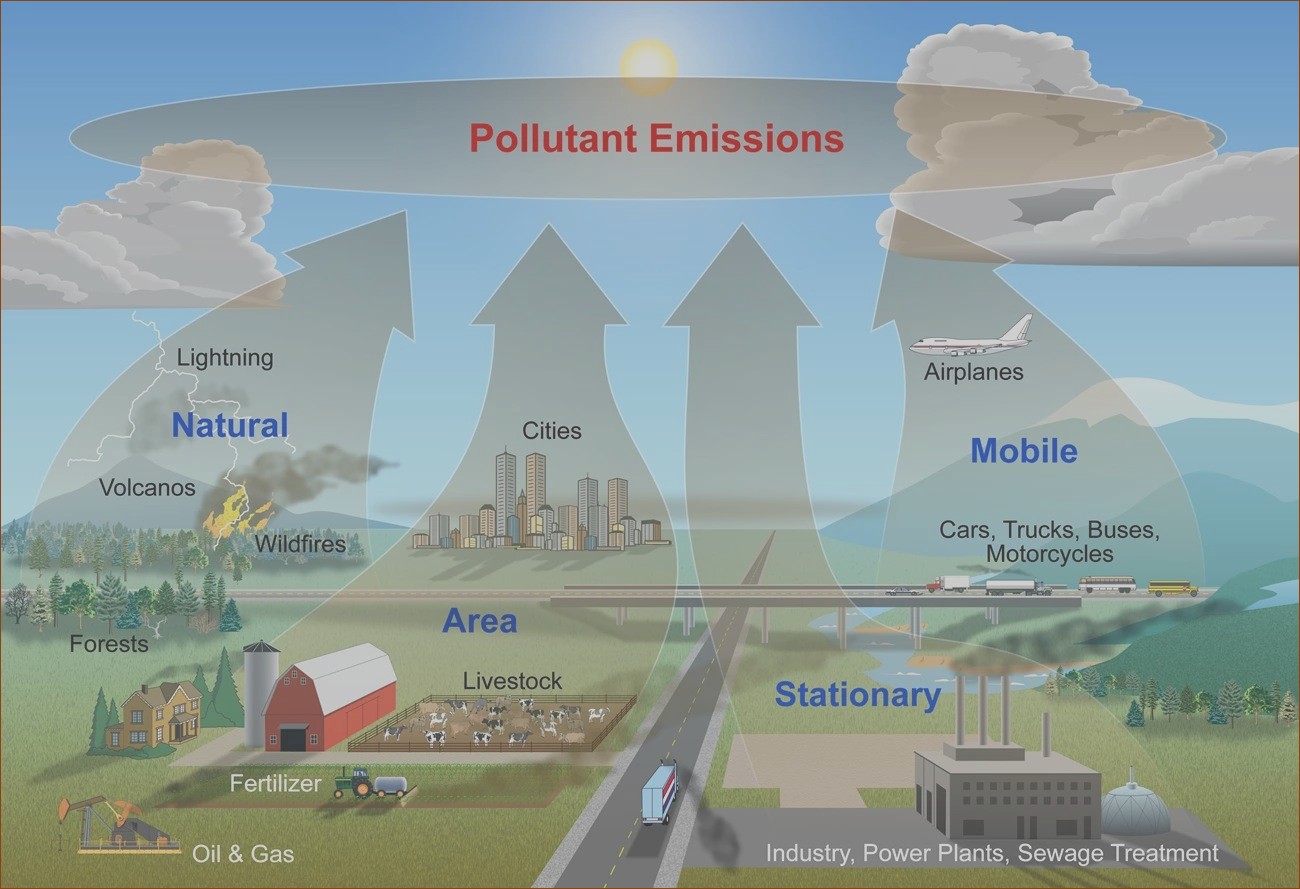
Research continues to show ongoing threats to air quality in both cities and rural areas, caused by vehicle emissions, industries, and agricultural practices. A recent study pointed out that people living close to large animal farming operations are often exposed to higher levels of fine particulate matter (PM2.5)—28% more near big cattle farms and 11% more near industrial hog facilities, compared to those living further away.
To tackle air quality challenges, CleanAIRE NC collaborates with communities statewide, from the Historic West End in Charlotte to rural Sampson County. They help set up local air quality monitoring and offer training and educational support to residents affected by pollution.
Understanding Air Pollution
Particulate matter, known as PM, consists of tiny solid particles and liquid droplets in the air. While some particles, like dust and soot, can be seen, others, such as PM2.5, are so small that they need powerful microscopes to be detected. This type of pollution can lead to serious health issues, including heart attacks, worsened asthma, and even premature death, particularly for those with heart or lung conditions.
National studies confirm the air quality concerns raised by CleanAIRE NC. A 2022 report found that higher PM2.5 levels correlate with increased mortality risks across all age groups, particularly affecting low-income communities. Another study from 2018 noted that efforts to lower PM2.5 levels in the U.S. from 1999 to 2013 saved the lives of many elderly Americans, totaling an estimated $24 billion annually by the end of that period.
Even with challenges to the Clean Air Act, organizations like CleanAIRE NC strive to fill the gaps left by changes in federal and state policies. For example, the recent Supreme Court decision in Sackett v. EPA has reduced federal protections for some wetlands, while the EPA may reconsider the findings that greenhouse gases threaten public health. These developments further emphasize the need for educational initiatives like CleanAIRE’s to empower communities.
The CleanAIRE Academy
In light of these needs, CleanAIRE NC has created the CleanAIRE Academy, a new online platform offering educational resources about air quality. They emphasized in a statement, “Recent environmental concerns and legal changes show that communities must be informed and engaged. The CleanAIRE Academy provides valuable, expert-backed information developed by professionals in air quality and public health.”
Naami Abbey, a University of North Carolina-Charlotte student passionate about environmental justice, was among the first to use the academy. “The self-paced courses made it easier to learn and understand air quality issues, allowing me to turn concerns into action for environmental justice,” she said.
The academy includes two main learning modules: “Air Quality 101,” which teaches the basics, and “Advocacy in Action,” which shows how to engage with policy and decision-makers. Plans for additional modules on health, environmental justice, and community science are already in the works.
Vaca pointed out that the shift to online education allows CleanAIRE to meet the increasing demand for training, even if there isn’t a dedicated grant for a specific community. “This platform is for everyone—especially those living in impacted areas,” she added. The goal is to expand the academy to cover a wider range of topics that benefit both the public and affected communities.
Aiming for a Brighter Future
The idea for the academy originated from the organization’s team of experts in 2024. The process included gathering feedback to ensure high-quality content. Vaca expressed her hopes that participants will find the courses engaging and not intimidating. She wants them to realize that community solidarity, education, and support can pave the way toward a cleaner environment.
To learn more about or enroll in the CleanAIRE Academy, visit their website.
