
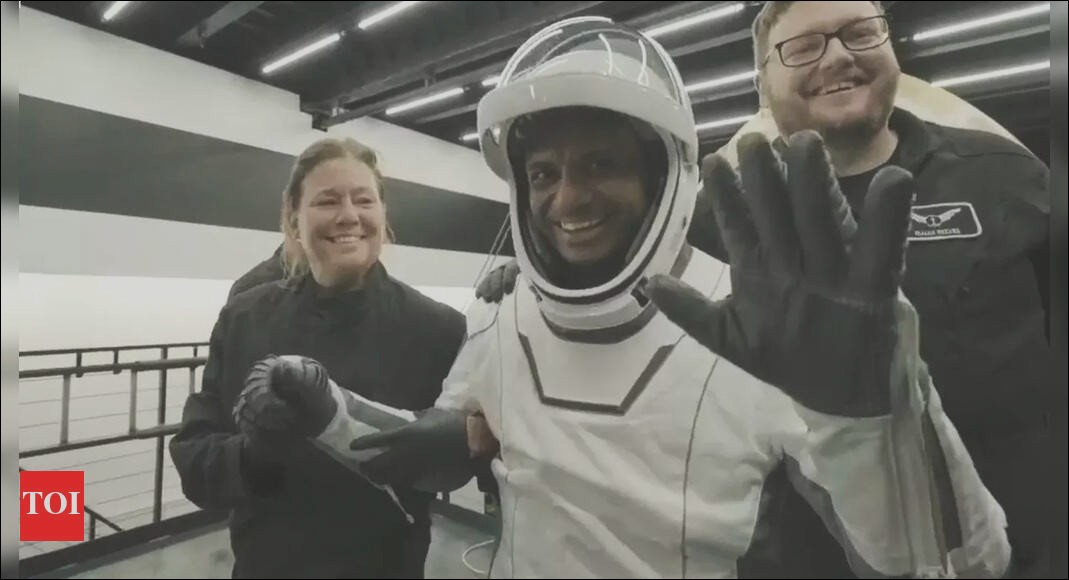
Indian Astronaut Shubhanshu Shukla Returns After Successful Mission
Indian astronaut Shubhanshu Shukla, known as Shux, safely landed in the Pacific Ocean near San Diego at 3:02 PM IST on Tuesday. His return marked the end of his mission, which included months of training and important experiments aboard the International Space Station (ISS). This mission highlights India’s growing involvement in human spaceflight beyond just satellites and rockets.
When Wing Commander Rakesh Sharma traveled to space in 1984, Shux had not even been born yet. Now, 41 years later, Shux’s Axiom-4 (Ax-4) mission underscores India’s expanding aspirations in space exploration. In his final address from the ISS, he expressed hope for India’s future in space, stating, “If we decide, even the stars are attainable.”
Prime Minister Modi welcomed Shux back and praised him for inspiring countless dreams across the nation. He emphasized that this mission is a significant step toward India’s own human spaceflight program, Gaganyaan.
The Splashdown Procedure
Shux’s journey back began when the Dragon capsule, named Grace, undocked from the ISS at 4:45 PM IST on Monday. The re-entry process started at approximately 2:07 PM on Tuesday, with the capsule conducting a burn to prepare for re-entry. Following this, Grace shed parts of its structure, including its trunk and nose cone.
By 2:57 PM, Grace deployed its drogue parachutes, followed by the main parachutes at 1,000 meters altitude. This system worked effectively to slow the capsule down from a high speed of 563 km/h to a safe landing speed of 23 km/h before it hit the water.
Recovery Operations
At 3:07 PM, mission commander Peggy Whitson confirmed that the crew was prepared for recovery. Recovery boats reached Grace within minutes. The safety team checked for any harmful gases before starting the recovery process at 3:15 PM.
By 3:29 PM, Grace was lifted onto the recovery ship named “Shannon.” The crew exited the capsule between 3:49 PM and 3:52 PM, with Shux emerging last. They were then flown by helicopter for medical check-ups before heading to Houston for further debriefing.
Looking Ahead to Gaganyaan
This mission cost India approximately Rs 548 crore, but ISRO sees it as an invaluable step in pursuing human spaceflight and scientific advances. ISRO Chairman V. Narayanan pointed out that the lessons learned from this mission are immensely beneficial and cannot be measured just by costs.
Experts believe the Ax-4 mission sets the stage for future crewed space expeditions, including Gaganyaan, which aims to send an Indian to the Moon by 2040. Leaders in the space sector noted that while previous explorations relied on intuition, modern missions like Shux’s are built on scientific experimentation, symbolizing a major leap for India’s space dreams.
