
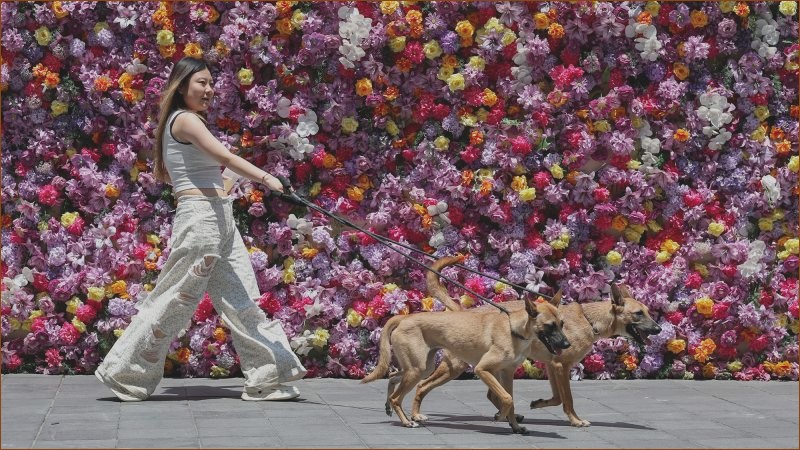
The Rise of the Solo Economy in Asia: Living Alone Gains Popularity
Hong Kong — Rachel Xia has embraced solo living since relocating from her hometown of Luoyang, central China, about ten years ago. The 30-year-old, now residing in Hong Kong, finds no issue with enjoying meals, traveling, or even going to the cinema by herself. She notes that most aspects of city life can be tailored to suit a single person’s needs.
In her day-to-day life, Xia appreciates the convenience of having groceries and meals delivered right to her door. Her late cat, Mocha, served as a loyal companion, always there to greet her after a long day at work. She also finds solace in chatting with AI, helping her express feelings or simply pass the time.
“It’s super convenient right now for people to live alone,” Xia shared. “Most things I can think of, I’ve had the experience of doing solo.”
Xia is part of a growing group in Asia that is changing consumer habits—individuals who are single, childless, or living alone. With rising costs of housing and education, traditional measures of success, such as marriage and homeownership, have lost their appeal for many young people.
As a result, birth rates in many Asian countries have dropped to record lows, prompting governments to offer financial incentives for couples to have children, though these measures are not seeing significant success. Interestingly, this decline in population has an unexpected side effect: those living alone are spending more on themselves.
In places like Japan, South Korea, and China, the trend of single-person households is giving rise to what some call the “solo economy.” Rather than buying bulk groceries, individuals are splurging on items like pets, collectibles, and new experiences, prompting businesses to adapt and provide more tailored services for solo consumers.
“They tend to have higher fixed costs, as they have no partners or family to share expenses,” explains Ming-Hsuan Lee, a professor who studies consumer behavior among singles in Asia. Despite the potential for higher living costs, single individuals often invest more in travel, dining out, and personal development than their married counterparts.
For Xia, while being alone means she often pays more for experiences, she enjoys the freedom to pursue her interests without compromise. However, after the passing of her cat last year, she began to reflect on her future and whether living alone would be her permanent choice. “It made me rethink the kind of life I’m looking for,” she said.
In China, which has recently lost its title as the most populous nation, the solo economy is booming. Karaoke kiosks designed for individual singers have begun appearing throughout the country, and travelers can easily find partners for hiking or sightseeing.
According to Chinese research firm Discovery Reports, the demand for goods and services aimed at singles reached over $1 trillion in 2025, marking a significant increase. Analysts note that singles are also spending more on entertainment like video games and quick web series.
Ashley Dudarenok, a market consultant specializing in China, observes that single living is reshaping consumer habits. “When you get home late and want to relax, you might turn to streaming or gaming if you don’t have a partner to talk to,” she stated.
As companies adapt to this shift, services and products for single living are likely to grow and could potentially be exported globally. In the U.S., businesses are now marketing to solo diners, introducing smaller meal portions and unique products that cater to individual needs.
While companies are tailoring their offerings for singles, concerns remain about the impact of loneliness on mental health. Countries like Japan and South Korea are investing in initiatives to tackle these issues, including the appointment of dedicated officials to address isolation.
For some individuals, like Ellen Xie, a comedy producer in Shanghai, pets have filled the void of companionship. Many of her friends, all single, also have pets, and they enjoy meals together, ordering takeout to bond over their thoughts on life and aging.
As for Xie, she is content with her two cats, allowing her the freedom to take spontaneous trips, like a recent journey to Japan. “Sometimes I think about how great it is not to be married,” she said. “Those experiences are special and perhaps best enjoyed while single.”
With societal values shifting, there is also growing awareness of the needs of an aging population, as the number of elderly individuals is expected to surpass younger groups in the coming years. The market for services for older adults is projected to reach over $4 trillion by 2035, reflecting growing demand for technology and products that cater to senior citizens.
Amidst these changes, many young individuals remain optimistic about their living situations. Graduate student Xiao Hanyu from Shenzhen appreciates the freedom that modern conveniences bring, allowing him to remain single for longer. With affordable travel options and technology that keeps him entertained, he values the ability to choose his future path without feeling rushed into a relationship.
As attitudes towards solo living continue to shift, it remains clear that the solo economy is here to stay, paving the way for a new understanding of independence and fulfillment in life.
