
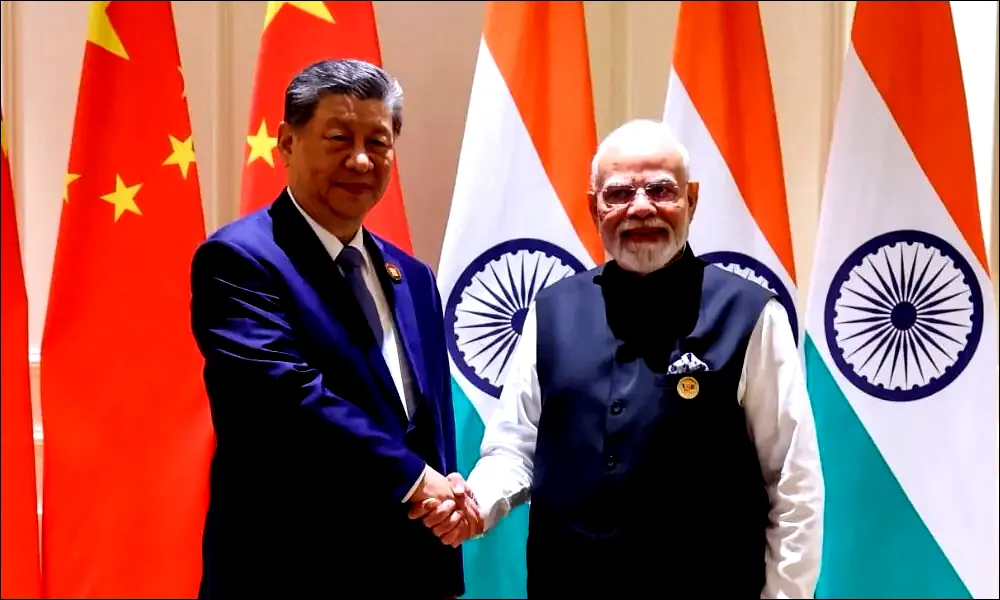
NEW DELHI: Indian Prime Minister Narendra Modi and Chinese President Xi Jinping have decided to collaborate on addressing the ongoing border disputes between their nations, according to a statement from India’s foreign ministry on Saturday following their meeting.
This encounter is particularly significant as Xi’s visit to New Delhi coincided with the BRICS summit, marking his first trip to India since 2019. This meeting is viewed as a positive step towards easing tensions between the two nuclear-armed neighbors.
During their discussion, Xi emphasized the potential for both countries to complement each other, saying, “Though we have our differences, we have the ability to support each other’s strengths and work together towards mutual success.”
After the meeting, India’s foreign ministry reiterated the leaders’ commitment to finding a “fair, reasonable, and mutually acceptable” solution to border issues. Modi also stressed the importance of adhering to existing agreements related to the border.
The visit comes six years after a violent confrontation occurred along the disputed border. However, relations between India and China have shown signs of improvement, with the resumption of direct flights, visa processes, and high-level dialogue.
Despite this progress, the territorial dispute remains unresolved, with both nations maintaining significant military presence along the approximately 3,500-kilometer border near Tibet. Demonstrations were held in New Delhi by Tibetan exiles, including followers of the Dalai Lama, who have been critical of Xi’s visit.
India’s foreign ministry stated that “differences should not turn into disputes,” and Modi emphasized the need for “mutual respect, sensitivity, and interest” between both countries.
Trade was another important topic of discussion. India now counts China as its largest trading partner, with bilateral trade amounting to $151 billion in the 2025-26 fiscal year. However, the trade dynamics favor China heavily, with India importing $131 billion worth of goods while exporting only $19 billion. This has resulted in a substantial trade deficit of $112 billion.
Both leaders acknowledged the necessity of addressing concerns like the trade imbalance and facilitating better market access for each other, highlighting the importance of balanced and sustainable economic cooperation.
