
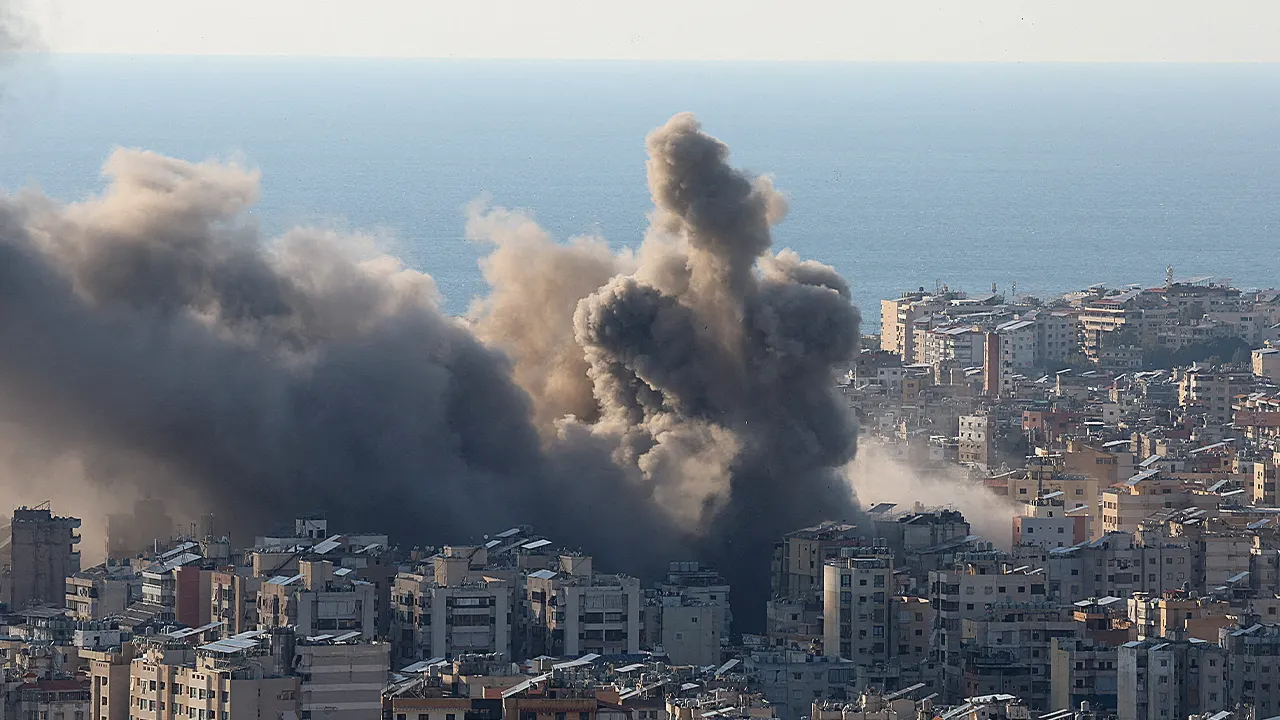
Major Shift in Lebanon: Israel Captures Key Ridge from Hezbollah
JERUSALEM — Israel achieved a significant milestone on Sunday by capturing the Ali al-Taher ridge in southern Lebanon, a crucial stronghold for Hezbollah and Iranian forces. This victory has dealt a significant blow to Iran’s “Axis of Resistance,” although experts suggest it may not entirely cripple Hezbollah’s overall capabilities.
The Israel Defense Forces (IDF) have stated that this strategic win means Hezbollah has lost one of its most important locations for planning potential attacks on Israel. Lt. Col. (Res.) Sarit Zehavi, President of the Alma Research and Education Center, shared that Israel has successfully targeted multiple Hezbollah sites in recent years, which has dramatically reduced their stockpile of rockets and missiles.
Zehavi explained that the IDF has managed to destroy or neutralize about 90% of Hezbollah’s weapons, leaving the group with roughly 10,000 to 15,000 rockets. This is a significant decrease from their previous arsenal. She noted that Hezbollah’s ability to launch a large-scale attack on Israel, like they prepared for three years ago, has been severely diminished due to Israeli forces stationed along the Lebanese border.
In late August, Alma presented a detailed analysis indicating that Hezbollah has shifted from being a large-scale military force to a more dispersed guerrilla group. As a result, although they still aim to rebuild their military capabilities, they face numerous obstacles, particularly related to weapon transfer routes through Syria and the challenges that come with them.
Zehavi, who has lived in Northern Israel and faced numerous attacks from Hezbollah, emphasized that as long as Iran keeps supporting Hezbollah with weapons and funding, the risk of the group reconstructing its military strength remains a concern.
Recent statements from Hezbollah officials suggest that the loss of Ali al-Taher Ridge does not signify the end for the group. However, analysts believe that this setback, particularly given its proximity to the Israeli border, will force Hezbollah to rethink its strategies.
The IDF has reported that they have cleared the underground routes in the Ali al-Taher area, significantly hindering Hezbollah’s ability to launch attacks against Israel.
Hezbollah’s influence is seeing challenges not only from military operations but also from internal divisions within Lebanon. Some within the Shiite community are beginning to question Hezbollah’s role and effectiveness as a leader and protector, especially after multiple confrontations with Israel. The sentiment appears to be shifting, and this inner discord could further weaken Hezbollah’s power in the region.
Simultaneously, Lebanon’s Deputy Prime Minister has indicated that the Lebanese army is poised to take over the strategic ridge, alluding to political tensions between Israel and Lebanon ahead of upcoming Israeli elections.
In summary, while Israel’s recent successes have disrupted Hezbollah’s operations, the overall situation remains complex as both military strategies and political dynamics continue to evolve in the region.
