
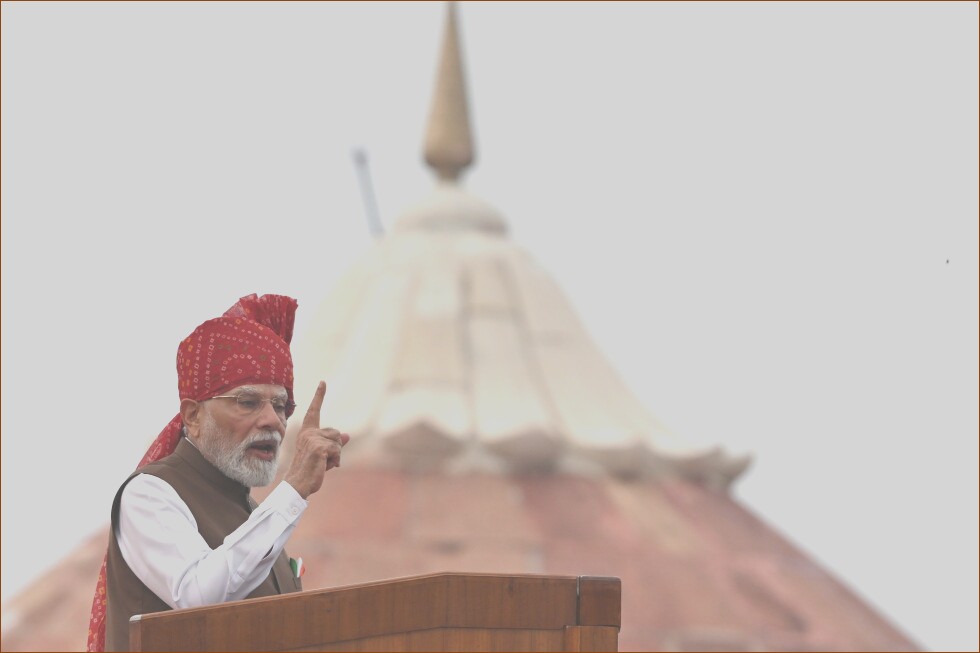
New Delhi – On Saturday, Indian Prime Minister Narendra Modi addressed the nation on the occasion of India’s 79th Independence Day. He declared that the longstanding Maoist insurgency in the country is close to ending. However, he cautioned that a new challenge is emerging – what he referred to as “dimagi Naxals,” or individuals who share the ideology of Maoists.
Speaking from the historic Red Fort, Modi described the decline of Maoist violence as a significant achievement following years of security efforts against this rebellion, which had been considered India’s biggest internal security challenge. The Maoist movement, also known as the Naxalite movement, has posed a threat to state authority in many rural regions, leading to considerable loss of life among civilians, rebels, and security forces.
“We have been successful in removing armed Naxals from the forests, but there are still ‘dimagi Naxals’ who are attempting to stir up trouble,” Modi stated. He emphasized the need to identify and distance society from these ideologies, saying, “They want to divert people onto the wrong path.”
In addition to addressing security concerns, Modi announced various initiatives aimed at encouraging self-reliance in different sectors, including defense and agriculture, with a particular emphasis on providing opportunities for young people. This comes in light of recent protests led by youth movements that have begun to challenge his government, notably resulting in the resignation of the education minister. While he did not mention the protests directly, Modi highlighted programs intended to support young Indians, such as skill training in artificial intelligence and free online coaching for competitive exams.
Modi shared his vision for India, asserting that the country has transformed from a “fragile” economy to the fastest-growing major economy in the world over the last decade. He reaffirmed the government’s aim to establish India as a developed nation by 2047, marking 100 years of independence.
The Naxalite movement traces its roots back to a 1967 uprising in Naxalbari, eastern India, aimed at advocating for the rights of marginalized farmers and communities. Reflecting on its impact, Modi stated that this movement has “ruined the future” for many generations. He credited his government’s policies for significantly reducing Maoist violence since he assumed office in 2014.
The term “dimagi Naxal” is reminiscent of the previously used label “urban Naxal,” which Modi and other leaders from the Bharatiya Janata Party have applied to critics, including activists and academics. Opponents argue such terms are utilized to discredit dissenting voices.
Modi’s comments come amidst ongoing criticism from human rights organizations like Amnesty International and Human Rights Watch, who have accused his administration of suppressing civil society and targeting those with opposing views through various laws and regulations.
In response, Jairam Ramesh, a senior leader of the opposition Congress party, criticized Modi’s terminology as mere political rhetoric, claiming that the Prime Minister shifts his language to vilify ideas before eventually adopting them himself. He cited the caste census as an example, suggesting it reflects Modi’s attempts to mask his political difficulties.
