
Innovative Use of Nuclear Energy for Multiple Benefits
Scientists from the Bhabha Atomic Research Centre (BARC) in Mumbai and the Indira Gandhi Centre for Atomic Research (IGCAR) in Kalpakkam are making strides in energy innovation. They have successfully shown that a single nuclear reactor can perform three crucial tasks at once: generating electricity, converting thorium into nuclear fuel, and producing green hydrogen using waste heat.
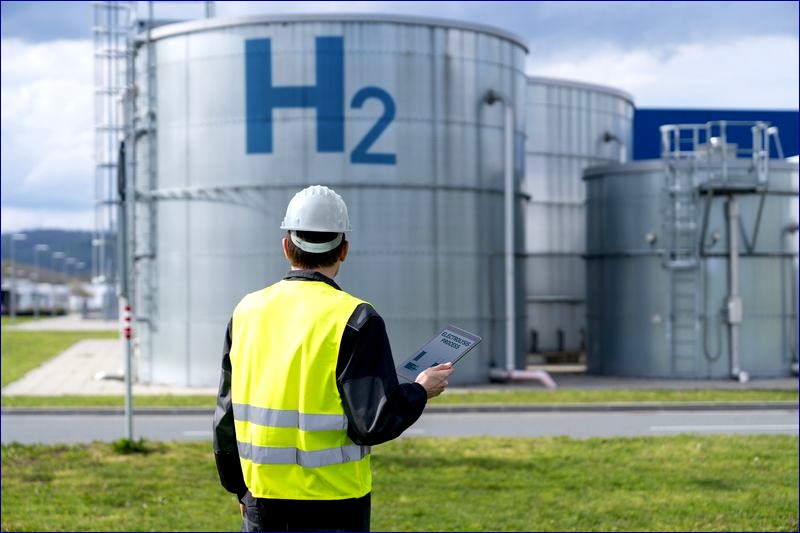
Hydrogen is important in various industries, especially in making ammonia, which is essential for fertilizers. It also plays a significant role in creating methanol, a key ingredient in plastics and chemicals, and helps in refining petroleum by removing sulphur from fuels.
In the future, hydrogen is expected to be a key player in transportation. Fuel cells, which power electric vehicles, use hydrogen and oxygen from the air to produce electricity, with only water vapor as the byproduct. This means refueling can be as quick as filling up with petrol or diesel, making it a practical option for heavy vehicles, ships, and possibly aircraft, where battery systems can be too heavy and time-consuming to recharge.
Hydrogen is not available freely in nature; it needs to be extracted from water or hydrocarbons, which requires a lot of energy due to strong chemical bonds. Most of the world’s hydrogen today is produced through methods like steam methane reforming, which extracts hydrogen from natural gas. However, this process often leads to significant carbon emissions, leading to the term “grey hydrogen,” which simply shifts the pollution from one place to another.
To combat this, there is a growing interest in green hydrogen, which is produced with minimal to no carbon emissions. Researchers are exploring various methods, including using renewable energy from solar and wind, as well as biological techniques. India, with its large thorium reserves but limited uranium, has chosen a unique method.
Unlike uranium, thorium isn’t directly usable as nuclear fuel. It needs to be transformed, which is where fast breeder reactors (FBRs) come into play. These reactors utilize a thorium blanket surrounding the reactor core, where fast neutrons convert thorium into uranium-233, an excellent fuel for reactors.
Developing this technology wasn’t easy, especially with restrictions imposed by other countries. As a result, Indian scientists had to innovate largely on their own over the decades. The Fast Breeder Test Reactor (FBTR) was commissioned in 1985 and has paved the way for a more advanced 500-megawatt prototype reactor set to achieve its first critical operation soon.
Nuclear reactors generate heat during the process of fission, turning water into steam that drives turbines for electricity generation. However, only a fraction of this thermal energy becomes electricity; much is wasted. Engineers have long looked for ways to use this waste heat productively, such as heating homes in colder countries or turning seawater into drinking water.
Now, researchers are exploring potential in hydrogen production. They are focusing on improving traditional electrolysis methods by effectively using reactor heat, or employing thermochemical cycles that use heat instead of electricity to separate water molecules.
India has taken an innovative path by utilizing the sodium coolant in the FBTR, which operates at about 480-520°C. Scientists have developed the copper-chlorine thermochemical cycle to work efficiently at this temperature. By integrating this process into the reactor, they have demonstrated that it can produce green hydrogen from waste heat.
While the current hydrogen plant linked with the FBTR serves to showcase this technology, the next step is to refine and expand this method to create commercial plants that can capitalize on the waste heat from future fast breeder reactors. This advancement could greatly enhance the versatility and contribution of nuclear energy beyond just electricity generation.
