
Ukraine Intensifies Drone Campaign Against Russian Targets
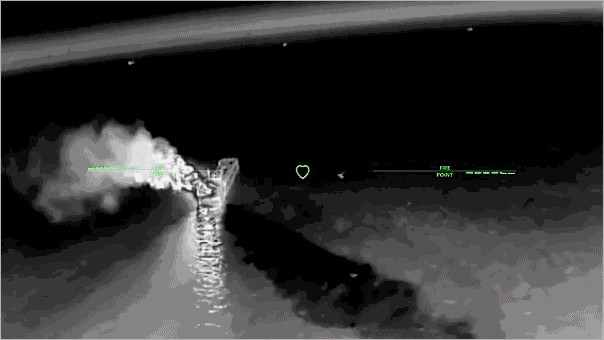
This week, Ukraine has ramped up its drone strikes, targeting Russia’s maritime and energy sectors. Over the course of three days, they claimed to have hit 21 vessels, including oil tankers and a cargo ship near the contested region of Crimea. These attacks highlight Ukraine’s advancing long-range capabilities and add pressure on Russia’s fuel supplies.
On Wednesday, during a meeting at the NATO summit in Ankara, Ukrainian President Volodymyr Zelenskyy and former U.S. President Donald Trump discussed a significant development: the U.S. will allow Ukraine to produce Patriot missile defense systems. Zelenskyy noted that strengthening air defense is a top priority for Ukraine and expressed enthusiasm for future agreements on drone technology.
Zelenskyy showcased evidence of Ukraine’s ability to disrupt Russian resources far beyond the battlefield, while Trump praised Ukraine’s effectiveness, stating, “They have the best equipment because they had our equipment.”
Ukraine’s recent actions have forced Russia to defend critical infrastructure, as Ukrainian forces conduct long-range strikes that hinder fuel production and disrupt logistics. While ground combat continues to be grueling, these aerial operations are starting to affect Russia’s ability to maintain its military efforts.
On Tuesday, Ukraine’s Unmanned Systems Forces reported striking nine vessels in the Sea of Azov, adding to the tally from the previous days. Officials believe many of these ships are part of Russia’s fleet tasked with transporting fuel to Crimea, which Russia annexed in 2014.
Alongside the maritime strikes, Ukrainian attacks also targeted refineries and military airfields across several regions in Russia, including Saratov and Voronezh. The escalating strikes led to serious damage, with one confirmed death reported in Saratov.
Just earlier, Ukraine had hit the Omsk refinery in Siberia, which is significant for its large oil production capacity. Following this attack, reports confirmed the facility had ceased operations.
These disruptions have caused visible fuel shortages in Russia, prompting long queues at gas stations and even restrictions on purchases in certain areas. In response, Russia announced a temporary ban on diesel exports to safeguard local supplies.
Margarita Simonyan, a prominent figure in Russian media, acknowledged the struggles faced by the population and urged calm, likening the situation to past hardships after the Soviet Union’s collapse.
As Zelenskyy and Trump discussed military cooperation, Russia continued to launch missiles and drone strikes against various Ukrainian cities, demonstrating the ongoing volatility and tension in the region.
