
Continued Violence Deepening Crisis in Gaza
On Sunday, the ongoing violence and restrictions in the Gaza Strip intensified, exacerbating an already dire humanitarian situation. Reports indicate that the so-called “ceasefire” declared in late 2025 has had little effect on the ground.
In central Gaza, an Israeli drone strike in a residential area resulted in the deaths of two Palestinians and injuries to several others. Meanwhile, artillery fire targeted the western districts of Deir al‑Balah, where thousands of displaced families now live in makeshift tents. Witnesses shared harrowing accounts of families fleeing once again, salvaging whatever belongings they could as Israeli forces issued new evacuation orders.
Similar scenes unfolded in Nuseirat and Khan Younis, where sporadic shelling caused further injuries and forced families into hiding. Local reporters described the situation as a “ceasefire in name only,” with the ongoing attacks instilling constant fear in local communities.
Inside Gaza City, the situation at Shifa Hospital has become desperate. Families gathered outside, calling for the evacuation of relatives unable to receive necessary medical care within the Strip. Gaza’s health authorities revealed that over 20,000 patients are currently awaiting evacuation as access to Rafah crossings remains tightly restricted.
Medical professionals report critical shortages, with no functioning intensive care beds, and almost no surgical supplies available. One healthcare worker mentioned that they must prioritize patients based on survival chances due to these severe resource limitations. Rights groups have also expressed concern over detained medical personnel, indicating that their condition has become life-threatening.
The health crisis is further complicated by a rise in diseases. Medical teams have reported thousands of new cases of contagious skin infections such as chickenpox, scabies, and lice in overcrowded shelters. Intestinal illnesses related to contaminated water and food are also on the rise, with entire families falling ill at once.
Humanitarian access is still severely limited, with only 150 to 200 trucks entering Gaza daily—far below the 600 to 1,000 needed to meet basic needs. Reports have indicated that many of these trucks are delivering goods for private companies instead of essential humanitarian supplies, leaving agencies unable to assist large portions of the population.
Recent reports highlighted that aid convoys faced delays at Israeli-controlled crossings, obstructing the delivery of crucial resources like flour, medicine, and water purification tablets. Conditions in displacement shelters are rapidly worsening, with over 750 locations housing families in tents that are often infested with insects and rodents. Rising summer temperatures are exacerbating health issues, with doctors noting an increase in skin infections and reports of children collapsing due to dehydration and hunger.
The situation has grown increasingly alarming, particularly in northern Gaza, where families have faced repeated displacements and long gaps without food distributions. There is a significant scarcity of infant formula and clean drinking water.
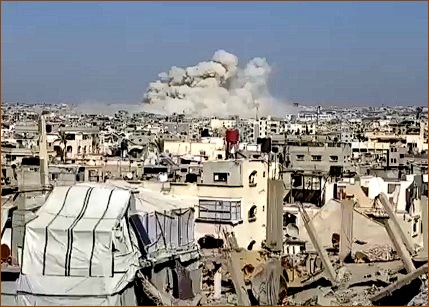
The destruction in Gaza is staggering. Recent assessments indicate that nearly all buildings in the Strip have suffered damage or destruction, with vast areas still under strict Israeli military control and movement restrictions. New evacuation orders issued in western Deir al‑Balah have forced families to relocate yet again, often to areas lacking basic infrastructure.
On a political level, the “ceasefire” agreement that was supposed to take effect on October 11, 2025, remains largely unfulfilled. Essential components—such as a steady flow of aid, the withdrawal of Israeli forces from certain areas, and a comprehensive exchange of detainees—have stalled, leaving the situation stagnant.
While international mediators work towards a second phase that would aim at reconstruction and administrative arrangements, Palestinian officials are concerned that the current direction risks entrenching long-term Israeli control rather than fostering true recovery.
