
Rising Ticket Prices for the 2026 World Cup
The ticket prices for the 2026 FIFA World Cup have sparked concern among fans, as some seats are now priced up to seven times more than what was initially promised. A recent analysis highlights the staggering costs associated with attending this prestigious event in the United States, which is hosting its first World Cup since 1994.
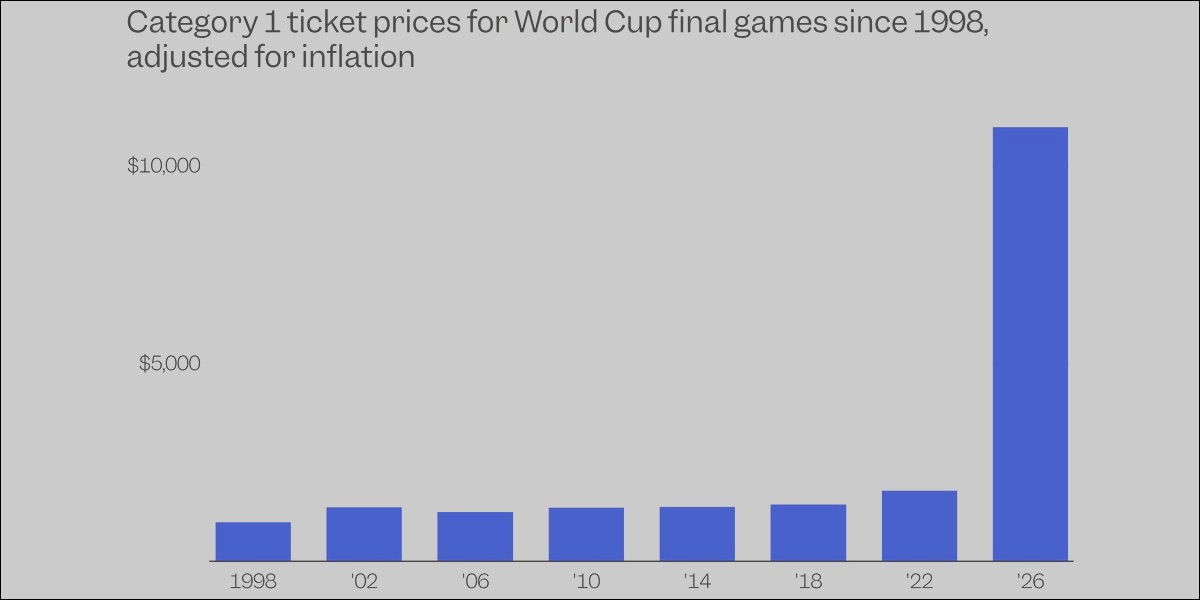
FIFA’s recent ticket sales, particularly the “Last-Minute Sales Phase” that began in April, revealed jaw-dropping prices. For instance, a top-tier ticket for the final game was sold for $10,990— a significant increase from the $988 to $1,783 range seen at previous tournaments, adjusted for inflation.
Initially, FIFA had committed to providing tickets ranging from a mere $21 to a maximum of $1,550 for prime seats during the bid process. However, as the tournament nears, ticket prices through the Participating Members’ Association (PMA) system have risen sharply, with some faithful fans needing to attend multiple games to even qualify for a chance to buy a ticket.
Price Increases for Category Tickets
Tickets sold directly through PMAs have seen dramatic price increases. For example, a Category 3 seat, which was expected to cost $695, now hovers around $4,000, and a Category 1 ticket skyrocketed from $1,550 to approximately $8,680. The cheapest tickets available for the final, although rare, are still considerably higher than initially projected, reflecting an ongoing trend of escalating costs.
Group Stage Ticket Prices
The World Cup kicked off with the group stage, where each team plays a series of three matches. This year, the least expensive ticket in Category 3 was priced at $140, nearly double the cost of similar tickets for the previous World Cup when inflation is considered.
Challenges for Fans from Lower-Income Countries
This year’s expanded format allowed teams from countries with lower rankings, like Cape Verde and Jordan, to qualify. Yet, many fans from these nations are facing significant financial barriers, making it challenging to afford tickets. For instance, a ticket to watch Haiti cost nearly $2,300—almost 90% of the country’s GDP per capita.
In Brazil, where soccer is deeply ingrained in the culture, even the cheapest ticket at $770 represents a month’s average earnings. Meanwhile, in Switzerland, tickets priced around $380 are still seen as relatively affordable compared to Brazil’s costs.
Transportation Costs for Attendees
For those lucky enough to secure tickets, attending the matches includes navigating differing transportation costs. Various cities are hosting multiple matches; some have raised public transit prices during the tournament.
In places like South Florida, round-trip prices for transportation can jump significantly on game days. New Jersey Transit has hiked its prices for round-trip tickets to MetLife Stadium to $98, while in Boston, the cost is around $80, up from $20 on regular days.
FIFA has expressed its commitment to ensuring fair access for fans, noting the availability of $60 tickets and explaining that the rising prices align with trends in sports and entertainment. Nevertheless, the rising costs of tickets and transportation are posing challenges for many fans eager to experience the World Cup.
