
Robotic Elephants Make Their Mark in Indian Temples
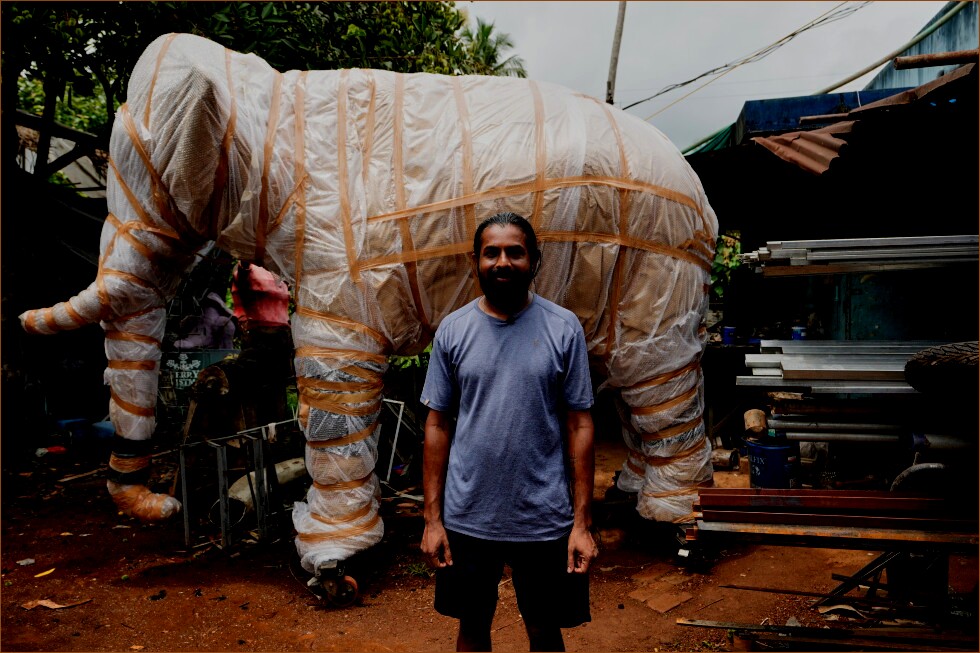
Chalakudy, India — In a unique workshop in Chalakudy, Prasanth Prakashan creates life-size robotic elephants that come to life with flapping ears, swishing tails, and even water-squirting trunks. While they may look lively, these animatronics made of fiberglass, iron, and rubber aim to replace real elephants in Hindu temples.
This shift has drawn support from animal rights groups like PETA, who have funded around 40 robotic elephants for Indian temples, each costing about $6,000. While these creations are lighter than actual elephants, they lack the natural grace and movement of their living counterparts. Prakashan, a mechanical engineer, acknowledges that while they strive to capture the spirit of real elephants, it’s impossible to truly replicate them. “You can’t create an original elephant, just like you can’t duplicate a human,” he said.
Notably, the robotic elephants can’t walk yet, but Prakashan is optimistic about future advancements.
The Symbolism of Elephants
Elephants aren’t just important in Kerala; they hold significance across various cultures. In Buddhism, elephants represent patience and wisdom, and the grand parades in Kandy, Sri Lanka, showcase them as sacred creatures.
In Kerala, festivals featuring live elephants attract massive crowds. For example, the annual Pooram parade at the Thrissur Vadakkunnathan temple showcases around 100 adorned elephants, each a star of the event. Additionally, the nearby Guruvayur Sree Krishna Temple hosts about 50 elephants and organizes races and feeding rituals to honor these majestic animals.
However, some experts like Andrea Gutierrez from the University of Texas express concern about keeping live elephants in temples. The adult males, often used due to their size, can become aggressive during a natural period called musth, posing potential dangers during crowded festivals.
Despite tighter restrictions, about 400 elephants remain in captivity in Kerala, a significant decrease since 2010, when approximately 2,500 elephants were recorded across India.
Embracing Change in Temples
PETA India’s Khushboo Gupta argues that the beauty of live elephants cannot outweigh the concerns for their welfare. Stressed elephants can sometimes act unpredictably, leading to tragic incidents.
Prakashan first came to the attention of animal rights activists after a video of his robotic elephants went viral at a Dubai festival. This led to collaborations with PETA, inspiring a new focus on replacing live elephants in temples.
The process of creating these robotic elephants involves artists meticulously designing everything from the skin texture to intricate details like veins in their ears. The entire creation process typically takes about 15 days.
At the Irinjadapilly Sree Krishna Temple, Prakashan’s robotic elephant, named Irinjadapilly Raman, was introduced last year. Children are now able to play and interact with it freely, something that wouldn’t be safe with a live elephant. The temple’s head priest notes that the rituals don’t explicitly require real elephants.
Traditionalists Stand Firm
Despite the advantages, many traditionalists view robotic elephants as a threat to age-old customs. K. Mahesh, who rents his elephant for festivals, emphasizes the sacredness of real elephants, saying, “What’s the point of a robotic elephant in a temple?”
While some see the new robotic alternatives as a good fit for smaller temples, larger ones still cling to the traditional use of live elephants. K.I. Purushottaman, president of the Cheekamundi Sri Mahavishnu Temple, expressed relief at not having to worry about potential accidents with a robotic elephant.
On the other hand, artists like Sooraj Nambiat face backlash for their work. “I’m not here to ruin their tradition,” he insists, “but we must change how we treat elephants to ensure they exist for future generations.”
Wildlife expert P.S. Easa stresses the financial incentives driving some of the practices around elephants, underlining the challenges in changing long-held traditions. He remains uncertain if robotic elephants will find acceptance in his lifetime, saying, “You cannot change centuries-old tradition any time soon. But who knows? Maybe one day.”
As technology evolves, the conversation around the use of robotic elephants in temples continues, merging tradition with modern solutions for animal welfare.
