
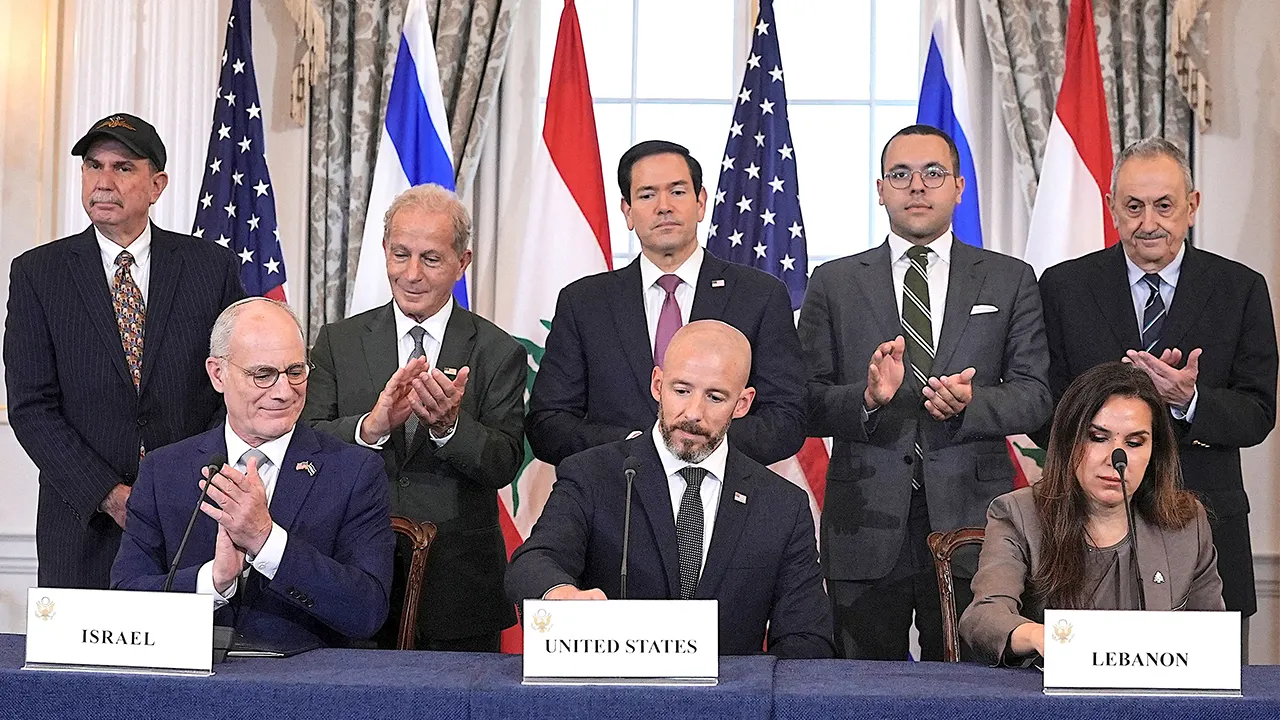
Framework Agreement Between Israel and Lebanon Aims for Peace
U.S. Secretary of State Marco Rubio and Israeli Prime Minister Benjamin Netanyahu have announced a significant framework agreement aimed at fostering peace between Lebanon and Israel. This agreement, brokered by the United States, is seen as an essential first step towards reducing Iranian influence in the area.
The historic deal could pave the way for normalizing relations between the two countries, which have been in a state of war for decades. Experts suggest that this agreement could hinder the Iran-backed group Hezbollah, which operates in parts of Lebanon.
Hezbollah and Israel have a tumultuous history, including two wars, especially heightened following recent conflicts connected to the ongoing violence initiated by Hamas in October and U.S.-Israeli actions against Iran.
Rubio expressed optimism, stating, “Today is a good day as we announce a framework agreement that aims to bring lasting peace and security for both nations.” He emphasized that both countries deserve peace.
Netanyahu echoed this sentiment, calling the agreement “a severe blow to Iran.” He stressed that the deal conveys a clear message to Iran and its affiliates: “You have no role here in southern Lebanon.”
U.S. Ambassador to Israel, Mike Huckabee, highlighted the potential of this agreement, focusing on the disarmament of Hezbollah, which has been responsible for numerous attacks, including against Americans.
Lebanese President Joseph Aoun thanked the U.S. for supporting Lebanon’s position throughout the negotiations.
While many view this as a unique opportunity for peace, some experts urge caution. Guila Fakhoury, whose father was kidnapped by Hezbollah, described the agreement as historic and a shift in Lebanon’s reliance on external influences.
However, she cautioned that its success depends on effective implementation by the Lebanese government, urging stability to be rooted within legitimate institutions rather than external forces.
Walid Phares, a prominent expert on Middle Eastern affairs, pointed out that while this agreement might be a ceasefire, it does not necessarily lead to lasting peace due to Iran’s influence over Hezbollah. He highlighted the need for the U.S. to carefully balance its actions in the region.
Senator Tom Cotton also expressed support for the agreement, celebrating it as a way to limit Iran’s influence through Hezbollah. Hanin Ghaddar, a senior fellow at The Washington Institute, called it a breakthrough, but warned that Iran would likely try to undermine the agreement, highlighting the responsibility of both Lebanon and Israel to ensure its success.
This historic agreement marks a crucial moment in Middle Eastern diplomacy, with the potential to reshape relationships and promote lasting stability.
