
A Look Back at India’s Emergency: The Events Leading to a Dark Chapter
About fifty years ago, a group of students at a government engineering college in Ahmedabad protested against rising food costs. Beginning in December 1973, the cost at the Lalbhai Dalpatbhai College mess saw an increase of 20-40%, causing financial strain on many students. Reports from political scientist Ghanshyam Shah revealed that nearly half of the students struggled to pay their monthly bills.
One student shared their frustrations about the food quality, stating, “We’ve always complained about the food, even boycotted meals sometimes.” A survey conducted by Shah in early 1974 highlighted the staggering rise in food prices, with essentials like grains and cooking oil increasing by over 100% in just a year.
The rising costs weren’t isolated to Ahmedabad. As the winter of 1973 drew closer, households in Gujarat faced severe shortages. Ration cards allowed families to receive only one kilogram of wheat monthly, while rice was entirely unavailable at shops. The supplies of wheat plummeted dramatically, leaving many struggling to feed themselves.
International Issues Affecting India
The root of these domestic struggles can be traced back to an international crisis. On October 6, 1973, Egypt and Syria attacked Israeli forces, leading to an oil embargo by Arab nations. This embargo resulted in oil prices nearly quadrupling, significantly impacting countries like India, which relied heavily on imported oil. The price surge meant India could only afford a fraction of the fertilizers needed for farming, further complicating the agricultural crisis.
Political Unrest in Gujarat
These issues were compounded by ongoing droughts across the nation. By early 1974, it was clear that the Indian government was faltering in its response to the growing public discontent. In Gujarat, the Chief Minister’s alleged deals with oil traders fueled accusations of corruption, leading to widespread outrage. In April 1973, the nationalization of wheat trade added to the chaos, but efforts failed to improve the situation, leaving farmers and consumers disheartened.
Amid these frustrations, students from the Lalbhai Dalpatbhai College began to protest in December 1973. Tensions escalated when students engaged in violent demonstrations, culminating in police action that saw over 300 students arrested.
The Navnirman Movement Emerges
This unrest gave rise to the Navnirman movement, where students demanded lower mess fees and an end to police violence. As the protests gained momentum, it became clear that the dissatisfaction stemmed from broader issues of corruption and inflation – marking one of the most significant public movements in independent India.
Key figures within the movement included Narendra Modi, who became involved as a student leader, and Jayaprakash Narayan (JP), who advocated for a “Total Revolution.” Amid escalating protests, the political landscape in Gujarat shifted dramatically; on February 9, 1974, Chief Minister Chimanbhai Patel was forced to resign.
The Nationwide Impact
The movements in Gujarat set the stage for similar protests across India, particularly in Bihar, where students united under JP’s leadership against corruption and injustices. Concurrently, railway workers led a massive strike, further crippling the government.
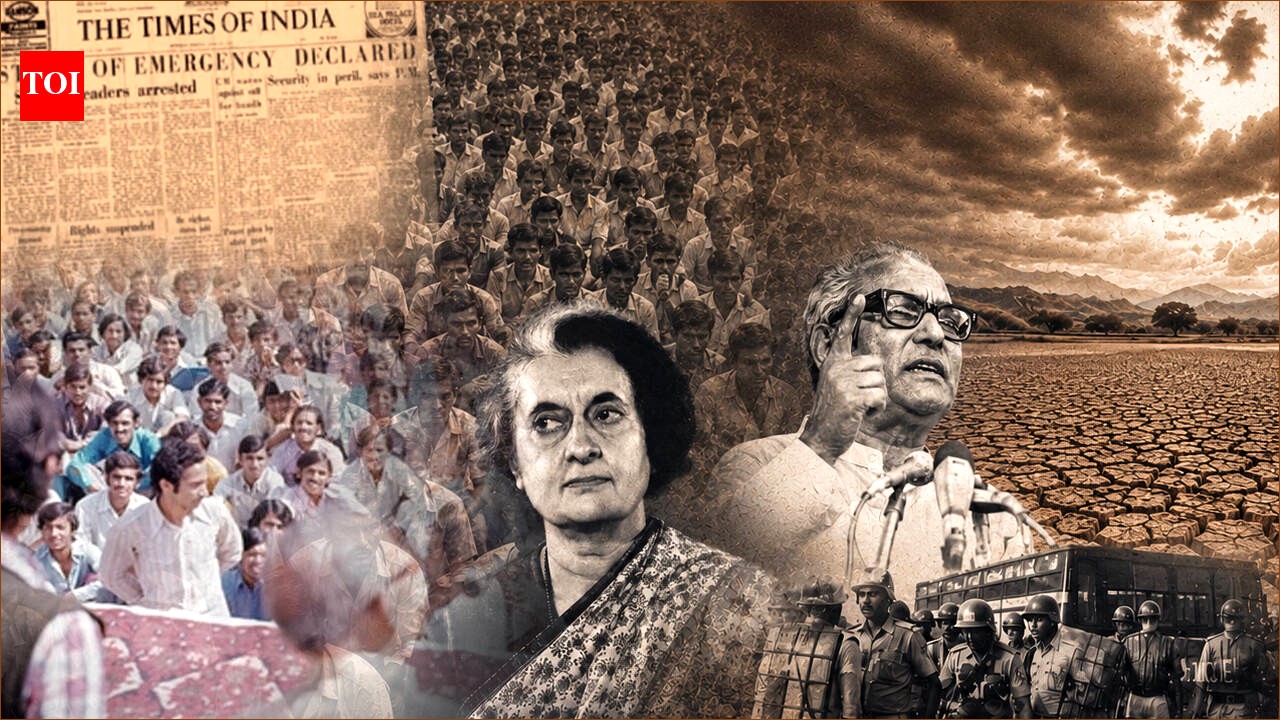
With mounting public unrest, Mrs. Gandhi’s administration faced mounting pressure. On June 12, 1975, the situation escalated after a court ruling declared her election invalid due to irregularities. In response, the government enacted a state of Emergency on June 25, 1975, stifling voices of dissent.
A Cautionary Tale
The Emergency period and the events leading up to it serve as a crucial reminder of how economic hardship can trigger widespread political mobilization. The difficulties experienced by the populace were interconnected with global events, ultimately culminating in significant constitutional crises in India.
As we reflect on this chapter of history, it highlights not only the vulnerability of democracies but also the importance of addressing underlying economic issues to prevent political unrest in the future.
