
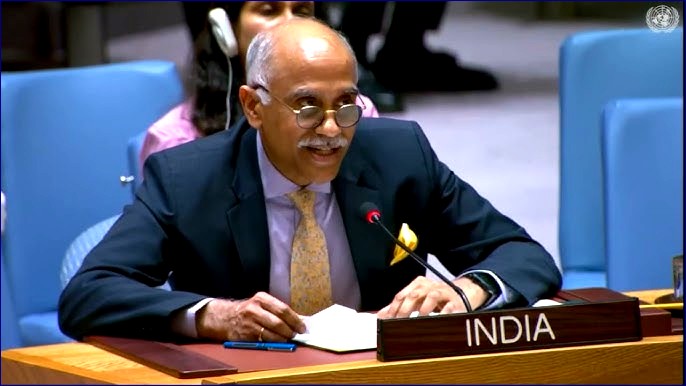
India Highlights Urgent Action Needed on HIV/AIDS at UN Meeting
In a significant address at the UN General Assembly High-Level Meeting on HIV/AIDS held on June 22 and 23, 2026, India’s Permanent Representative to the UN, P. Harish, raised serious concerns about growing inequalities and funding shortfalls that could jeopardize advancements made in fighting HIV/AIDS, especially in developing nations.
Harish emphasized that we are at a crucial point in the global response to HIV. He called on the international community to leverage the flexibilities allowed under the WTO’s TRIPS agreement. This approach would help low- and middle-income countries secure or produce affordable medicines, including crucial diagnostics and antiretrovirals. Harish insisted that equitable access to health technologies should be a priority.
“These legal flexibilities are not just abstract terms; they are vital lifelines for millions who rely on accessible treatments,” he pointed out. For India, which has been a significant provider of affordable generic medicines to other developing countries, maintaining policy space under TRIPS is essential for its own health policies and global health efforts.
In addition, Harish highlighted the importance of sustainable initiatives driven by communities. India’s health programs increasingly recognize the role of community-based organizations and networks of people living with HIV. These groups are key partners in reaching marginalized populations. Community leadership helps build trust, improve service uptake, and address the stigma that still limits access to prevention, testing, and treatment.
Reiterating India’s commitment to ending AIDS as a public health threat by 2030, in line with global health objectives, Harish described India’s holistic approach that blends public health planning with social rights. By integrating HIV services into broader healthcare systems, India aims to ensure not only expanded coverage but also ongoing care for those living with HIV. He stressed that maintaining and speeding up these gains is crucial to meet the 2030 targets.
Harish also discussed India’s achievements through the National AIDS and STD Control Program, which is focused on equity and community involvement. He noted significant declines in new HIV infections and AIDS-related deaths over the years.
A key part of India’s strategy is the Triple Elimination Strategy, aimed at stopping the transmission of HIV, syphilis, and hepatitis B from mothers to children. This initiative includes universal antenatal screenings, prompt diagnosis, and treatment linkages, ensuring that every pregnant woman can access timely testing, and every infant at risk receives appropriate care. Harish stressed that stopping mother-to-child transmission transcends medical intervention; it embodies principles of fairness and social justice.
Meanwhile, UN Secretary-General António Guterres issued a stark warning, stating that the fight against AIDS is far from over. By the end of 2024, nearly 9.2 million people in need of HIV treatment would still lack access, with 1.3 million new infections and 630,000 deaths from AIDS-related illnesses reported. He highlighted that funding reductions are undermining prevention efforts and weak community support systems critical to the global fight against HIV.
Guterres encouraged nations to uphold the Sevilla Commitment, urging them to enhance financial flows, alleviate unsustainable debt, and reform the global financial system to better support developing countries. He also outlined five key pathways for accelerating progress: closing service access gaps, prioritizing community-led efforts, protecting human rights, strengthening health and social protection systems, and renewing multilateral cooperation.
Harish echoed many of Guterres’ concerns, aligning India with a rights-based, community-focused approach. He underscored that laws and policies that marginalize certain populations not only infringe on human rights but also harm public health.
The discussions were part of the UN’s ongoing efforts to bolster its HIV response through the UN80 Initiative, aiming to enhance UNAIDS’ capabilities within the wider UN development framework. The meeting concluded on June 23, 2026, with member states adopting a new Political Declaration to expedite efforts to end AIDS by 2030.
