
India Explores Defence Sales to UAE Amid Growing Ties
By Saurabh Sharma and Aftab Ahmed
New Delhi, June 22 – The Indian government is currently in discussions with the United Arab Emirates (UAE) to potentially sell key defence systems, including the advanced BrahMos cruise missile. This comes as the UAE seeks to bolster its military capabilities following recent conflicts in the region.
Sources familiar with the matter revealed that the talks also include India’s Akashteer air defence system. “The UAE has expressed interest in several of our weapons systems, including BrahMos and Akashteer. These discussions are in the early stages but are progressing swiftly,” said a source.
Despite requests for comments, officials from both the Indian government and the UAE’s foreign ministry have remained silent.
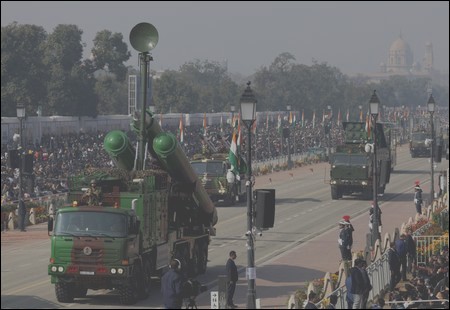
The BrahMos missile, developed in collaboration with Russia, is known for its speed and versatility—able to be launched from various platforms, while Akashteer is an automated defence system created by Bharat Electronics Ltd for the Indian Army.
The UAE’s growing interest in acquiring defence equipment stems from previous military attacks, particularly from Iran, prompting the nation to enhance its protective measures, especially in safeguarding the vital Strait of Hormuz, a key passage for its energy exports. Earlier this year, the UAE signed a substantial defence cooperation agreement with South Korea worth over $35 billion.
“A broader pool of suppliers offers the UAE greater strategic independence while maintaining a positive relationship with the U.S.,” noted Pearl Pandya, a senior analyst at the Armed Conflict Location & Event Data project.
Data shows that the U.S. was the largest arms supplier to the Middle East from 2021 to 2025, contributing 54% of the region’s imports, followed by Italy and France.
Before finalizing any sale of the BrahMos missile to the UAE, it is essential for India to secure approval from Russia, as it is a joint development project. However, this is not expected to be a significant obstacle, given the strong ties between Moscow and Abu Dhabi.
Siemon Wezeman, a senior researcher at SIPRI, highlighted that both the BrahMos and Akashteer could effectively meet the UAE’s military demands, despite increasing competition in the arms market.
The UAE currently utilizes the U.S. MGM-168 ATACMS ballistic missile, which can reach distances of up to 300 km, along with advanced THAAD and Patriot air defence systems. Experts indicated that Akashteer would integrate data from various sources to counter aerial threats effectively.
While India has faced challenges in previous arms deals, analysts believe there is a promising opportunity for sales to the UAE and other Gulf nations. Stronger relations between India and the UAE have already resulted in numerous agreements in trade, energy, and military collaboration.
The ongoing talks regarding India’s sophisticated weapon systems signal shifting dynamics in the region, with India potentially using these partnerships to counterbalance a recent defence agreement between Saudi Arabia and Pakistan.
“Strengthening defence ties illustrates both nations’ commitment to showcasing their robust partnership amidst regional changes,” added Pandya.
India’s defence exports saw a significant rise last year, and recent military activity involving the BrahMos has sparked further international interest. Following its successful use in its conflict with Pakistan, India has secured deals to sell the BrahMos to countries like Vietnam and Indonesia and has received inquiries from others, including Thailand and South Africa.
India’s defence exports reached over $4 billion in the fiscal year ending March 2026, compared to a mere $7.26 million in 2013-14. Additionally, India holds the position of the world’s second-largest arms importer, accounting for over 8% of global arms purchases.
(Reporting by Saurabh Sharma and Aftab Ahmed in New Delhi)
