
India’s Growing Ties with Saudi Arabia Amid Regional Tensions
RIYADH: The ongoing conflict involving the US and Israel against Iran has significant implications for India, which relies heavily on energy supplies from the Middle East, has a stake in maritime trade, and hosts millions of its citizens in Gulf countries. This situation has prompted New Delhi to closely monitor developments in the region.
The current crisis has emphasized the strengthening relationship between India and Saudi Arabia, which has evolved over the past ten years. Initially focused on oil, the partnership now encompasses security, investment, culture, and diplomatic efforts.
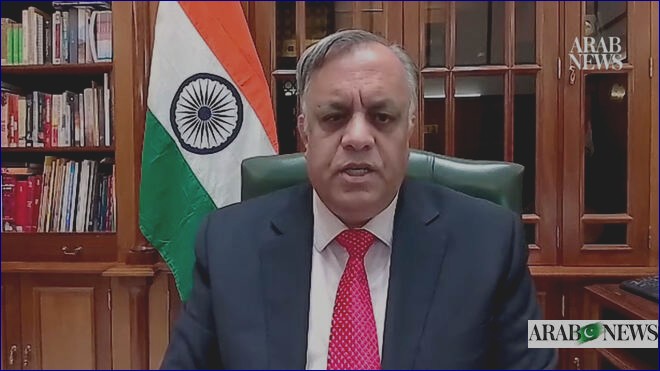
In a recent interview on the Arab News program “Frankly Speaking,” Suhel Ajaz Khan, India’s outgoing ambassador to Saudi Arabia, highlighted how the conflict has spurred discussions between New Delhi and Riyadh.
Khan remarked that the ongoing turmoil makes the security in the Gulf a matter of urgent concern for India. With approximately 10 million Indians living across the Middle East, including nearly 2.7 million in Saudi Arabia, the safety of this region is closely linked to India’s national interests.
“Saudi Arabia is a key trading partner as well as a major source of energy and fertilizers for us,” he mentioned. “Thus, any event in the Gulf region is crucial for us.”
Khan noted that communication between leaders from both nations has intensified amid the crisis. Prime Minister Narendra Modi and Crown Prince Mohammed bin Salman have held discussions, while ministers and officials frequently exchange views.
“We have been in regular touch at the leadership level,” he added.
India has condemned Iranian attacks on Saudi Arabia and other Gulf nations and continues to advocate for constructive dialogue. “We have a clear stance on the conflict,” he stated, adding that New Delhi is particularly vigilant about the safety of shipping routes in one of the world’s most crucial waterways.
“We believe the Strait of Hormuz must remain open for navigation and free trade,” he emphasized, noting the increasing urgency due to recent attacks on merchant vessels, including incidents that resulted in the loss of Indian sailors’ lives.
Khan explained that this led India to summon the US Deputy Chief of Mission twice in two days, following American strikes that impacted Indian-crewed vessels.
“The ongoing attacks on civilian infrastructure, including shipping lines, are very troubling,” he said. He reiterated that diplomacy is the best way to move forward, calling for all parties to respect ceasefires and avoid targeting civilian infrastructures.
In talks earlier this year, Indian National Security Adviser Ajit Doval discussed security and economic concerns during his visit to Riyadh, where he met with senior Saudi leaders.
Khan shared that these talks underscored the shared interest of both nations in maintaining open maritime trade routes.
Saudi Arabia has played a significant role in assuring India of reliable energy supplies, including crude oil. The ambassador noted recent efforts to divert oil shipments through the Yanbu port, reducing reliance on routes through Hormuz.
While there are still challenges due to ongoing regional tensions, Khan affirmed that India and Saudi Arabia are committed to keeping trade routes available.
The conflict has also affected expatriate communities, but Khan praised Saudi Arabia for facilitating the return of Indian citizens seeking to leave conflict zones. He acknowledged the issuance of nearly 15,000 transit visas to stranded Indians.
As he concludes his tenure, Khan reflected positively on the growing friendship between India and Saudi Arabia. He cited the personal rapport between Modi and bin Salman as a key driver in deepening ties over the past decade.
“This friendship is built on mutual respect,” he added, noting the significant growth in economic ties, with bilateral trade exceeding $42 billion.
Khan pointed out that Indian companies have increased their presence in Saudi Arabia, growing from about 490 in 2019 to over 5,000 today. He believes that future investments and collaborations, especially in technology and artificial intelligence, hold great promise.
Despite the focus on economic and technological growth, Khan emphasized that the people-to-people connection remains vital. The Indian community in Saudi Arabia continues to flourish, contributing to cultural exchange and mutual respect.
In his final remarks, he expressed his satisfaction with serving the Indian community during significant events like Hajj, emphasizing both personal and professional fulfillment.
As Khan leaves his post, he sees a bright future for India-Saudi relations, summarizing the partnership with the words: “Peace, progress, and prosperity.” In a time of regional instability, these ideals are more crucial than ever.
