
The Aircraft Accident Investigation Bureau (AAIB) is set to provide an update on its investigation into the Air India flight 171 crash. This update will be shared on Friday and comes almost a year after the tragic incident, although it will not specify the cause of the accident. Officials have indicated that the analysis of the aircraft engines is still ongoing.
According to sources, this update will outline the progress made in the investigation, but it will not resolve the crucial question: whether the fuel supply to both engines was cut due to human error or a mechanical failure. This uncertainty has led to varied opinions among investigators, pilots, and legal experts since the inquiry began.
A ministry official explained that this update is essentially a checkpoint, not an interim report. “It will clarify the current status of the investigation and the work completed so far, but it won’t determine the cause of the crash,” the official stated.
As mandated by the International Civil Aviation Organization, a final report must be issued within a year of an accident, or a progress report must be published. This update is shared with international authorities involved in aviation safety.
The Federation of Indian Pilots has requested the civil aviation ministry to reconsider issuing the update, arguing that it may only lead to more confusion. A representative from the All India Pilots’ Association expressed concerns over how a brief mention in a previous report ignited numerous theories about human involvement, suggesting that this new update might fuel further speculation.
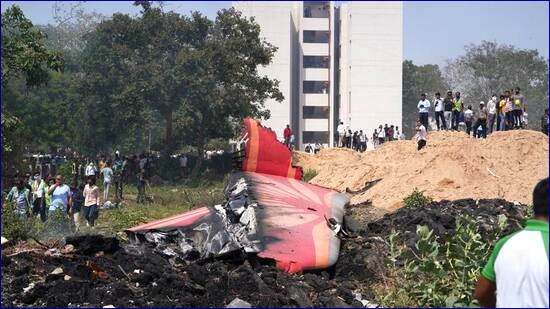
What is clear is that Air India flight 171 took off from Ahmedabad at lunch on June 12 last year, headed for London Gatwick with 242 passengers onboard. In the last moments before the crash, one pilot reportedly questioned why they had shut off the fuel, only to be told by the other pilot that he hadn’t done it. Both engines lost power, leading the Boeing 787-8 to crash onto the canteen of BJ Medical College, resulting in the loss of 241 lives and one survivor. The initial report, released shortly after the accident, captured this cockpit exchange but did not identify any causes or individual responsibilities.
As the investigation drags on, families of the victims are left grappling with different theories. Muktiben Vansadiya, who lost both her parents in the crash, shared her struggle to find clarity. “We still do not know what exactly happened,” she said, highlighting the conflicting accounts and her hopes for answers.
The inquiry has sparked debates among experts. Some pilots believe blame is being unfairly directed at the crew, while other investigators, particularly from the West, have alleged that the captain might have intentionally switched off the fuel. This division has created tension, and there were reports of disagreements between Indian and American investigators early in the process.
The Federation of Indian Pilots has continued to contest these claims, emphasizing that it is too soon to assign blame to the pilots. Mike Andrews, a lawyer representing over 150 victims, pointed out the use of an emergency mechanism known as the Ram Air Turbine, suggesting that a mechanical issue might have played a role.
The timeline for the final report remains uncertain, as the ongoing analysis of the engines in Ohio is the last major step before the report can be released.
As the investigation continues, families are being encouraged to sign a compensation form that releases various entities, including Air India and Boeing, from liability. This form includes a compensation package, but signing it means families cannot pursue further claims without knowing the investigation’s conclusions. Air India has reassured that there is no deadline for acceptance.
One year after the tragedy, the crash site still shows signs of the incident. The hostel buildings affected remain vacant and damaged, with debris still scattered around. A local woman who works near the campus finds remnants of the plane during her daily routine. Miraculously, she had just stepped away moments before the crash occurred.
Among the deceased was Vijay Rupani, the former chief minister of Gujarat, who was traveling for a religious event. His family has chosen to trust the investigation and is hopeful for a thorough examination of the facts. “We urge everyone to wait for the findings,” said his son Rushabh. “When you have support, it shields you; when it’s gone, you’re vulnerable.”
