Close Menu
  • Home
  • World News
  • India News
  • Business News
  • Health
  • Sports
  • Indian Diaspora In US
  • Technology
  • Bollywood
  • Education
Facebook X (Twitter) Instagram
Thursday, June 18, 2026
Breaking News
  • Yiwugo Traders Shine Bright as World Cup Excitement Takes Over
  • ZDC Accelerates Growth with Cutting-Edge Tech and Outstanding Client Success — TradingView News
  • Nag Ashwin Addresses Alia Bhatt and Sai Pallavi Rumors for Kalki 2898 AD Sequel: “All Just Speculation”
  • Johnson & Johnson CEO Foresees Cancer Breakthrough in the Next Ten Years
  • FIFA World Cup: Harry Kane Credits Thomas Tuchel’s Half-Time Rally for England’s Comeback Triumph Against Croatia
  • Colombian Military Takes Action, Neutralizes 5 Suspects Linked to Deadly Bus Bombing
  • Speaker Set to Discuss TMC Split with Abhishek Tomorrow | India News
  • CBOT Wheat Rises Amid Global Export Demand and Weather Concerns — TradingView News
Facebook X (Twitter) Instagram
India Bulletin
Advertisement
  • Home
  • World News
  • India News
  • Business News
  • Health
  • Sports
  • Indian Diaspora In US
  • Technology
  • Bollywood
  • Education
India Bulletin
Home»India News»Art Brings Historic Iran-India Relations to Life at Sunder Nursery
India News

Art Brings Historic Iran-India Relations to Life at Sunder Nursery

May 29, 20263 Mins Read
Facebook Twitter Email
Share
Facebook Twitter Email


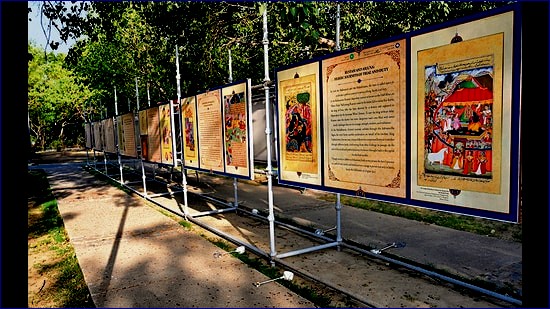
Exhibition Highlights Cultural Ties Between India and Iran

A new temporary exhibition at Sunder Nursery is catching the eye of Delhi residents during their evening walks. Visitors are drawn to a series of 18 panels exploring historical connections that many may not be aware of. Among the highlights is a 19th-century painting of Yama, the Hindu god of death and justice, alongside an illustration of Yima or Jamshid, an Iranian king from folklore who created a sanctuary to protect humans, animals, and plants from severe winters. Interestingly, the Mahabharata also describes Yama’s hall as a place void of suffering.

Titled “Shared Epic Worlds,” the exhibition showcases the artistic and cultural links between India and Iran by comparing two of their greatest epics: the Sanskrit epic Mahabharata and the Persian Shahnameh, penned by the poet Ferdows between 977 and 1010 CE. Each panel offers a feast for the eyes, featuring Mughal-era paintings, calligraphy, and artwork from the Safavid period in Iran, all illustrating scenes from the Shahnameh.

Curator Shahab Khajeh Piri emphasizes that both epics convey similar messages about ethics, identity, loyalty, love, and the human experience. This exhibition isn’t just about manuscripts and art; it’s a celebration of shared narratives and ideas across historical times, highlighting how India and Iran bond over more than just trade and politics.

Piri notes that the exhibition aims to reveal the many similarities between the Mahabharata and Shahnameh, showcasing the profound cultural ties between the two nations. For instance, mythical birds feature prominently in both tales—Garuda in the Mahabharata and Simurgh in the Shahnameh—both serving as symbols of liberation and devotion. There are also parallels between epic heroes, like Rustam from the Shahnameh and Arjuna from the Mahabharata, who face great challenges for a higher purpose.

Additionally, the exhibition sheds light on the significance of the Shahnameh during the Mughal dynasty. One panel displays an ancient manuscript with royal Mughal seals, tracing its ownership from the founding emperor Babur to Shah Jahan. Another showcases a beautifully illustrated manuscript from Jahangir’s era, complete with nearly 90 narrative paintings and verses organized in gold-ruled columns.

Historian Swapna Liddle points out that India and Iran have always shared strong cultural bonds, largely due to their linguistic heritage. Persian served as a court language for the Mughal emperors and played a vital role in administration and literature, much like English does today. Many modern Indian languages, including Bengali and Marathi, have also borrowed vocabulary from Persian.

This exhibition invites viewers to explore and appreciate the rich cultural tapestry that connects India and Iran, making it a must-visit for anyone interested in understanding their historical links.

1. Sunder Nursery 2. exhibition 3. Delhi 4. Mahabharata 5. Shahnameh
Share. Facebook Twitter Email
admin
  • Website

Related Posts

Speaker Set to Discuss TMC Split with Abhishek Tomorrow | India News

June 17, 2026

Trump Talks Iran and US-India Ties at G7 Summit

June 17, 2026

India Scores Major Trade Triumphs at G7: UK Deal Date Set, EU FTA Targeted for Year-End | Complete Breakdown

June 17, 2026
  • Facebook
  • Twitter
  • Instagram
Don't Miss

Yiwugo Traders Shine Bright as World Cup Excitement Takes Over

ZDC Accelerates Growth with Cutting-Edge Tech and Outstanding Client Success — TradingView News

Nag Ashwin Addresses Alia Bhatt and Sai Pallavi Rumors for Kalki 2898 AD Sequel: “All Just Speculation”

Johnson & Johnson CEO Foresees Cancer Breakthrough in the Next Ten Years

Started in 2004, India Bulletin is the largest and
most read South Asian publication
in Chicago and surrounding Midwest.

  • Home
  • About Us
  • Contact
  • Advertise With Us
  • Privacy Policy
  • Terms of Use
  • Disclaimer
  • CCPA
News
  • Bollywood
  • Business News
  • Health
  • India News
  • Indian Diaspora In US
  • Sports
  • Technology
  • World News
Facebook X (Twitter) Instagram

Type above and press Enter to search. Press Esc to cancel.

Accessibility Adjustments

Powered by OneTap

How long do you want to hide the toolbar?
Hide Toolbar Duration
Select your accessibility profile
Vision Impaired Mode
Enhances website's visuals
Seizure Safe Profile
Clear flashes & reduces color
ADHD Friendly Mode
Focused browsing, distraction-free
Blindness Mode
Reduces distractions, improves focus
Epilepsy Safe Mode
Dims colors and stops blinking
Content Modules
Font Size

Default

Line Height

Default

Color Modules
Orientation Modules