
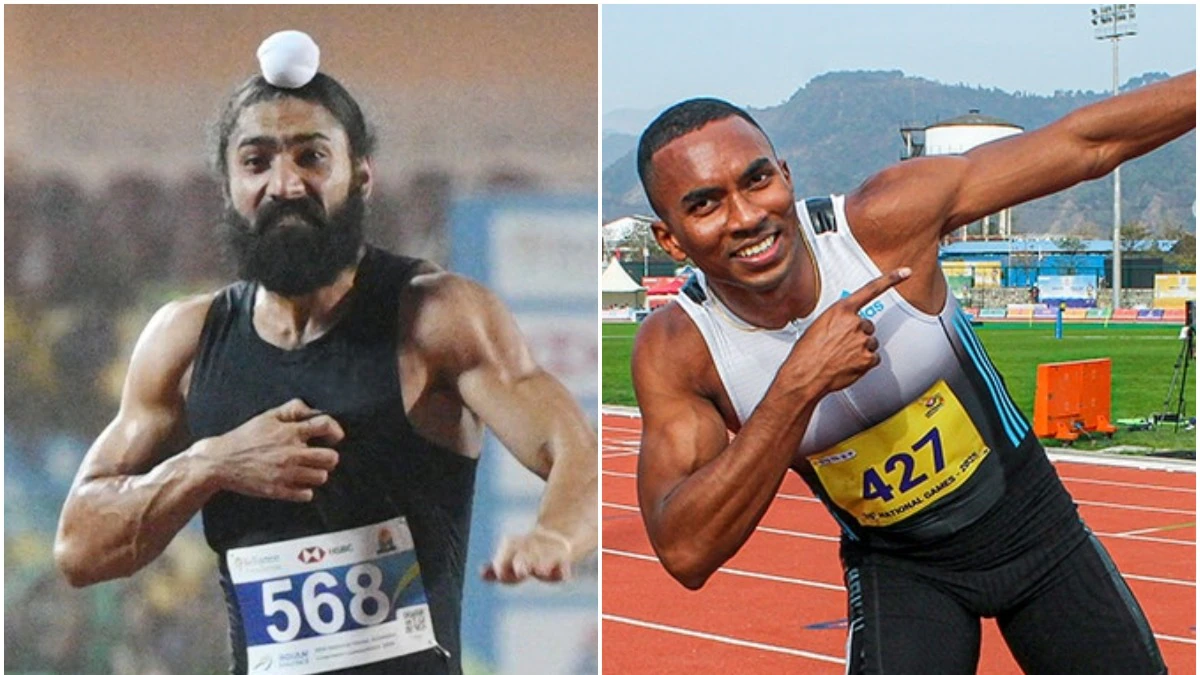
On a recent Friday evening at the Birsa Munda Stadium in Ranchi, a remarkable event unfolded for Indian athletics. Gurindervir Singh, a 25-year-old sprinter from Jalandhar, Punjab, made history by running the 100 meters in just 10.17 seconds, setting a new Indian national record. But the excitement didn’t end there. Just minutes later, Animesh Kujur, a young sprinting talent from Jharkhand, clocked an even faster time of 10.15 seconds, breaking Gurindervir’s record. In just one evening, the national record switched hands twice.
The final race on Saturday had the feel of a thrilling competition. Gurindervir seized the moment and finished with a time of 10.09 seconds, becoming the first Indian athlete to break the 10.10-second barrier. Three national records, two athletes, and a single stadium set the stage for a historic 24 hours.
For keen followers of athletics, these developments are worth pausing to reflect on—not just because of the records but their implications in a global context. The 100 meters has long been the hallmark of speed in sports.
### Exploring the Geography of Running
To understand why India has been absent from elite sprinting, it’s crucial to look at the rich history of distance and sprint running around the globe. East Africa, consisting of countries like Kenya and Ethiopia, is known for producing outstanding long-distance runners. Their training at high altitudes equips them for endurance races, while sprinting has not traditionally been their focus.
However, things are changing. Kenyan sprinter Ferdinand Omanyala made waves when he clocked a time of 9.77 seconds in 2021, marking a significant achievement for African sprinting. Yet, he remains an exception rather than the norm.
In contrast, West African nations—like Nigeria and Ghana—have cultivated a legacy of sprinters, whose muscle composition allows for rapid, explosive energy. The influence of the transatlantic slave trade led to the spread of this talent, particularly in the Caribbean and the southern United States. Notably, nearly 40% of everyone who has broken the ten-second barrier in the 100 meters comes from Caribbean nations, showcasing an astounding concentration of sprinting talent.
The path to understanding this dominance also brings to light genetic factors related to sprinting. Research indicates that specific genetic markers are prevalent in athletes with ties to West Africa, showcasing how genetics play a role in athletic performance.
### India’s Athletic Landscape
A 2013 study involving Indian Army soldiers examined the distribution of sprint-related genes among various ethnic groups in India. Surprisingly, the genetic profile showed no significant differences among these groups, resembling that of European athletes rather than strictly West African lineages. This reveals that India’s genetic diversity is vast and includes potential for sprinting talent.
Despite the possible genetic advantages that could exist in a country with over 1.4 billion people, the challenge lies in nurturing that talent effectively. Historically, sports like cricket have dominated funding and attention, leaving little room for sprinting to grow. Young athletes in rural India have lacked access to proper training programs or funding opportunities, which limited their potential.
### A Turning Point
The recent achievements of Gurindervir and Animesh could signal a turning point in Indian sprinting. Their records demonstrate that the foundation for a new athletic culture is being laid. While Gurindervir’s time of 10.09 seconds may not yet place him in global contention, it represents a significant advancement for Indian athletics.
Much like the barrier-breaking run of Roger Bannister in 1954 when he completed a mile in under four minutes, Gurindervir’s achievement shows that breaking boundaries is possible. The arrival of Animesh Kujur also adds an element of competition that can further drive improvements in performance.
### Looking Ahead
As nations invest in sprinting programs, it isn’t just about securing Olympic medals down the line. Achievements in the 100 meters can reshape how countries view their athletic capabilities. The breaking of historic records by Indian sprinters is about more than just personal triumph; it challenges long-standing beliefs about a nation’s potential in the world of speed.
In summary, Gurindervir and Animesh have not yet made India a sprinting powerhouse, but they have opened doors for future possibilities. Their accomplishments signify a new chapter for Indian athletes and inspire the next generation to dream bigger. The race towards faster times has begun, and the unfolding narrative is indeed full of promise.
