
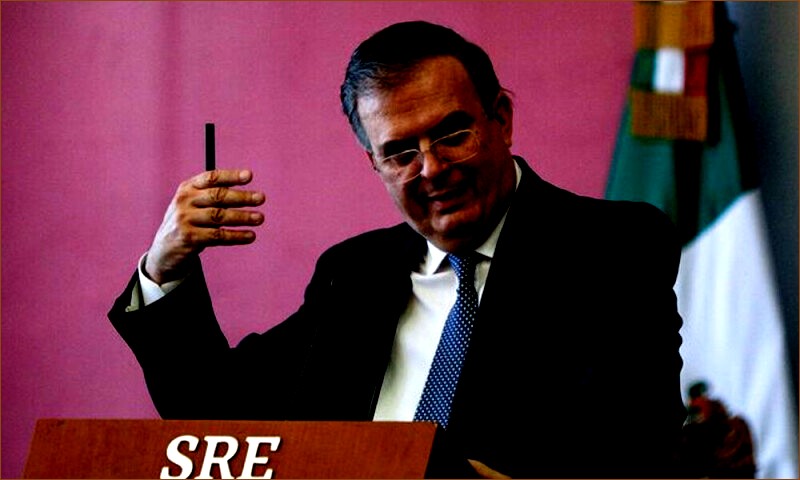
MEXICO CITY: Concerns Raised Over Proposed Tariffs by Trump
On Wednesday, Mexico’s Economy Minister Marcelo Ebrard voiced serious concerns regarding the proposed 25% tariffs suggested by US President-elect Donald Trump. Ebrard warned that these tariffs could lead to the loss of around 400,000 jobs in the United States, slow down economic growth, and negatively impact both US businesses and consumers.
Describing the proposal as “a shot in the foot,” Ebrard urged for increased regional cooperation instead of imposing retaliatory import taxes. He explained that these tariffs would significantly raise the costs for US companies operating in Mexico, effectively doubling their tax burden.
The automotive industry, which heavily relies on cross-border exports, would be hit particularly hard. Major US car manufacturers such as Ford, General Motors, and Stellantis could see vehicle prices rise by thousands of dollars as a result of the tariffs.
Mexico plays a crucial role as the United States’ top trade partner, especially in the automotive sector, which accounts for nearly 25% of North American vehicle production. Analysts from Barclays expressed concern that the proposed tariffs could eliminate nearly all profits for Detroit’s big three automakers.
Despite the looming threat, Trump’s team, as well as representatives from Ford and Stellantis, have not commented on the issue, and GM has chosen to remain silent.
In light of these developments, Mexican President Claudia Sheinbaum emphasized the importance of dialogue and cooperation between the two nations. This comes after Trump’s announcement, which some analysts believe may violate the United States-Mexico-Canada Agreement (USMCA) — a trade deal that was established during Trump’s previous term.
Sheinbaum suggested that Mexico might consider imposing its own tariffs in response. Analysts have been speculating about the potential for a new trade war if Trump pursues a tough stance on trade.
The automotive industry group in Mexico, AMIA, is preparing for various scenarios as they await further developments.
As for the USMCA, which is set for review in 2026, experts like Katia Goya from Grupo Financiero Banorte believe that the three countries involved might look to renegotiate the agreement rather than simply extending it as is.
In summary, the proposed tariffs have sparked a wave of concern and discussion about the future of trade relations between Mexico and the United States.
