
TGS Unveils New Data Tool for West India’s Oil Exploration
TGS, a leading name in energy data and intelligence, has launched the West India Facies Map Browser (FMB), a new dataset aimed at enhancing exploration efforts along India’s west coast.
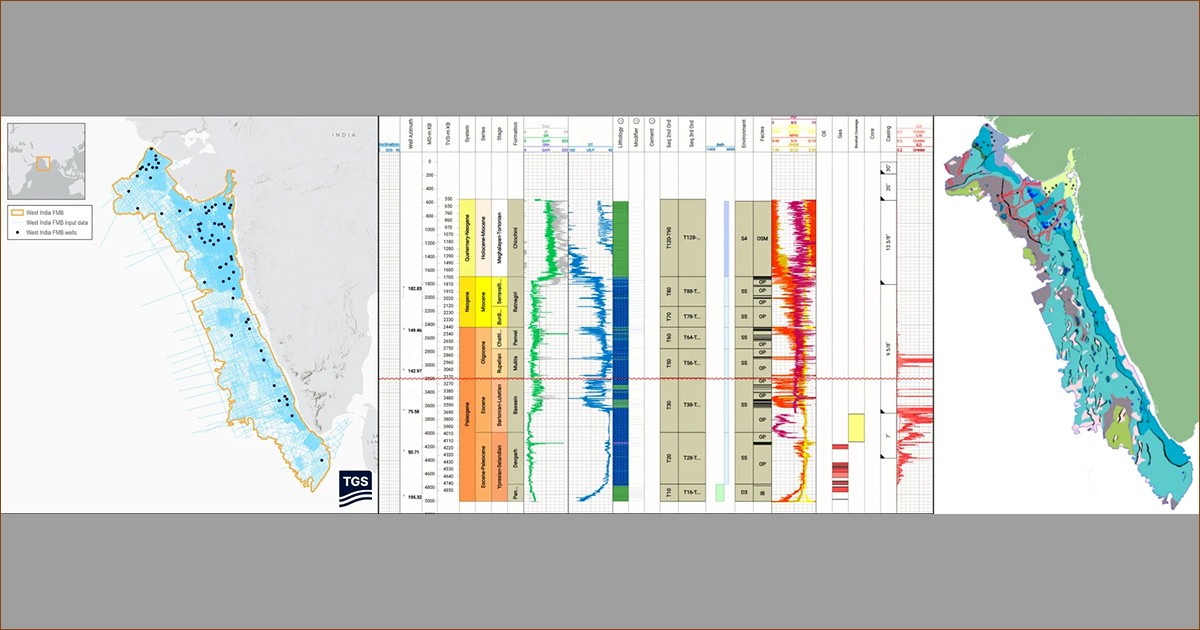
Spanning approximately 642,825 square kilometers, this tool provides a comprehensive geological framework that combines regional seismic and well data, making it easier for clients to analyze subsurface information. By streamlining the process of gathering and organizing this data, the FMB allows exploration teams to transition from initial screening to prospect evaluation more swiftly and confidently.
The FMB is grounded in data from 65 wells, featuring detailed maps of gross depositional environments (GDE), seismic horizon interpretations, and thorough stratigraphic correlations. This integrated approach gives users a clearer picture of basin evolution and helps identify potential exploration opportunities.
David Hajovsky, Executive Vice President, Multi-Client at TGS, shared his enthusiasm about the launch: “The West India Facies Map Browser is a significant advancement for geoscientists working with basin-scale data on India’s West Coast. By merging high-resolution stratigraphic information with extensive seismic and well data, we’re helping teams make quicker and more informed exploration decisions, while minimizing uncertainties in subsurface data.”
The FMB is designed to fit seamlessly into existing exploration processes, offering benefits at every stage from initial basin analysis to maturation of prospects. With ongoing Open Acreage Licensing Policy (OALP) rounds, this new product will help users gain deeper insights into key reservoir intervals in available blocks.
To ensure versatility, the West India FMB is provided in various formats, accommodating different technical needs such as desktop applications, web access, and integration with Petrel-ready projects. This flexibility makes it easier for clients to incorporate the FMB into their workflows.
