
Virginia Commences Innovative Steps to Tackle Affordable Housing Shortage
A recent initiative aims to address the pressing affordable housing crisis in Virginia and beyond. Andrew McCoy, who heads the Virginia Center for Housing Research at the Myers-Lawson School of Construction, emphasized the importance of deploying new technologies to help communities navigate this challenge. “This is just the start. We want to promote this technology as more communities come together to tackle the commonwealth’s and several other regions’ affordable housing issues," he stated.
Statistics reveal that nearly one in three Virginians allocate a significant portion of their income—around half—to housing costs. According to the National Association of Homebuilders’ 2024 Priced-out Analysis, approximately 154,000 families in the state are unable to afford homeownership.
“This lack of affordable housing is a significant concern for many communities,” noted Chris Thompson from Virginia Housing. He highlighted that innovative solutions, such as 3D printing, could play a crucial role in addressing this crisis.
In response to the housing scarcity, Virginia Governor Glenn Youngkin recently issued an executive order linking economic development efforts with plans for housing newcomers to the state. He estimates the state requires the construction of 500,000 new homes to meet existing demand, with an additional need for 30,000 homes per year to remain aligned with population growth.
Importance of Collaboration
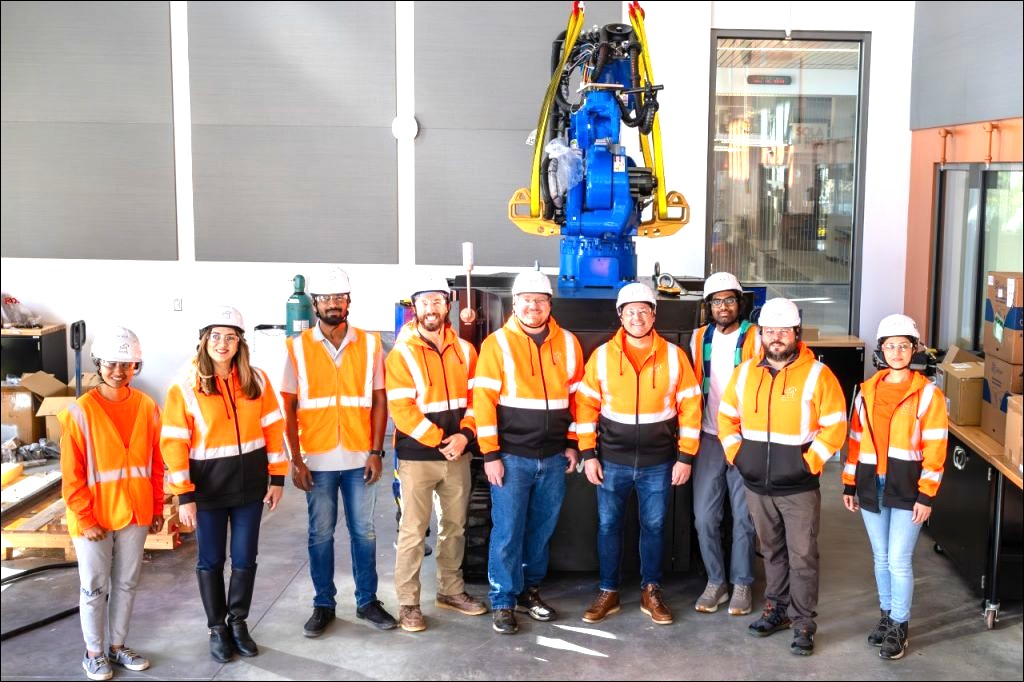
Virginia Tech has adopted a collaborative approach to tackle these housing challenges, bringing together experts from various fields including building construction, civil engineering, and design. Known as 3D4VA, this project leverages innovative 3D printing technologies to find solutions.
“This teamwork among these restructured colleges is groundbreaking,” remarked Nathan King, co-director of the Center for Design Research. The collaboration integrates diverse skills and insights that connect technical knowledge with real-world applications, advancing projects on regional, national, and international levels.
The project features a multidisciplinary team composed of several researchers and graduate students. Here are some key contributors:
- Alexander Brand: Leading the research, he specializes in concrete materials science and innovation.
- Andrew McCoy: As a forefront expert on affordable housing economics, he focuses on making housing accessible.
- Kereshmeh Afsari: She leads efforts in robotics within construction and trains the workforce in 3D printing technology.
- Philip Agee: Expert in the interaction between humans and technology in building settings.
- Nathan King: Specializes in the interplay of digital design and automation in construction processes.
Together, these specialists are investigating how to create a more affordable concrete mix, scale homes to fit different budgets, and train workers in this new technology.
“This collaborative effort is essential. The project’s complexity requires the diverse expertise that each team member brings,” Brand explained. “Managing these many components effectively isn’t possible without teamwork.”
Additionally, the team is working with experienced consultants who have previous experience in constructing 3D concrete homes. Professionals like Mike White from Crain Company, Craig Meadows with Williamsburg Builder Consultants LLC, and the Habitat for Humanity Peninsula Greater Williamsburg are assisting with everything from site operations to meeting building codes.
Through this innovative partnership and fresh ideas, Virginia Tech and its collaborators are setting the stage for a brighter future in affordable housing.
