
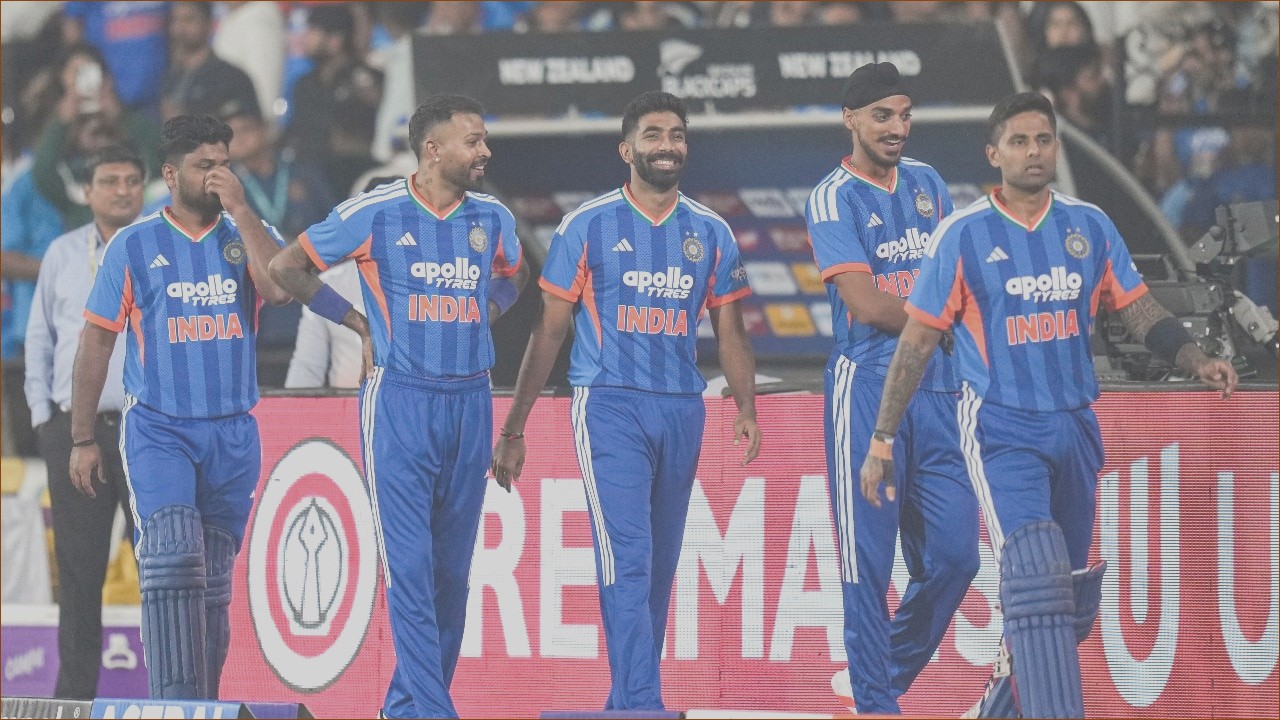
India’s T20 Triumph: Hosts and Defending Champions at the 2026 World Cup
If you had seen it unfold, you might think it was too good to be true. T20 cricket is known for being unpredictable and challenging, where reputation often means little. Yet, India has managed to turn this unpredictability into a winning formula.
Since August 2023, India has turned T20 Internationals into their own playground, easily defeating teams in bilateral series and multi-nation competitions. The team remains unbeaten, with an impressive 49 wins out of 63 matches and only three losses. Their spectacular run peaked during the T20 World Cup, where adaptability was key. India started on the green pitches of New York, moved to the friendly grounds of the Caribbean, adjusted to spin-heavy conditions in Guyana, and ended on the run-friendly surface in Barbados. They faced eight different opponents and claimed victory in all eight matches.
After lifting the trophy in 2024, India’s winning streak has only continued. They have not lost a single series since, with a record of 32 wins and just five losses. Currently, they lead the ICC Men’s T20I Team Rankings, featuring Abhishek Sharma as the top-ranked T20I batter and Varun Chakaravarthy as the leading T20I bowler.
Now, a new chapter is about to begin. India enters the 2026 T20 World Cup as both hosts and defending champions, a title that carries tremendous expectations. No host nation has ever won the men’s T20 World Cup, and no defending champion has successfully retained their title. Suryakumar Yadav and his team are on the brink of a historic achievement.
The Strength of India’s T20 Team
What sets this Indian team apart is their aggressive style. They do not aim merely to survive the first six overs; they aim to dominate them. Abhishek Sharma steps onto the World Cup stage as the No.1 T20I batter, a title he has earned through consistent performance and confidence. From the very first ball, it’s clear: bowlers must be on the defensive.
T20 cricket greatness comes in many forms. Some players offer stability, while others deliver explosive finishes. Abhishek creates a sense of urgency that can leave captains feeling they’re just one over away from losing control.
Then there’s Suryakumar Yadav, the captain who is the backbone of the batting lineup. With a strike rate above 160, he challenges conventional batting norms with his timing and diverse skills. Alongside him, Sanju Samson and, if fit, Tilak Varma add a blend of aggression and stability to the batting order.
India’s squad is built on one clear principle: they must keep the run rate high. Even if wickets fall, the scoring should never halt. Their players are skilled at handling both spin and pace, ensuring momentum continues deep into the innings.
While their batting steals the spotlight, it’s the bowling that seals victories.
Bowling: A Key to Success
India boasts a rare asset in T20 cricket—Jasprit Bumrah, a fast bowler who can make an impact at both the start and finish of an innings. His exceptional ability to take wickets early and at crucial moments can completely change the game.
Around him, the team has various options suitable for different conditions. Harshit Rana brings pace, while Arshdeep Singh provides control. Together, they maintain India’s strength throughout the match.
With the upcoming tournament being held in the sub-continent, India’s spin attack becomes even more critical. Their spin specialists, Kuldeep Yadav, Varun Chakaravarthy, and Axar Patel, each offer their own unique challenges. The conditions in India and Sri Lanka can vary, but this depth in their spin bowling makes them adaptable.
To accomplish what no team has managed before—winning the T20 World Cup as both hosts and defending champions—India understands that excellence isn’t the only requirement. Exceptional fielding will also play a vital role. Cutting off singles, being aggressive, and holding onto catches could turn matches in their favor.
Consistency and Statistics
India has displayed strong and steady progress leading up to the World Cup. A 3-1 series victory over 2024 finalists South Africa set a positive tone, which they carried into the New Year with another 3-1 lead against New Zealand. Since the last T20 World Cup, India has successfully won 30 out of their 40 matches, showcasing an impressive consistency that no other team has matched.
Finishing matches quickly—like when they chased down a target against New Zealand with 60 balls to spare—demonstrates their capabilities. Rarely do they allow games to remain tense, showing they can win comfortably even against tough opponents.
Sustaining success in T20 cricket is challenging because of its fast-paced nature. Teams can change quickly, and momentum is fickle. Winning 11 consecutive T20I series reflects a team that knows how to adapt and maintain high standards.
Home advantage is less predictable in modern T20 cricket, making India’s streak of 10 consecutive home series victories even more impressive. They have overcome varying conditions, showing that their success comes from skill and preparation rather than comfort.
Confidence in Defending the Title
While no team has yet won the men’s T20 World Cup at home, India is a unique contender in this format. This squad has effectively removed common pitfalls, managing to score quickly while staying composed and defending totals successfully.
With clearly defined roles and depth throughout the team, India continues to excel. They have not lost a bilateral T20I series since 2023, and with Suryakumar Yadav returning to form, the foundation is solid.
This team is built to handle every condition, from green pitches to slow turners. Their bowling unit can control both powerplays and closing overs, while their batting keeps pushing forward despite any challenges. India enters the tournament prepared, not merely hopeful.
While other strong teams like Australia, England, and South Africa can’t be overlooked, this Indian side stands out. If their batting and bowling are complemented by sharp fielding, they will be a tough challenge for anyone.
T20 cricket will continue to be unpredictable, with the potential for surprises like a lost toss or unexpected weather. However, if India manages to defend their title, they won’t just reclaim the championship—they’ll set a benchmark for all others to strive for.
